Today at 19:05
The return of Ukrainian children unlawfully deported by Russia became one of the European Union’s top humanitarian priorities in May and June 2026, as Brussels intensified diplomatic, legal, and financial efforts to support Ukraine and strengthen international accountability for these crimes.
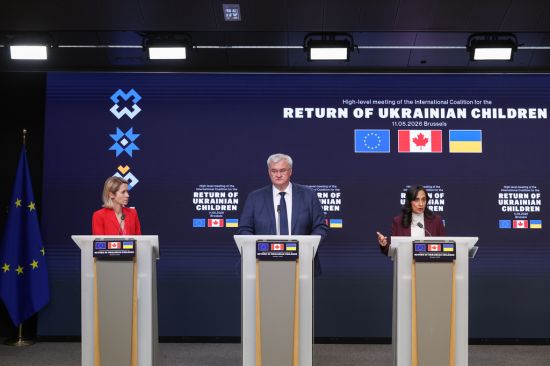
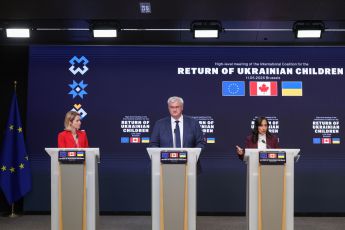
The renewed momentum was marked by a high-level meeting of the International Coalition for the Return of Ukrainian Children in Brussels, co-hosted by the European Union, Ukraine, and Canada. Representatives from dozens of countries endorsed measures aimed at improving child identification and tracing mechanisms, expanding diplomatic channels for returns, strengthening sanctions against those responsible, and increasing support for rehabilitation and reintegration.
Alongside these political commitments, the European Union announced additional funding to reinforce Ukraine’s child protection system, while introducing new sanctions targeting individuals and organizations involved in the deportation, forced displacement, and assimilation of Ukrainian children. These measures build on broader European efforts to support education, psychological assistance, and family reunification programs.
According to official Ukrainian data, more than 20,500 cases of unlawful deportation or forced transfer of children have been documented since the beginning of Russia’s full-scale invasion, although the actual number is believed to be significantly higher. Only a small proportion of those children have so far been successfully returned to Ukraine, making international cooperation essential.
The issue has also gained broader international backing. Canada announced further initiatives under the International Coalition, while the United States expanded its involvement through humanitarian programs and diplomatic efforts aimed at locating, tracking, and returning deported children. International organizations and civil society groups continue to support legal assistance, documentation, and long-term rehabilitation.
Beyond its humanitarian dimension, the return of deported children has become an important element of international efforts to hold Russia accountable for alleged war crimes. The International Criminal Court’s arrest warrants related to the unlawful transfer of Ukrainian children, combined with growing coordination among Ukraine’s partners, underscore the increasing role of international law in responding to these violations.
As Ukraine continues preparing for post-war recovery, the protection and reintegration of deported children is increasingly viewed not only as a humanitarian necessity but also as a key component of rebuilding the country’s future human capital and preserving its national identity.
Read the full article by Danylo Yershov, political scientist specializing in international relations and junior expert at the United Ukraine Think Tank.