Today at 18:44
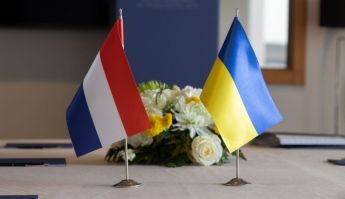
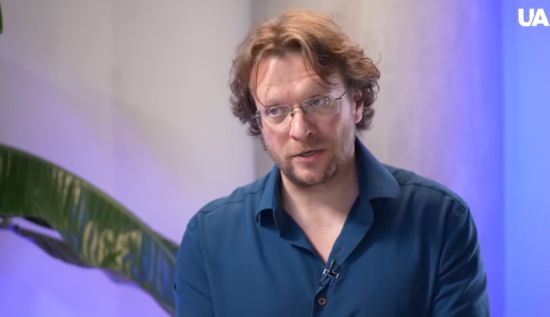
The Netherlands has earmarked €3 billion per year to support Ukraine between 2027 and 2029, reflecting Amsterdam’s commitment to providing long-term military assistance and ensuring predictable support for the Ukrainian Armed Forces, UATV English reports. The announcement was made by Colonel Simon Wouda, head of the Dutch Ministry of Defense’s Task Force Ukraine, in an interview with Ukrinform.
“We are currently working on plans for the use of the structural budget allocated by the Dutch government for 2027, 2028, and 2029. The Netherlands has set aside €3 billion annually for support to Ukraine. Our objective is to develop a framework that will guarantee sustainable and uninterrupted assistance to the Ukrainian Armed Forces over the next three years,” Wouda said.
According to the Dutch official, the focus is not only on the total amount of aid but also on ensuring that support is delivered in a steady and predictable manner.
“The most important thing is not simply to provide as much assistance as possible at one time. What matters is creating a continuous flow of support. This allows the Ukrainian military to receive equipment, integrate it into existing structures, distribute it among units, and use it effectively. It is far more practical than receiving a single large package all at once,” he explained.
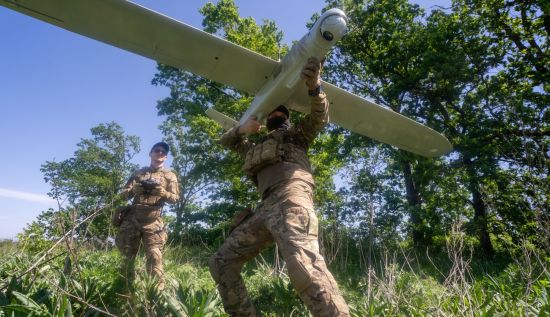
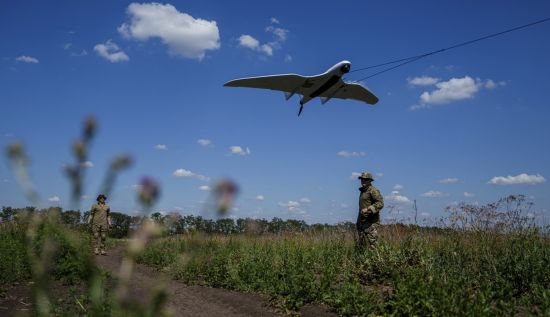
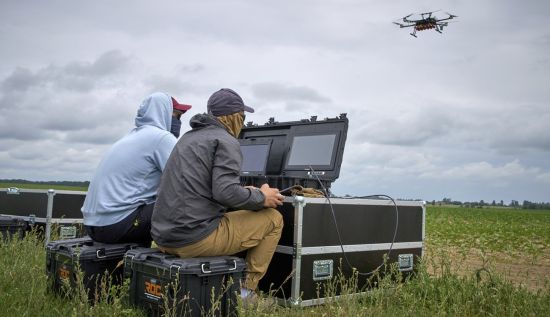
Wouda noted that the Netherlands intends to maintain long-term support in several key areas, including unmanned systems and the international F-16 coalition.
“We want to ensure a constant supply of drones, continued support for the F-16 program, and assistance in other priority areas over the coming years,” he said.
The colonel also described how the nature of military assistance has evolved since the beginning of Russia’s full-scale invasion.
In the early stages of the war, most equipment supplied to Ukraine came directly from existing military stockpiles. Over time, however, a growing share of assistance has been procured through commercial contracts with defense manufacturers.
“As the war progressed, procurement from industry became increasingly important. This process naturally requires more time,” Wouda said.
Under normal circumstances, military procurement can take more than a year from the initiation of a contract to delivery. However, according to Wouda, the Netherlands has significantly accelerated these procedures in response to wartime needs.
“We managed to reduce the contracting process to approximately three or four months. That does not mean the equipment is delivered immediately, because production often begins only after the contract is signed. Manufacturing may take an additional three or four months,” he explained.
As a result, delivery timelines of six to nine months for newly produced military equipment are now considered highly efficient.
“Of course, this is slower than transferring equipment directly from existing stockpiles. But for newly manufactured systems, it is a very fast process,” Wouda said.
He emphasized that while procurement-based assistance may require more time, the quality and sophistication of the equipment supplied to Ukraine have increased considerably compared with the early months of the full-scale war.
“The quality of the systems we provide today is significantly higher than at the beginning of the invasion. The process is especially efficient when we can rely on production lines that are already operational,” he noted.
The long-term funding commitment underlines the Netherlands’ intention to remain one of Ukraine’s key defense partners and to help ensure the sustained modernization and operational effectiveness of the Ukrainian Armed Forces in the years ahead.
Read also: Russia Building Infrastructure Near European Borders for Deployment of More Than 100,000 Troops