Today at 20:00

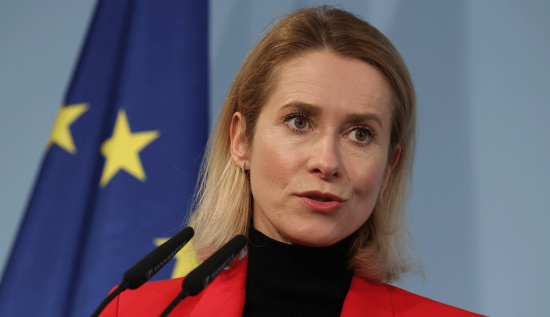
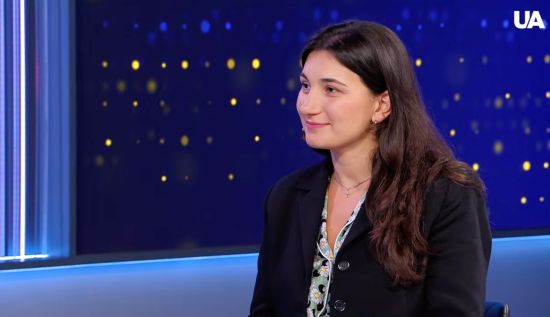
European Commissioner for Enlargement Marta Kos believes that the ongoing debate on Ukraine’s accession to the European Union will lead to a model of partial integration before full membership.
She made the remarks during a briefing in Kyiv, UATV English reports.
The commissioner stated that it is now possible to speak with confidence about the opening of the first negotiating cluster at the Intergovernmental Conference in Luxembourg on June 15.
“It is important to open the first cluster now, and then—hopefully by mid-July—the next five. At this stage, the absolute priority is to open all clusters,” she explained.
Kos acknowledged that the concept of “reverse enlargement,” previously promoted by the European Commission, was ultimately rejected by EU member states. However, member states have now chosen an intermediate approach under which candidate countries, including Ukraine, could receive benefits similar to those of membership before formally joining the EU.
According to her, the driving force behind this process is Ukraine itself, as well as the determination of key member states to help Ukraine move toward accession.
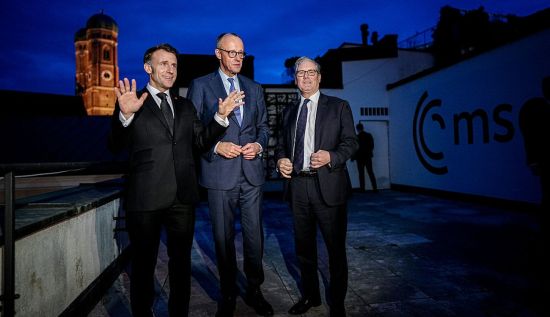
This was also the idea behind German Chancellor Friedrich Merz’s proposal for a special framework for Ukraine.
“When peace is achieved in Ukraine, the question of Ukraine’s accession to the EU will become a major issue and will be at the center of political debates at the highest level. Before that, we need to resolve the methodological questions. We must determine how to anchor Ukraine deeply within the EU. If we fail to do so, it will lead to disappointment,” the commissioner said.
“We need to understand where exactly we can integrate Ukraine more deeply even before full membership. That is why I am increasingly engaging with all member states on this issue. We do not yet know what the outcome of the leaders’ discussions will be, but one thing is certain: whatever option is chosen, the rule of law will be at its core,” Marta Kos stated.
She also expressed confidence that Russia would attempt to undermine any such arrangements.
“The closer we get to accession, the more Russia will strike at Ukraine. And when I say ‘strike,’ I do not mean only in the military sense,” she added.
It is worth recalling that on June 3, Hungarian Prime Minister Péter Magyar stated that Hungary and Ukraine had reached a “comprehensive agreement” regarding the Hungarian national minority.
At the same time, EU ambassadors began urgent preparations for opening the first negotiating cluster for Ukraine and Moldova.
Read also: EU Commissioner Kos names date for official launch of Ukraine’s accession talks