Yesterday at 20:03

The games your friends are playing were probably made in Ukraine. They just don’t know it yet.
Somewhere right now, a teenager in São Paulo is navigating the radioactive ruins of Chornobyl. A student in Seoul is surviving a Russian siege of an unnamed Ukrainian city. A gamer in Berlin is guiding a young girl through the silent horror of a Soviet-engineered famine. None of them may realise it, but they are being told Ukraine’s story — written, coded, and shipped by Ukrainian hands.
Ukraine’s game development industry is one of the world’s best-kept secrets. The audience of games created by Ukrainian developers exceeds 770 million users — larger than the entire population of the European Union. And yet, for most of those players, Ukraine itself remains invisible: a blank space behind the pixels, a country that makes the worlds but rarely claims them. That is starting to change. From Kyiv studios working under air raid sirens to indie teams coding in bomb shelters, a new generation of Ukrainian game developers is doing something far more radical than making entertainment: they are reclaiming their own narrative.
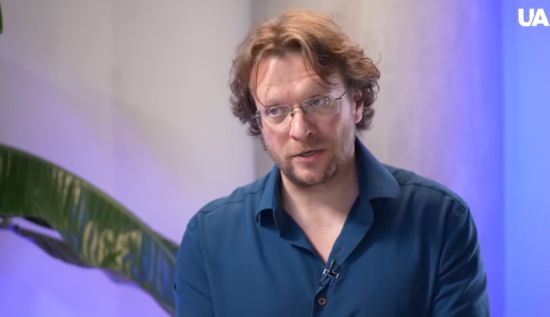
Read the FULL article by Volodymyr Kuznetsov, communications specialist, expert at the United Ukraine Think Tank on the Gaze.
Ukraine’s gaming industry did not emerge overnight. As Volodymyr Kuznetsov notes, the country’s first commercial video game — Admiral Sea Battles — was released back in 1993 by the studio Meridian’93. Since then, Ukraine has developed one of Eastern Europe’s largest gaming ecosystems, combining AAA developers, outsourcing companies, and a growing independent scene.
Today, the industry employs around 20,000 people, while nearly 90% of Ukrainian studios remain self-funded — an impressive figure for a sector operating with limited state support compared to countries such as Poland or France.
Yet for decades, Ukrainian developers often remained invisible within the global gaming landscape. Many studios contributed assets, code, and worldbuilding to international franchises without receiving cultural recognition for their work. According to Kuznetsov, Ukrainian creativity frequently disappeared somewhere between development offices in Kyiv and global publishing pipelines dominated by foreign branding.
This invisibility had real consequences. In 2023, the American gaming outlet Game Rant described the S.T.A.L.K.E.R. and Metro franchises as part of a “rich tradition in Russian fiction,” despite both series being created entirely by Ukrainian studios. After criticism, the publication changed the wording to “Eastern European fiction” — but still avoided explicitly calling the franchises Ukrainian.
Kuznetsov argues that this reflects a broader problem: Ukraine produces globally influential cultural products while often remaining absent from their international identity.
No franchise illustrates this paradox more clearly than S.T.A.L.K.E.R.. Developed by Kyiv-based GSC Game World, the original game launched in 2007 and transformed the Chornobyl Exclusion Zone into one of gaming’s most recognizable fictional spaces.
The series shaped the visual language of post-Soviet dystopia and influenced numerous later titles. Yet internationally, Chornobyl was often framed as a generic Soviet or Russian setting rather than part of Ukrainian history and culture.
According to Kuznetsov, the release of S.T.A.L.K.E.R. 2: Heart of Chornobyl in November 2024 marked an important shift. The game surpassed one million downloads and more than 117,000 concurrent players within 48 hours. Within a week, sales exceeded 1.5 million copies, generating an estimated $70 million in Steam revenue alone. The United States became the largest market, while Ukraine ranked second.
At the same time, a new generation of smaller Ukrainian developers began creating projects where Ukrainian identity was no longer hidden beneath universal themes.
One of the most striking examples is Famine Way by the Kyiv studio STELLARIUM.gaming. Set during the Holodomor of 1932–1933, the game follows a young girl searching for her family in a devastated Ukrainian village. The developers intentionally avoided dialogue and explicit narration, allowing the tragedy to emerge through atmosphere, visuals, and silence.
The full-scale Russian invasion of 2022 accelerated this transformation even further. Developers began creating games directly inspired by wartime experiences — sometimes while working from bomb shelters or serving in the military themselves.
Hollow Home by Twigames became one of the most recognized examples. Inspired by the siege of Mariupol, the game follows a teenager attempting to survive the destruction of his hometown. It later won two awards at Indie Cup Ukraine 2023.
Other projects, such as Ukraine War Stories by Starni Games and What’s Up in Kharkiv Bomb Shelter by Daria Selishcheva, blurred the line between entertainment and wartime documentation. Kuznetsov describes these games less as commercial products and more as forms of interactive testimony capable of reaching audiences beyond traditional journalism.
Beyond contemporary war narratives, Ukrainian developers are also reclaiming deeper historical themes.
Wild Field: Odesa places Ukrainian Cossacks at the center of the founding story of Odesa — directly challenging Russian historical narratives portraying the city as inherently Russian. Kuznetsov argues that such projects function not only as entertainment, but as cultural counterarguments embedded within interactive media.
Even GSC Game World explored similar themes decades earlier. Their strategy title Cossacks: European Wars initially focused heavily on Ukrainian history before broadening into a wider multinational framework for commercial reasons.
According to Kuznetsov, this dilemma — whether to universalize Ukrainian stories for global markets or preserve their national specificity — has long shaped the country’s cultural industries.
Today, however, Ukraine’s gaming sector increasingly treats authorship itself as a strategic issue. Hundreds of thousands of players worldwide are already exploring Ukrainian-designed worlds, surviving Ukrainian-imagined sieges, and experiencing narratives shaped by Ukrainian history and trauma.
But soft power only works, Kuznetsov argues, when audiences know where these stories come from.
Countries such as South Korea and Poland successfully transformed gaming into instruments of cultural diplomacy through visible national branding and institutional support. Ukraine already possesses the talent, global audience, and lived experience that resonate internationally. What remains, he suggests, is ensuring that Ukrainian authorship is no longer invisible.
“Ukraine’s game developers have survived a war to make their games,” Kuznetsov concludes. “The least the world can do is learn where those games come from.”
Read the FULL article on the Gaze: Ukraine’s Video Game Industry Is a Soft Power Superweapon
Read also: Reconstruction of Ukraine: Where European and American Companies Can Earn Billions Right Now