Yesterday at 19:21

While the world watches escalation, Moscow and Tehran are quietly building a long-term economic axis
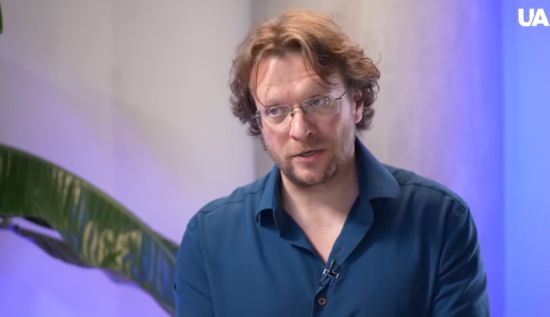
While global attention remains focused on missile strikes in the Middle East and new санкції against Russia, a deeper structural process is unfolding beneath the surface. As Anton Kuchukhidze explains, Moscow and Iran are quietly building a long-term trade and geopolitical axis that extends far beyond immediate military cooperation.
Read more in the article by Anton Kuchukhidze, co-founder of the United Ukraine think tank, international relations scholar.
At the center of this effort is the International North–South Transport Corridor (INSTC)—a 7,200-kilometer network designed to connect Russia with the Persian Gulf and India via the Caspian region, the Caucasus, and Central Asia. Although the project dates back to 2000, it remained largely dormant for years due to sanctions on Iran and Russia’s previous integration into Western markets. According to Kuchukhidze, the turning point came after 2022, when Moscow began actively redirecting its economic and logistical strategy toward non-Western partners.
The corridor is not merely an infrastructure initiative. Kuchukhidze notes that it reflects a broader ambition to construct an alternative economic space—a “macroregion” linking Russia with parts of the Global South through trade, finance, and logistics. In this framework, Russia seeks to reposition itself at the center of a Eurasian network that operates increasingly independently of Western systems.
A key dimension of this cooperation is sanctions circumvention. Russian companies have expanded their presence in Iranian free economic zones, such as the port of Anzali, where regulatory flexibility and tax incentives create favorable conditions for trade outside Western oversight. At the same time, institutional steps—such as the free trade agreement between the Eurasian Economic Union and Iran—are further integrating the two economies.
Trade volumes between Russia and Iran have grown steadily, and new mechanisms, including joint shipping and logistics consortia, are being established to increase cargo flows through the Caspian Sea. As Kuchukhidze emphasizes, these developments are not short-term adjustments but part of a long-term strategy aimed at reducing vulnerability to sanctions and reshaping global trade routes.
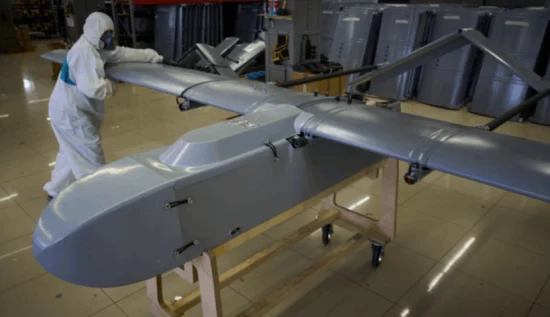
At the same time, economic cooperation is closely intertwined with military and technological ties. Iran has supplied Russia with drones and other military equipment, while Moscow has supported Tehran’s space and technological capabilities. This взаимозв’язок between economic and security cooperation underscores the depth of the partnership.
Kuchukhidze concludes that the INSTC should be understood as more than a transport corridor. It represents the economic backbone of a broader strategic alignment between Russia and Iran—one designed to endure beyond current conflicts and gradually alter the balance of power within the global system.
Read the FULL article on The Gaze: Russia and Iran Are Building a Trade Axis to Outlast Any War
Read also: Media Trust Has Hit Rock Bottom: What Does it Mean for Democracy?