Yesterday at 20:05

The Polish president’s decision to veto the law on protections for Ukrainians risks undermining trust between Warsaw and Kyiv, ultimately playing into Moscow’s hands.
The move by newly elected President Karol Nawrocki came as a surprise and at the same time signaled a broader shift in the political atmosphere between the two countries.
This issue is not limited to financial support or access to Poland’s healthcare system for Ukrainians under temporary protection. It raises a deeper strategic question: can Poland remain a reliable partner for Ukraine during wartime, especially as Moscow seeks to exploit divisions among Kyiv’s allies?
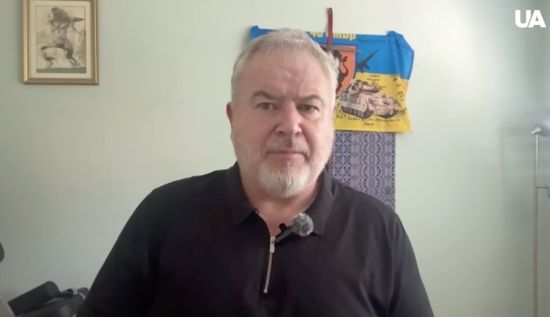
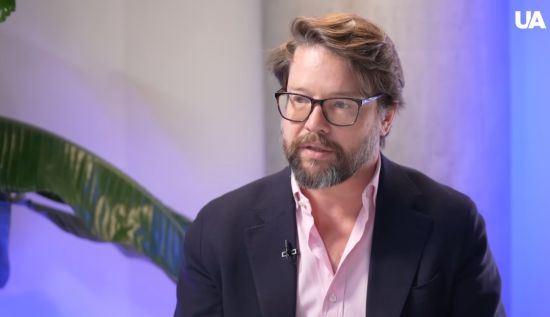
Read more about this in the article by Bohdan Popov, Head of Digital at the United Ukraine Think Tank, communications specialist and public figure.
Firstly, Popov informs that the vetoed legislation would have extended temporary protection for Ukrainians in Poland until March 2026 and specified rules for receiving child benefits. For nearly 900,000 Ukrainians currently under protection, it would have provided important safeguards against social challenges. Instead, President Karol Nawrocki ruled that such guarantees should apply only to those formally employed in Poland or running businesses there.
As a result, many Ukrainian families—especially mothers with children, students, and people with chronic illnesses who cannot work—lose access to assistance. The veto also disrupts funding for several key projects supported by Poland. Inevitably, this step is seen less as a pursuit of “social justice,” as the president claims, and more as a politically driven decision.
Secondly, the author argues that Kyiv has consistently shown its willingness to settle disputes with Warsaw, ranging from agricultural trade to the rights of labor migrants. Ukraine has even taken politically difficult steps at home to preserve strategic unity with Poland. Against this backdrop, the presidential veto appears unjustified and raises doubts: is it really about economic concerns, or rather a political calculation?
Ukraine has already gone to great lengths to avoid friction—accepting mechanisms to regulate agricultural exports, cooperating on migration policy, and considering Polish interests in its talks with the EU. In this light, Warsaw’s refusal to extend assistance seems irrational and is instead viewed as a move that heightens tensions to the advantage of third parties.
Thirdly, the expert explains that official figures show that about 1.5 million Ukrainians currently reside in Poland, with more than 700,000 legally employed. The president’s veto will primarily hit the most vulnerable—those without a Polish employer or working remotely for Ukrainian companies. Beyond creating social strain, this decision risks damaging Poland’s reputation as Ukraine’s key rear base of support in the early years of the war.
Equally troubling is the politicization of historical issues. Proposals to “equate Bandera symbols with Nazi and communist symbols” look less like sound state policy and more like concessions to the far right. For Ukrainians, such rhetoric is not only offensive but unacceptable, as it is seen as an attempt to rewrite history and shift responsibility onto the victim of aggression.
Finally, Popov summarizes that President Nawrocki’s veto is less about social justice and more about sending a political message. It affects not only Ukrainians living in Poland but also the broader principle of Polish-Ukrainian solidarity. Since Kyiv has met all reasonable conditions to maintain the partnership, the veto appears contrived.
The repercussions are significant: it weakens Warsaw’s standing within the EU, erodes Kyiv’s trust in Polish policy, and creates a vacuum that Moscow can exploit. For the Kremlin, every fracture in Ukraine-Poland relations is an opportunity to advance its strategy. Consequently, the issue extends beyond financial support or social guarantees—it concerns Poland’s capacity to resist manipulation and act in the shared strategic interests of both nations.
Read the full article by Bohdan Popov on The Gaze: Nawrocki Blocks Aid Law, Putting Ukrainians at Risk and Eroding Trust With Kyiv
Read also: Why does China increase the supply of dual-use goods to Russia?