Yesterday at 22:17

The Russian-Belarusian military exercises “Zapad-2025” have forced NATO to accelerate a shift from reactive defense to preemptive containment along its Eastern Flank. The scale and content of the drills — including missile forces, strategic aviation, drones, and information warfare — confirmed that Russia is testing not only military readiness, but political response thresholds.
NATO’s answer has already materialized through reinforced air and naval patrols, higher combat readiness in Poland and the Baltic states, and the launch of Operation “Eastern Sentry.” Yet these measures also exposed a structural reality: without Ukraine, the Eastern Flank remains strategically shallow.
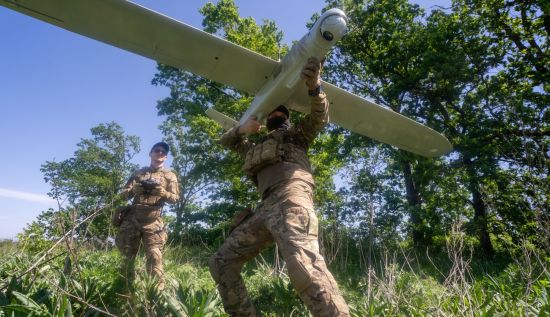
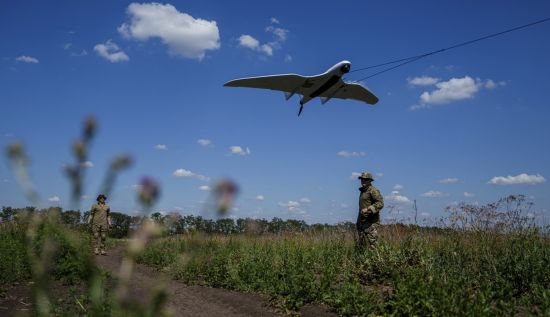
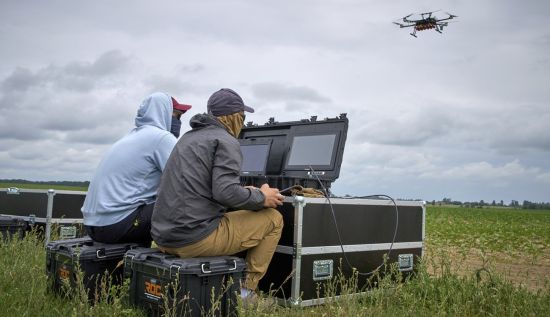
Ukraine contributes something no NATO member can replicate — three years of real-world experience in modern hybrid warfare. From counter-drone defense and airspace monitoring to cyber resilience and rapid battlefield adaptation, Ukrainian practices directly address the very threats demonstrated during “Zapad-2025.” This experience is increasingly relevant for defending NATO airspace, ports, energy infrastructure, and logistics corridors against gray-zone aggression.
Beyond experience, Ukraine is becoming a logistical and industrial multiplier. Its defense industry, repair capacity, and geographic position allow for shorter supply chains, deeper strategic depth, and faster force deployment across the Eastern Flank — from the Baltic region to the Black Sea. Integrating Ukraine into planning and early-warning systems would significantly reduce NATO’s response time to hybrid or aerial provocations.
Politically, Ukraine’s inclusion strengthens deterrence. It signals that NATO’s security architecture is built around long-term containment, not episodic reactions. At the same time, it limits Moscow’s ability to exploit legal and operational gray zones through drone incursions, airspace violations, or information pressure.
NATO’s evolving Eastern Flank posture already combines speed, presence, and doctrinal revision. Ukraine completes this architecture — as a source of combat-tested solutions, logistical depth, and strategic credibility. Without Kyiv’s integration, gaps will remain that Russia will continue to probe.
Read the full analysis by Anton Kuchukhidze, expert at the United Ukraine Think Tank.