Yesterday at 20:15

The global security architecture is shifting. From the historic fall of Viktor Orbán in Hungary to Donald Trump’s transactional ultimatum to NATO, the “old world” is fading.
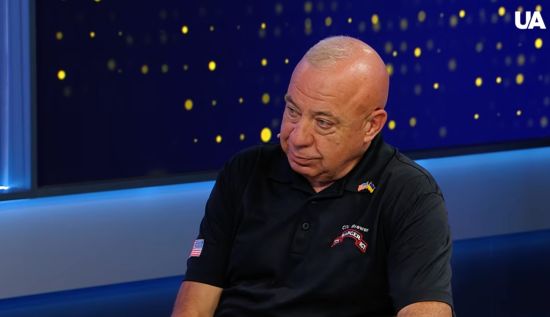
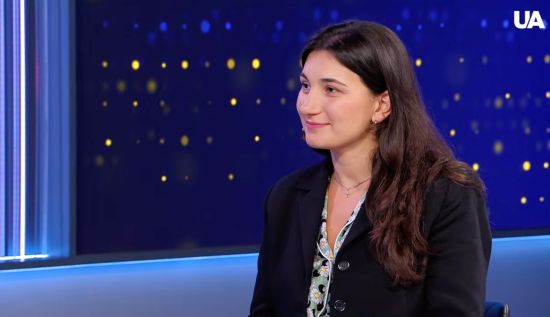
In this exclusive interview, we are joined by Colonel Taras Berezovets. A former prominent political consultant who joined the Armed Forces of Ukraine at the start of the full-scale invasion, Colonel Berezovets now brings a unique blend of strategic military experience and geopolitical insight.
— The Hungarian opposition leader Péter Magyar has won an overwhelming constitutional majority—138 parliamentary seats, if I’m not mistaken. Does this mean that the Russian lobby in the European Union and NATO has just disappeared?
— Well, thank you for this question. I think everybody is really curious about, first of all, the heritage of Viktor Orbán and his government, since he ruled the country for an unbelievable 16 years. We can definitely compare this heritage with Angela Merkel, who was Chancellor of Germany for roughly the same period, and whose legacy is now also being criticized.
Orbán, ironically, was first elected on anti-corruption slogans and was strongly in favor of European integration. At one point, the Visegrád Group—Czech Republic, Slovakia, Poland, and Hungary—was a driving force of Euro-Atlantic integration and support for Ukraine. But over time, he evolved from a figure seen as a hope for democracy into one of the most controversial politicians in Europe. His inner circle—his father, son-in-law, and close associates—became some of the wealthiest individuals in Hungary, raising many questions for anti-corruption bodies.
— Thank you for that detailed answer. But help me understand—this is a victory, but Magyar is an ambitious figure who was once part of Orbán’s system. What should Ukraine expect? A reliable partner or just a reshaped Orbán? Should expectations be high, low, or nonexistent?
— First of all, Volodymyr Zelenskyy became a central figure in Hungarian elections, largely due to Orbán portraying him as an adversary. Ukraine had no role in these elections—this was a narrative driven by Orbán and his political consultants. Now, thanks to Hungarian democracy, things are changing, but we should remain realistic.
The new prime minister will act primarily in Hungary’s national interest. His policies may sometimes align with Ukraine’s, sometimes not. However, he has signaled a return to a European path and stated he will not block future EU financial aid packages for Ukraine. He is also likely to rebuild relations with Poland and Brussels.
Still, we should not label him as pro-Ukrainian or even fully pro-European—he is pro-Hungarian.
Ukraine’s task is to rebuild a strategic partnership with Hungary as it existed before Orbán’s era.
— While Budapest celebrates, clouds gather over Brussels. If Hungary moves closer to Ukraine but the United States—our key ally—issues ultimatums, who becomes the guarantor of European security? For example, Donald Trump has effectively suggested NATO allies must support U.S. actions in the Middle East or risk losing American protection. What happens then?
— Trump has had close ties with several right-wing European politicians, including Orbán. But U.S. interests are currently focused on the Middle East. As the backbone of NATO, the U.S. can request support from allies in other conflicts. Ukraine has already demonstrated itself as a reliable partner—for example, by countering Iranian drones and missiles. However, Ukraine should not choose between the U.S. and Europe. That would be counterproductive. We must support NATO as a whole and cooperate with the U.S. where possible, while recognizing that much American military aid is financed by European taxpayers.
— NATO is a defense alliance, and this war in Iran may not fit that framework. So is Europe ready for strategic autonomy? Can countries like France and Germany replace the United States, or are we seeing NATO fragment?
— This is a complex issue. NATO was created in response to the Soviet threat. The United States remains the strongest military force in the world, and without American presence in Europe, security has never been guaranteed. Historically, U.S. troops in Europe deterred Soviet aggression. Today, American presence still deters Russia. Without it, NATO’s effectiveness would be significantly reduced.
— Well, when we talk about new alliances, possible new alliances—even if NATO is reshaped or reformed—it is important to understand what threats these alliances will be built to defend against. As of 2026, it is Russia that continues to terrorize Ukraine and is also putting pressure on the Baltic states. At the same time, the Iranian regime is blocking the Strait of Hormuz. But maybe there are other threats—did I miss anything?
— Yes, we should also take into account the threat from China, because the communist regime in Beijing presents a clear and present danger to Western democracies. China, Russia, North Korea, and Iran have been doing everything possible to undermine European democracies and their ability to defend themselves. From this perspective, Ukraine has become a crucial partner for both European nations and the United States—first in repelling Russian aggression and now in countering Iranian aggression as well. We should also remember that World War II did not begin solely with Germany’s invasion of Poland; it was preceded by a series of conflicts. Many experts believe that a broader global conflict is already underway, and the war in Ukraine is just one part of it.
— Right. I understand and agree that the United States remains the most formidable force. But what about Turkey? It seems to have assumed a key role in Black Sea security, acting decisively. At the same time, in Northern Europe, initiatives like the UK-led Joint Expeditionary Force can respond quickly without full NATO consensus. Could these “coalitions of the capable,” from Ankara to London, become a real alternative to Brussels?
— From many perspectives, recent decades have shown some fragmentation within NATO. Some member states have played less significant roles or even distanced themselves from certain commitments. However, NATO remains the only alliance capable of guaranteeing security for its members. While fragmentation could eventually lead to new multinational structures, we have so far seen only limited alternatives, such as AUKUS, which focuses on countering threats in the Indo-Pacific region.
— So these alternatives are still limited?
— Yes, and we should be cautious about predicting the emergence of entirely new alliances that could replace NATO. Turkey is indeed a crucial partner for Ukraine and has one of the largest armed forces in Europe. It has demonstrated its capabilities in the past, including direct confrontations with Russia. However, unlike nuclear powers such as the United Kingdom or France, Turkey is not part of the nuclear club, which significantly affects its strategic weight. If more countries, including Turkey, were to acquire nuclear capabilities, that would dramatically change the situation.
— That brings us to another issue—technology. Even if new alliances emerge, modern warfare depends on microchips and advanced components, largely produced in or for the United States. If Washington isolates itself, can Europe sustain this on its own?
— I don’t see a major risk there. Donald Trump, for example, approaches policy from a business perspective. The United States would continue to sell technology globally, even to competitors, because it is economically beneficial. Therefore, Ukraine and Europe are unlikely to face critical shortages of key defense components.
— Let me ask one final thing. After massive Russian losses and Ukraine’s battlefield successes, Ukraine is no longer just a recipient of support—it is a partner. How can Ukraine convert this experience into real influence in the future global security architecture?
— Israel is a country of startups, especially in IT and the military sphere. There’s a strong example explaining why Israeli scientists and engineers became so successful in the early 1990s. At that time, the most successful countries in scientific R&D were the United States and Israel. But Israel had a completely different starting point—it didn’t have the same sophisticated laboratories or financial resources as the U.S. What it had was passion and vision. Its startups literally grew from nothing.
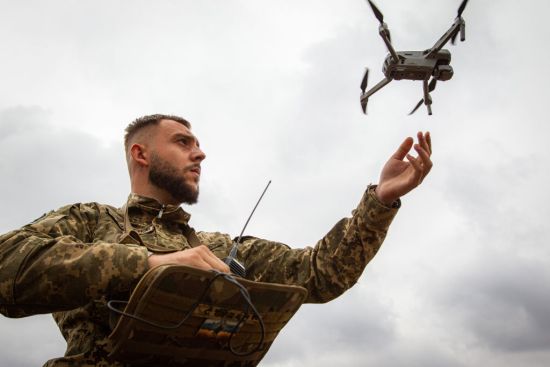
The same example explains why Ukraine has become so successful in military technologies, surprising the world by producing cutting-edge solutions without major funding, traditions, or established systems. First of all, Ukraine has strong education in high-tech and IT. Universities produce thousands of talented engineers every year. Many left the country and succeeded abroad, but many stayed and built an ecosystem that produces drones, missiles, and ground robotic systems based on Ukrainian expertise.
We should also pay attention to Ukrainian military specialists, because their expertise—especially in reconnaissance and modern warfare—is outstanding. One way to preserve this knowledge is to develop private defense companies. Another is to maintain strong funding for the Ukrainian military. If soldiers and officers receive proper salaries and guarantees for their families, many will remain in service even after the war.
Additionally, military companies and international contracts can allow Ukrainian experts to apply their experience globally. This is how Ukraine can convert its battlefield experience into long-term strategic influence and ensure it has a real seat at the table in shaping the future security architecture.
Read also: How the war in the Middle East Affects Oil and Gas Prices