Yesterday at 23:58

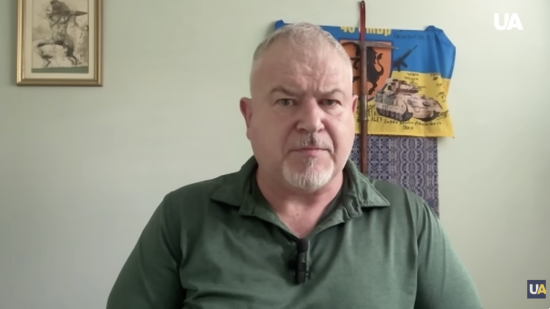
Wall Street financier Ted Kronmiller, who works in climate finance and visited Ukraine at the invitation of Ukrainian partners, joined us.
He stated that the West has significant untapped economic pressure on Russia, including new sanctions, military aid to Ukraine, and pressure on the Kremlin’s economic partners. A key step could be sanctioning oil refineries in China, India, and Turkey that buy Russian oil, which could sharply reduce Russia’s revenues.
He also emphasized the importance of confiscating around $300 billion in frozen Russian assets and transferring them to Ukraine for defense and reconstruction. Russia’s economy is operating at its limits, as military spending creates inflation and depletes resources instead of economic development. Europe can hit Russia harder by limiting access to the gas market and combating the “shadow fleet” transporting Russian oil.
— Tell us a bit more about yourself. Wall Street and climate finance — why, what for, what are you doing?
— Well, Henry, I’m a Wall Street guy. I was on Wall Street for many years and then I went into climate finance. Anybody knows that if you’re in climate finance, everybody in finance thinks you’re a hippie that doesn’t know finance, and everybody in climate thinks you’re a finance guy that doesn’t care about the environment. I worked with a lot of banks and project developers in the EU. Then I got a call — I was in the Swiss Alps — from a Ukrainian telling me that I needed to swiftly get over to Ukraine. And little did I know that was going to be like something out of a 007 movie.
— Thank you. It’s a pleasure and an honor again having you here in Ukraine and in our studio. The first question: Ted, let’s put it straightforward: The West is not powerless, is it?
— The West is not powerless. At the Munich Security Conference, there was broad consensus that the West has untapped economic leverage over Russia. And the West has untapped economic leverage in the form of new sanctions for energy, sanction enforcement, providing military support for Kyiv, and targeting Russia’s economic partners. The West must exploit Russia’s vulnerabilities.
— I like your push, but why has it not happened yet? What are the reasons? Let’s speculate on that. It’s a big machinery — political, military, economic, social. What’s your point? Will it happen, Ted?
— I believe at some point it will, because there is a great deal of political will in Congress. The American people stand firmly with the people of Ukraine, and so does the EU. The reason it hasn’t happened — there are many reasons. I believe the West has been shifting away from Russian resources. There has been a great deal of Russian sabotage and Russian influence in a number of Western arenas. But it can happen and it will happen. And in order to fundamentally change the trajectory of the war, we need indefinite commitment to sanctions.
— And when it happens, it will change the trajectory of the war. How?
— If we have indefinite commitment to sanctions, if we seize and immobilize Russian assets, and if we provide military support for Ukraine, that will tremendously strengthen Ukraine and deal devastating blows to the Kremlin.
— We’ll talk about frozen assets more, but in your previous interviews you mentioned eight key oil refineries in China, India, and Turkey. They still buy Russian oil, right?
— Yes, Henry. As Bill Browder said, to break the Kremlin we must target those eight refineries. They are in China, India, and Turkey.
— How do we do that? Financially?
— Yes. There are financial mechanisms to target those refineries. We can impose sanctions against them. The simple and decisive way is to give them an ultimatum: shift away from Russian oil or face US and EU sanctions. This would hit the backbone of the Kremlin. It could cause a precipitous drop in Russian oil sales by up to 80%. We could have Putin on his knees within six months.
Also, the Chinese National Offshore Oil Corporation and Sinopec must be told in explicit terms that if they buy Russian oil, there will be economic consequences.
— Suppose that happens tomorrow. What will be the effect on the American people?
— There will be alternative sources, but there will also be a lower supply of oil. There could be some shocks from that, but this would greatly strengthen our hand. The more we can degrade Russia’s war funding, the more strength we have.
— Is American society ready for that?
— I believe so. The American people value freedom and the dignity of living freely and having democracy. The more we constrain autocracy and the Kremlin, the better off we are.
— Let’s get back to frozen assets. About 300 billion. Why hasn’t it been confiscated and given to Ukraine?
— A big part of the reason is that the Kremlin has put a great amount of pressure on Belgium and Brussels, and made threats to officials there. Another part is Hungary and Slovakia.
To get it done, they can implement a trade law requiring qualified majority voting. This gets around Hungary or Slovakia blocking the EU. QMV requires 15 EU member states representing 65% of the population to vote in favor. Hungary and Slovakia then have no power over it.
— Could it benefit American society and businesses?
— Greatly. This would provide a great deal of resources to the EU — close to 300 billion in sovereign assets, plus another 25 billion from sanctioned oligarchs. That would go into supporting Ukraine and provide tremendous financial relief for the United States.
— How would you describe the state of the Russian economy now?
— The Kremlin’s economy is flashing red. All industrial activity is going into goods that vanish immediately on the front line instead of long-term investment in infrastructure like highways and schools. The cycle sustains itself short-term at the expense of long-term sustainability.
— Experts say Russia can keep sinking like this for 3–5 years.
— Some experts say that. The International Federation of Economic Development at the Munich Security Conference said the Russian economy is resilient but running up against limitations.
Every injection of liquidity, monetary stimulus, or credit creates demand — but demand bumps into supply constraints: logistical bottlenecks, technological limits, and workforce shortages.
Stimulus raises inflation instead of creating real growth. That is the opposite of what defense spending is intended to do.
— Europe could use this window to help Ukraine. Is Europe doing enough?
— Europe — especially the Nordics and the Baltics — has been strongly supportive. They can still step up.
For example, the G7 price cap puts a $60 limit on Russian oil transported on Western tankers. Russia created a shadow fleet that moves 75% of their oil. That fleet goes to the Baltics. The Baltics can require liability insurance for those tankers. That would deal an immediate blow, because Western insurers would reject them.
— But the shadow fleet works in the shadows. They circumvent rules. Is there another way?
— Insurance measures make it harder but can be circumvented. Harder-to-circumvent measures include targeting Russian gas instead. The EU still imports 20% of its gas from Russia. If the EU blocks market access, Russia has nowhere else to sell — China has said they don’t want more Russian gas.
With qualified majority voting, the EU can block gas imports. At Munich, they committed to banning Russian gas by 2027. That’s hard to circumvent: Russia has no other market and cannot build pipelines in time.
— Let’s go back to America. Does supporting Ukraine benefit America?
— It does. Ukraine has been defending the entire world from the tyranny of Russia for over 10 years. Ukrainian innovations benefit the free world. By degrading Russian military infrastructure, Ukraine is doing a tremendous service to the US.
For example, Russia said if anyone touches Kaliningrad, they would go nuclear. Ukraine essentially said “hold my beer” and knocked the lights out in Kaliningrad — proving it was a paper tiger.
Now in the US, bipartisan support is growing, including the Graham–Blumenthal legislation providing 500% tariffs on countries buying Russian oil, gas, and uranium.
— Will 500% tariffs be a big blow?
— Yes. It would significantly curb purchases of Russian oil, gas, and uranium. There are also secondary sanctions on businesses that work with Russia and restrictions on Russian sovereign transactions.
— What happens if Russia does not suffer a strategic defeat?
— We will be consistently terrorized by their tyranny. Russia has a nebulous constellation of influence. They will continue sabotage in the gray zone — Moldova, US elections, EU elections. Half-measures do not get half-results. We must defeat Putin decisively.
— Could China be emboldened if Russia is not defeated?
— Yes. Russia projects a facade of an “axis of autocrats.” They benefit from the perception of alignment with China and Iran — but it’s a paper tiger. When the US acted in Iran, Russia did nothing.
If the world is distracted by non-existential crises, China could feel empowered to go after Taiwan.
— Let’s talk about why you’re here. The reconstruction of Ukraine — could it become the largest economic project in Europe in 50 years?
— I believe it could — maybe even in a century. I traveled through over 15 countries to present Ukraine as a destination for international capital. I believe we will see a systemic shift in capital flows toward Ukraine.
Ukraine is defending itself and the free world from Russia, and at the same time leapfrogging advanced economies. Every project developer, investor, and policymaker I speak with says: we are innovating forward.
Ukraine is embracing its heritage and culture while rebuilding with sustainable materials and sustainable energy.
Ukraine is doing in months what takes Europeans years. It is a blueprint for the world.
— When I was last in America, many people asked: why should we help Ukraine? It’s far away. They say this is “Biden’s war.” What would you tell Americans?
— The American and Ukrainian people share values: the dignity of freedom and democracy. Ukraine is doing a great service to the entire world.
Ukraine is on the vanguard of the fight between freedom and tyranny. It has succeeded in an epic historic battle between good and evil.
Ukraine has proved it can leverage immense authority with limited resources. The spirit behind that is Volia — the unbreakable spirit of the Ukrainian people, deeply rooted in their culture. It is the ability to transcend obstacles and turn challenges into opportunities.
This spirit transcends geography and brings our human family closer: the US, Ukraine, and the EU. We need Western unity — unity that embraces Ukraine.
Read also: “Like World War I and II combined”: US Senator Tom Brewer shocked by Ukraine war