Today at 01:02

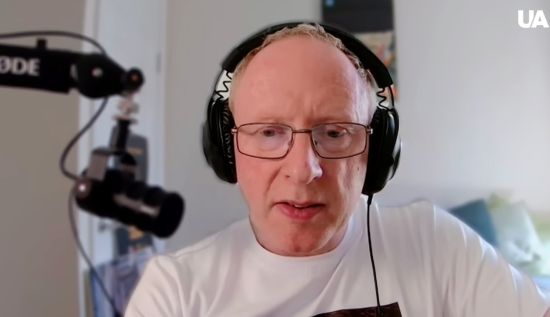
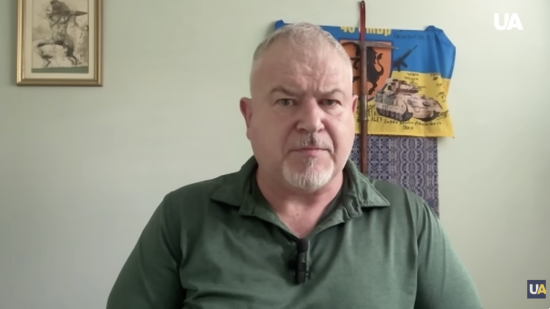
US Senator and combat veteran Tom Brewer shares his vision of the Ukraine war after personal frontline visits. He compares modern battles to the scale of World Wars I and II and notes the resilience of Ukrainian troops facing a much larger army daily. Brewer also explains Russian army weaknesses — logistics problems, command issues, and lack of strong NCO corps.
The conversation covers the role of drones that radically changed modern warfare, the need for greater military aid to Ukraine, and why territorial concessions would only prolong the conflict. The senator emphasizes: just peace is possible only with strong pressure on Russia and reliable security guarantees for Ukraine.
— Your frontline experience in Ukraine — as someone who saw the war not from an office but from the trenches — and also your multiple visits here, I think eight times now… What changed in terms of actual combat on the battlefield? What has impressed you the most from 2022 to today?
— People need to understand that the combat we saw in the American army, and really all NATO forces that were part of ISAF in Afghanistan, was minimal compared to what Ukrainian soldiers are seeing. We had a very structured situation: you lived on combat outposts or camps, you went out for a mission for a day, and then came back and took a break for a day or two. Most engagements were small. Roadside bombs were the most effective in terms of damaging or injuring NATO soldiers.
Coming into the environment I saw on the Eastern Front was a day-and-night difference. This was World War I, World War II–level fighting, day and night, virtually no breaks. It’s impressive that they can maintain that pace and that they can go against an army they were never expected to match — and defeat them in detail on the battlefield.
— I’m sure you had thoughts about what the Russian army actually was before visiting Ukraine. After seeing what you saw, has your attitude changed?
— Those of us who have been in the military for a long time — I go back to the 1970s — trained to fight the battle of the Fulda Gap in Germany. We studied Soviet weapons and tactics and were prepared for that fight.
A lot carried over: weapon systems, tactics. But I think all of us were surprised — whether you go to Ukraine and see it firsthand or read about it — because we saw Russia as a giant modern, sophisticated army, perceived as the number two or number three army in the world.
China complicates the ranking, but China hasn’t fought a war in recent times, so no one knows. Russia, meanwhile, was in Syria, in Chechnya, on battlefields. But if you look closely at what they did in Georgia, Chechnya, and Syria, there were indicators that they weren’t the army they claimed to be. They had flaws, and those flaws appeared in those smaller engagements — and now they’re compounded in Ukraine.
— And these flaws — what are they?
— They have no NCO corps. The American and NATO armies depend on their NCO corps. A sergeant is trained and smart enough to take command, make decisions, and ensure an objective is seized.
Russia has a structure where only officers know what’s going on and have leadership training. If something happens to an officer, or if the officer is weak, the entire unit is immediately in peril.
Add to that their failure in logistics. Some of that is because Ukrainian weapons are striking deeper and disrupting resupply. But Russia has issues across the board: logistics, administration, and unit leadership — none of which can be fixed easily.
They also have a mindset where a subordinate should not know as much as the superior, because he might take the superior’s position. We work hard to find someone better than us, so soldiers always have a good leader. It’s a completely different mindset.
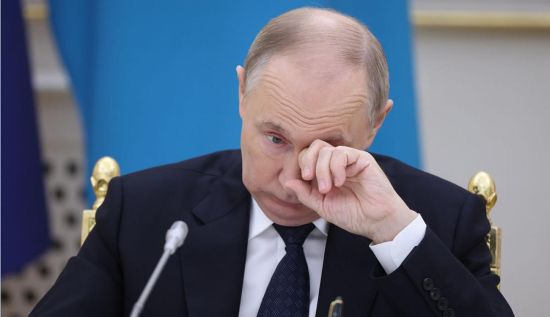
— Right. That’s the rigid system Vladimir Putin built. He prefers hearing what he likes rather than actual intel. Am I wrong?
— Combine that with the fact that if you don’t give him a good report, you might go missing. They’ve built a house of cards, and I don’t see how they can change the situation. They don’t have reserves. Their best and brightest soldiers have been killed. As they become weaker and less effective, Ukraine becomes more effective and is increasingly able to affect Russia’s ability to conduct day-to-day operations.
— As a combat officer and Afghanistan veteran, what technology is currently changing faster than all others? What is the main one?
— Any key NATO country — and likely China — would say drones. Drones have drastically changed the battlefield. Even more impressive is Ukraine’s ability to go from producing 3 million drones a year to a projected 7 million next year.
The United States is now going to Ukraine to learn about drone technology. No one would have thought that in 2022.
This is why so many of us believe it’s foolish not to allow Ukraine into NATO. When this war ends, the best-trained, best-equipped, and most future-prepared army in terms of combat operations will be the Ukrainian army.
— Well, if NATO doesn’t want to accept Ukraine, maybe Ukraine should accept NATO.
— I agree. In Afghanistan, we saw that some NATO countries do not have the will to fight. They are paper tigers. They provide nice vehicles, look good in uniform, but some preferred to sit around and drink cappuccino rather than go out and defeat the enemy.
— Let’s move to U.S. military aid. Some experts say American aid is barely sufficient for Ukraine to survive but not to win. Would you agree?
— I would. We must not pull back intelligence. American intelligence capabilities can change the course of the war if used fully.
The situation has forced NATO and the EU to think about how to protect themselves and organize as a group with less reliance on the United States. I don’t believe the U.S. will ever leave NATO — it’s essential. Some of the rhetoric is chest-pumping and positioning.
— If it were up to you, what critically needed weapons that have not yet been sent should be sent?
— I would pressure the Germans. The Taurus missile is incredibly accurate and can defeat electronic jamming. It’s terrain-following like the Tomahawk. And of course, the Tomahawk itself.
For those of us who care deeply about Ukraine, it’s heartbreaking to know that weapon systems exist that could end the war in weeks. If Ukraine could strike key railheads, bridges, ammunition depots, harbors, refineries — in a coordinated series of strikes — Russia would be forced to end the war. Then comes the challenge of ensuring a just ending with security guarantees.
— It’s painful to hear the war could be stopped in weeks.
— There’s been a process of growing Ukraine’s army and confidence. But I think we’re now prolonging the war unnecessarily.
— A statement: pressure on Ukraine to accept territorial concessions only prolongs the war and doesn’t help end it. Right?
— If it prolongs the war, it’s because Russia hasn’t changed its position.
I firmly believe that Ukrainians have paid a dear price in blood and treasure for their land. You didn’t invade — you were invaded. Rewarding the enemy by giving them the land you paid for is not the right answer.
Instead, you must apply such pressure on Russia — stopping illegal oil shipments, shutting down ports, even airfields — that they eventually say, “We can’t do this anymore.” The resolution should not include giving up your land.
— If Ukraine does not win, will Putin go further?
— There’s nothing to indicate he won’t. He has a burning hatred of Ukraine. A ceasefire would only allow him to reset, rebuild, and try again. A ceasefire must come with security guarantees — real ones backed by American resources and manpower — not just paper.
— If tomorrow you woke up as commander-in-chief of the Ukrainian Armed Forces, what would be your first order?
— I’d assess forces and positions. Inevitably, you need to replicate what happened in the fall of 2022 in Kharkiv — a deep penetration. Russians do not operate well on the run.
If Ukraine had had fuel and logistics, they could have pushed Russia back to the border.
I would create the logistical conditions to penetrate and continue pushing to the Russian border. Then I would prioritize the south — the approaches to Crimea. Crimea is strategic and Ukrainian. It should not be taken off the table.
Americans, if smart, would help secure it long-term. You must have vision to break the stalemate, which only consumes lives. A decisive action that systematically changes the war is the right answer.
Ukraine has done this before — the deep penetration into Kursk is an example. But Ukraine wants Ukrainian ground, not Russian ground. It’s about picking the right point, bypassing defenses, trenches, mines, dragon’s teeth — then shortening the war.
— Last question. This interview — and everything you do for Ukraine — looks like Ukraine’s struggle is personal for you. Why?
— From my first trip to Ukraine, I found a welcoming people — very different from what many Americans imagine. Americans often perceive Ukrainians as a flavor of Russians. They are the opposite: more passion, more heart, down-to-earth, like country folks who welcome you into their home, give you borshch, share their family and community.
You almost feel like you’re back home in the Midwest.
Ukrainians won my heart. I decided this would be my mission. At some point, you can choose to sit by a river and fish — or you can choose a life that helps others and betters the world. That is a richer, purposeful life.
Read also: Russia cannot fight forever, – Interview with Ben Hodges