Today at 17:44

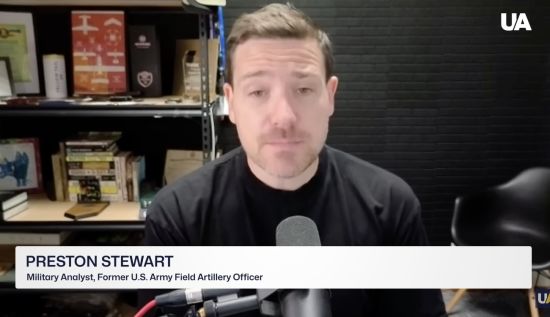
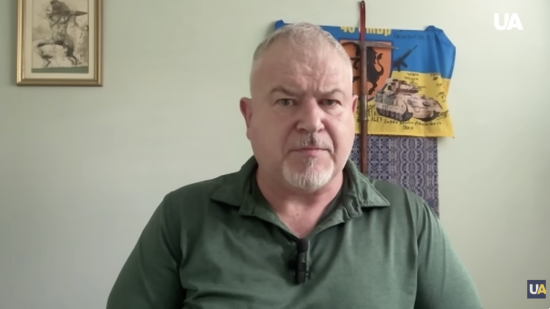
This is a major interview with former U.S. Army field artillery officer and leading military analyst Preston Stewart (@PrestonStewart)! Together we analyze:
· how a cheap FPV drone could destroy an elite $19 million helicopter;
· how clearing over 100 vessels of Russia’s shadow fleet in 10 days strangled the Kremlin’s oil exports;
· what will happen to the frontline when Russian tanks finally stop without fuel.
Watch an in-depth analytical breakdown with a subject-matter expert who has vast experience and has personally been to Ukraine.
— Today we’re joined by someone who explains complex military topics in plain language to millions of views around the world — Preston Stewart, former US Army field artillery officer and military analyst. Preston, great to have you here with us.
— Thank you. Thank you so much. It’s an honor to be here.
— Today, Preston is going to help us figure out how a $400 drone is connected to the Russian army’s retreat across 126 square kilometers in a single week, in between 136 shadow fleet vessels, as well as Russia’s last untouched — touched, as of now — oil refinery, and air defense that the Kremlin keeps hauling across the country in a desperate, if you ask me, attempt to patch one hole at a time in one chain. Let’s take it link by link.
But first things first, Preston — you were recently in Ukraine in person, you saw this war up close. What’s one thing you saw there that changed your perspective of this war, if that was the case?
— It was a great visit. We had an opportunity to spend some time in Odesa, at the Black Sea Security Forum, and then a few days later went to Kherson with a good friend, Ken Harbaugh, and dropped off some supplies at his school, and met with an air defense unit there.
The dichotomy of the two is always striking — going from a beautiful city like Odesa, in the middle of a major international forum, with parties and people flying in from all around the world, to, at night, an air defense unit shooting down Russian drones and missiles — it’s very strange to see. It’s inspiring that life goes on and people are trying their best to have a normal life, day in and day out, but I don’t think you can ever get used to that. I can’t ever get used to that, coming in from time to time.
But the second big one was in Kherson. We had the opportunity to go to a school and drop off some supplies, and I have an eight-year-old daughter, and it hit home for me that the kids were in the basement, because that was the only safe place. Then we went outside to look at the playground — they had a little memorial there for the children who’d been killed in Russian strikes. We were looking at that, and the drone detector went off. It was relatively clear skies, and they were explaining that on clear days, the kids can’t play outside. That was the polar opposite of the conversation I have with my daughter when I take her to school in the morning — when we see clouds in the sky, it’s “oh no, you might not be able to play outside.” To think that children are having the exact opposite experience was pretty impactful.
— Clouds — the plume of smoke here. Ukraine — you’re talking about the fleet, the Black Sea fleet. Ukraine is wrecking the Russian fleet without having one of its own. In 10 days, Ukrainian drones hit 136 vessels of Russia’s shadow fleet — 116, if I’m not mistaken, in the Sea of Azov, and another 20 or so in the Black Sea in a single night: 17 tankers, two gas carriers, and a tugboat. Russia has already halted traffic through the Azov-Don Canal and the Kerch Strait — and all of this for Ukraine without a single classic Ukrainian warship actually involved, simply because Ukraine has none.
Preston, you titled your latest video on the naval operations “Phase Two Just Began.” Why? What’s the meaning of that?
— It sounds like Robert “Madyar” Brovdi, the commander of the Unmanned Systems Forces, is talking about phase two shifting to the Black Sea. Right now, Ukraine has been hitting ships in the Black Sea — that hasn’t stopped — but it looks like that’s going to be the focus, moving away from the Sea of Azov. It’s not unlikely that traffic in the Sea of Azov has just fallen off; that supply route into Crimea, from what we can tell, is just a fraction of what it used to be. It sounds like phase two is going to be focused more on shipping even further out from Crimea, in the Black Sea.
— Let me play devil’s advocate here. Russia is a major continental power, with railroads and pipelines and everything. Refineries burn, yes, but the oil is still flowing. Is the blockade a real thing, or just fancy footage for the news?
— It’s a real thing in Crimea, and it’s been interesting to see how it’s being reported on Russian channels — primarily as an information operation, that it’s not real, that it’s just what you’re seeing on the news. But when you see reports from citizens in Crimea, and from some of the military personnel stationed there, it’s a very real issue. I think Russia is doing a good job of tamping down the panic and the chaos — there’s not a lot of news coming out about how bad it’s actually getting. But there are lines at gas stations, there are military units talking about restrictions on fuel, and even beyond that, the fact that Russia hasn’t been able to stop these strikes is, in itself, significant.
Any peninsula is very challenging to hold, for any military anywhere, ever — it’s harder to hold than a regular piece of terrain, and Russia is experiencing that right now. I don’t know that we’re going to see some major turn in the next couple of days or even weeks, but the situation in Crimea is, no doubt, getting worse for Russia by the day.
— And how Ukraine is doing it, to me, is amazing. On July 15th, a $400 Strike-10 (ph) FPV drone, on a seek-and-destroy mission, caught and destroyed a Russian Mi-28 assault helicopter — worth 15 to 20 million dollars — in midair. That’s a stunning difference right there: a 1-to-47,000 exchange rate.
You’re trained as an artillery officer — can you help us do the math? What does this war cost Russia in just one day? I know it’s speculation, but roughly, can they manage this? Because it’s obviously enormous.
— This is a problem we’re dealing with in the United States right now as well. As hostilities continue in the Middle East around Iran, they’re using very low-cost munitions, and we don’t have great low-cost interceptors quite yet. This is a new style of warfare that I think the entire world is trying to adapt to right now — Ukraine and Russia, of course, are on the very bleeding edge of that, day in and day out.
Long story short, it’s not sustainable over the long term. You can trade 100, 200, probably 3,000 drones before you even come close to the price point of a helicopter. We’re seeing the adaptation there — it’s rare to see helicopter operations anywhere near the front, which is why it’s such a story when a bird got hit a couple of days ago. They’re just not there — it’s too risky.
We’re seeing the same thing, to go back to the conversation about Crimea — the Black Sea Fleet is rarely leaving port, and the reason is this trade-off of low-cost drones for high-cost surface vessels. It’s impacting the war in a way we can see day in and day out — long-term, it’s not sustainable.
Air defense is another great example, and I think we’ll probably get into that in a moment. Nobody has enough air defense systems. Ukraine has found ways to use low-cost drones to eliminate Pantsir, Buk, and other assets — those can’t be built fast enough. Every single one of those that goes down opens a gap for a significant period of time.
— Exactly. And Ukraine produces roughly 10 million drones a year, and it’s aiming — as Zelenskyy recently said — for 20 million. It’s a staggering figure. You once told Ukrainian manufacturers that even keeping it at 15 million would be quite enough, that the world will be lining up for these technologies after the war. But do I see the Pentagon at the end of that line already, Preston?
— I don’t know. I think, in some ways, at the very least, we’re learning. I think one of the big lessons taken away here is not just the technology Ukraine is developing, but also the need to have the manufacturing done in-house. We cannot rely on China — you guys cannot rely on a number of different countries, but we’ll stick with China as a good example. Russia, on the other side, saw their imports and exports largely shut off at the beginning of the war, and had to adapt. There’s a lot of learning happening — we’re seeing the effects.
I think in the United States, our big takeaway is more on the defensive side, or at least it should be — how to shoot down these things, since our adversaries are going to have a lot of these low-cost munitions too. But I think a bigger takeaway, rather than the actual technology, is the mindset shift. It has to be rapid, it has to be innovative, it has to happen with iteration from frontline units. We can’t afford to take six to ten years to build something that looks good on paper but may or may not solve issues on the battlefield. We need to take the model of iterating with soldiers at the front — what works today may not work tomorrow.
— Let me ask you a question, just a thought from the back of my mind: do you think the axis of evil — China — is also teaching, learning, and gathering intel, and that everyone is watching exactly how Ukraine is fighting, and how the United States is reacting to how Ukraine is fighting?
— Absolutely. In fact, we just saw some images come out yesterday that the Syrian government stopped a shipment of munitions moving into Lebanon for Hezbollah — they didn’t cite the origin, but you’d have to assume these probably came via Iran. Either way, these were fiber-optic FPVs. That would have been hard to imagine — just a few years ago, nobody else was even using FPVs as a baseline. Now, to see fiber optics making their way onto that battlefield — 100%, they’re learning, they’re adapting, and I think at times we underestimate that our adversaries are taking these same lessons.
— Let’s move to Russia’s weak points — from burning refineries to retreats on the front lines. My main question, Preston: as an artillery officer, you know war is 90% logistics and careful planning, and maybe 10% actually pulling the trigger. With a critical fuel shortage, and Russian air defense crews rolling out to their positions with nearly empty tanks, and something like minus 126 square kilometers lost in one week for Russia — are all these events intertwined and connected, or am I just engaging in wishful thinking here?
— It seems to be a pretty smart move by Ukraine, over the course of the last couple of years — we get hyperfocused on what happened today or this week, and kind of lose sight of how this has played out over time.
We’ve seen a systemic targeting of Russian air defense by Ukrainian drones. In many cases, these drones were too small for the air defense systems to pick up, or the systems didn’t have a munition capable of shooting them down. What that meant was more and more areas opened up for Ukrainian strikes. A year, two years ago — destroy Russian air defense, that’s good, but no Ukrainian aircraft are going to be flying into those skies. The helicopters are avoiding the front, there are some missiles, no doubt.
What we’ve seen is that Ukraine has been able to adapt with longer-range, more effective drones, in greater quantity. As those air defense systems go down, it’s exponential — there’s a reason we’re seeing more strikes day in and day out, because more areas are becoming susceptible to these attacks.
Now, in terms of what that means at the front — again, the focus is always territory changing five kilometers here, or Kostiantynivka fell or didn’t. But what we’re seeing more and more is that Russia is having a bit of a challenge right now keeping the front line resupplied. That, right out of the gate, shows an impact on offensive operations, and long-term, you just can’t hold terrain — it takes a lot of supplies to keep a military even alive, at distance, in unfriendly territory.
So every one of these refinery strikes has an impact — it builds over time, it gets worse and worse. If exports drop by 1%, by 5%, by 20%, that has a real impact on the war effort. It’s not as tangible as seeing the front lines change day in and day out, but I’d argue, big picture, it has a larger impact.
— I’d argue the same. I hear the voices — skeptics say striking refineries is just a media effect, a picture for the media — Russia patches the holes, sells crude oil, and the front line holds. It is holding, at least for now. One week, 126 kilometers, they say — that’s my point, and their point is: it’s just another good week for Ukraine, that’s all. What would you need to see, over the next month, to say on camera, “Yes, this isn’t just a good week for Ukraine anymore — there’s something else, this is more, this is a collapse of Russian logistics”? What would that sign be?
— I think a good thing to keep an eye on would be the number of offensive operations and attacks — Ukraine does track that day-to-day and week-to-week, and see what that volume looks like. We’ve already seen a strange mix there, where the number of attacks increased in recent months, but they were more one- or two-soldier assaults — kind of an increase, but also not really.
That’s what we’re waiting to see: when frontline soldiers very clearly are having a hard time, because if they can’t get fuel there, then they can’t get medical supplies, they can’t get ammunition — it all snowballs. That’s what we’re really keeping an eye on.
The thing is, that’s such an important intelligence issue that Russia is going to keep it very closely held — very difficult to discern. You have to expect they’re rationing, as we’ve already seen with civilian use of some of these materials before it hits the military. So we’ll probably see additional shortages and queues lined up across portions of Russia, additional fuel rationing that will eventually reach the military, and we’ll start to see a significant slowdown of offensive operations. That’s the path we’re on. Again, I think it’s premature and overly optimistic to talk about a collapse of the Russian front line, but the natural progression of running out of fuel, of not being able to get logistics to the front, is what happens down the road.
— What if I try to push you to an even more premature answer — if we try to speculate and calculate timing? It’s about the money. Oil is the Kremlin’s cash register, the war chest, and contract payments are their only way to recruit soldiers without a new mobilization. They need money. How many months can Russia keep paying for this war and putting out fires at its own refineries at the same time? Because it’s a big thing before it has to choose one or the other, and I don’t see that happening just yet.
— I agree, and it hasn’t happened yet. I want to be careful about not incorrectly estimating Russia’s ability to deal with some of this. If we go back to the beginning of the war, some of these economic sanctions should have shut the country down — we thought they would.
And they’ve adapted — they’ve adapted pretty well, all things considered. I’d like to see more sanctions. You mentioned a minute ago the strikes being “performative” on refineries — one strike on a refinery is performative; we’re not seeing one strike, we’re seeing repeated strikes, day after day after day, and some of these fires burn for a couple of days at a time. That adds up over time.
In terms of how long it’ll take before we see some large-scale Russian collapse, or a major impact on their economy — I think we’ve been too optimistic on that in the past. But there’s no doubt there is a breaking point; every country, every individual has a breaking point. The screws are getting tighter and tighter, but it’d be very hard to predict whether that’s something we’ll see in the next few weeks, months, or whether it could take years.
— I know this is just speculation, Preston, this isn’t real data I’m trying to squeeze out of you — but when there isn’t enough of a resource to go around, someone has to decide who gets it first, at some point. The Russian army is in exactly that position with fuel right now — aviation, armor, air defense, and ammunition trucks are all literally standing in the same line for the same tank, all getting burned on the road in Crimea. Build that line for us, from a Russian headquarters point of view — who gets fuel first, who gets it last? And what exactly will we see on the front line the moment the tanks run dry? Let’s imagine that — no more petrol, almost no fuel for the Kremlin’s war. What happens next? Will the front line collapse immediately after that?
— To extrapolate that out — if there’s no fuel moving at all, the front line will collapse, because you can’t keep the soldiers supplied. In many areas of the front, there’s no local economy that’s going to keep the soldiers functioning, fed, in, say, the Kostiantynivka or Pokrovsk direction. It’s not like they can walk down the street to a store and buy what the Ministry of Defense can no longer bring their way. So when fuel shuts down, that’s a collapse of the front line — they won’t be able to hold, in the near term.
This is an impossible situation that no country ever wants to find itself in — having to make that determination, let alone in the military, of who gets priority. That’s already a challenge in war — you want unlimited resources, but when you have to step back from that and decide whether citizens, or emergency services, get these resources, or the military does, in a time of war, that’s a lose-lose situation. There’s no positive way to do that.
Of course, if Putin and the Kremlin were to choose to prioritize the military, the war would go on longer at the front, and we’d likely see continued Russian advances. If he chooses to keep the citizens happy 100%, you’re going to see a collapse. He has to find a middle ground. What we’re seeing right now are small shortages at the front, and increasing frustration inside Russia. That’s an awful balancing act for anybody to deal with, and that’s what Putin is working through right now.
— The blanket is always too short, just too short. Now I want to talk about the Russian air defense system, and what Ukraine is building against it. Preston, it looks to me — I’m not an expert at all, but it looks like we’re watching a cycle: Ukraine strikes, Russia drags the air defense over to plug the gap where it hurts, Ukraine strikes exactly at the exposed spot right after that. Russia is always playing catch-up in this game. My question: is Ukraine just that fast, or has the Russian system physically stopped being able to keep up with such a pace, if it ever could?
— This was an unfair fight from the start. As soon as Ukraine started developing mass-produced, long-range drones, it very quickly became untenable for Russia. Again, I want to stress this is something most countries around the world are going to be dealing with in the near term.
If you think of the opening phases of the war, Russia had a substantial air defense network, considered one of, if not the most, robust in the world — but they were primarily focused on intercepting long-range missiles, and then aircraft. Then Ukraine started developing these small drones in mass volume, and Russia wasn’t needing to shoot down thousands, or hundreds, of missiles a day — that wasn’t really in the cards, at least for an extended period of time.
Now they have to: these raids, night after night, are three, four, five, six hundred Ukrainian drones that have to be intercepted. The Russian technology, the legacy air defense, wasn’t built for this type of sustained volume — again, to stress, neither is ours, in the United States, which is why I hope we lean heavily on Ukraine for some of this interceptor technology.
That’s what you’re seeing — it’s completely overwhelmed Russian air defense from the opening of the war. They’ve been forced to defend more areas, at a deeper range, and day by day they have less equipment. So even if Ukraine hadn’t destroyed any Russian air defense assets, the increase in range of these Ukrainian drones means Russia has to protect more with less. I think it’s about once a week we see a strike something like 2,000 kilometers inside Russian territory. They just, to be blunt, don’t have enough to cover all of that area, and we’re seeing the effects of it every day.
— You don’t see any system behind that — it couldn’t be a logical system, or some hidden intel we don’t know about — it’s just not enough force and military equipment to cover the whole of Mother Russia? Is that what you’re saying?
— For the most part. Now, Russia is innovating — they’re trying to come up with new systems, and they’ve developed new systems throughout the war, just not in volume. Again, Russia’s weakness here is the size of their territory. There’s too much to protect. They can’t mass all of their air defense in one location and hope to protect everything. We’ve seen day after day, strikes in Crimea, and then, to the north, strikes east of Moscow — it’s too big for them to defend against this current threat. That’s the issue.
Now, with that, Ukraine is gathering intelligence and carrying out very smart strikes each day. Every drone that flies is gathering intel on Russian air defense and electronic warfare — they’re finding those gaps. They’re not just throwing things at the wall hoping a few get through; they’re taking advantage of when those gaps arise, and massing drones through there for maximum effect.
— While Russia still does that — moves its old systems around the map — Ukraine isn’t sitting idle. They’re building their own anti-ballistic capabilities, three of them at once: the Patriot license, Trump promised French licenses for Aster 30 and SCALP missiles, and AASM Hammer bombs, and its own interceptor, Freya, which — with nine partners — is expected to be up and running, hopefully within 12 months. But a license is just a piece of paper, Preston, and a production line is concrete, steel, and people. Can Ukraine’s approach to scaling more or less simple tech, like drone production, actually be applied to these high-tech, hardened, heavy missiles — and where’s the real bottleneck here? Money, components, people — maybe all of it?
— I hope so — not just for Ukraine’s sake, but for all of us. Ballistic missile defense is very expensive, and there’s never enough. We’re seeing that right now — there’s pretty clearly a shortage in Ukraine, we’ve seen in recent days a number of missiles get through, more than usual. But our allies around the world, and the United States right now in the Middle East, need more interceptors — that’s a challenge.
The Patriot license is a step in the right direction — that’s good news — but it’s also something we shouldn’t really plan on having a major impact for a couple of years. On top of that, building anything of that scale in Ukraine comes with significant risk — if Russia were to identify any location in that supply chain, it slows the production timeline of something that already takes too long to build.
So again, the Patriot license — great, it’s a positive step — I don’t think it’s anything anyone should count on in the short term. Ukraine has come up with so many innovative products that were unthinkable just a few years ago. I’m optimistic that will lead to some sort of viable, affordable ballistic missile defense, but that’s a very challenging problem to solve. Fingers crossed.
— Yes, all the fingers I have are crossed, because necessity is the mother of innovation — we don’t have any other choice, if you ask me, but to build these systems out.
Another question: the United States recently struck Iran; you covered that on your channel. Here’s the question people in Ukraine keep asking me, so I’m re-addressing it to you now: interceptors, munitions, and production lines — is that one shared American resource, split between two wars, or do these wars have separate budgets? And if they’re shared, where is Ukraine already feeling that competition — today, let’s put it that way?
— I don’t think you can separate these out entirely. There are contracts in place for what we’re going to sell, and what we’ve manufactured, to our allies — those could be purchased through the PURL program to provide to Ukraine, and I believe those are still ongoing. But we’ve seen a reallocation of priorities over the last couple of years, under this administration, where they’ve deprioritized Ukraine — Taiwan, at one point, as well — to send munitions to different allies.
That’s the issue that’s going to be taking center stage right now. The United States is at war too — those Patriots in the Middle East, in many cases, are used to protect American service members and American bases. I wouldn’t be surprised if, at some level up the chain of command, the decision is made to prioritize the backfill of those before anything makes its way to Europe, through our European allies, and then to Ukraine. I’ve not seen anything concrete yet, but it would make sense that if there’s a shortage, or if we need to reallocate resources, the priority is going to be the United States for those munitions, for a period of time — which again leads to further possible shortages in Ukraine.
— Absolutely understandable — common sense, which is not so common these days. Final question for this lovely interview, Preston, to wrap things up: what’s the very first thing you check every morning to gauge which way this war is tilting?
— Good question. There’s not a single channel or thing I check — there’s a number of what I think are very reliable accounts on Twitter. I open that up and see what my friends have said, the ones staying up overnight. We’ve got some folks in the UK, for instance, that I think are very reliable — they’re already awake, already working, getting after it. I take a look at what they’ve said in the last few hours, and usually, if anything significant has kicked off, they’re on top of it. So I’m sleeping in a little bit, able to piggyback off their hard work in the middle of the night here in the United States. And then, of course, first thing, I jump into a number of Telegram channels and try to understand exactly what happened, in a little more detail.
Read also: Who Will Fight for Europe? The Limits of Conscription in an Age of Long Wars