Today at 01:02

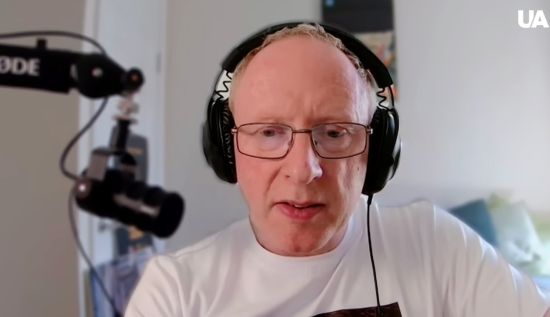
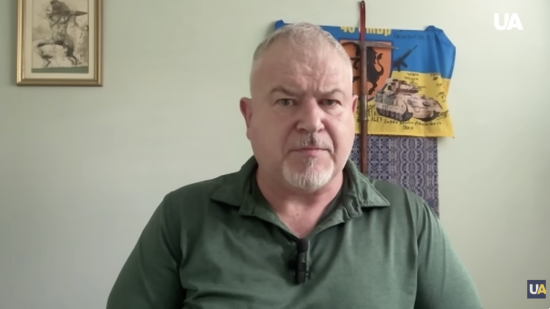
An exclusive interview with Kurt Volker on the new security architecture of 2026. The experienced diplomat criticizes Western hesitation and explains why any negotiations with Putin without real advantage on the battlefield are just paper.
Volker calls for the immediate deployment of a “Coalition of the willing,” the introduction of tough secondary sanctions against Russia’s energy sector, and the removal of any restrictions on long-range strikes by the Ukrainian Armed Forces. Why is the real business of the future in Ukraine, not Russia? A complete analysis of the strategy for victory.
— Maybe this is speculation, but if there is one step the American administration could take to stop this imitation of peace talks — and actually pressure Putin and the Kremlin into real peace talks — what would that step be?
— As your question suggests, diplomacy is only meaningful if it reflects reality. If it doesn’t, then they’re just empty talks, pieces of paper without substance.
So first we need to shape the reality on the ground. There are two essential steps the U.S. and Europe must take:
1. Cut off the Kremlin’s money flow, which comes primarily from oil and gas.
Europe is still spending a lot on Russian energy — or allowing it to be refined in India and then buying it back. It still fills Russia’s war chest.
We must stop this completely:
- The EU should move to zero Russian gas immediately, not in 2027.
- The U.S. should impose secondary sanctions on any global business trading Russian oil and gas — refineries, shadow fleet tankers, financial institutions, everyone involved.
This would hit the Kremlin’s budget very hard.
2. Create certainty for Putin that Western arms to Ukraine will continue without restrictions.
This past year has been full of uncertainty. Biden’s restrictions on long-range U.S. weapons — telling Ukraine not to strike deep inside Russia — are a major mistake.
If the West removes these limits and ensures steady supplies of weapons and ammunition, Ukraine can hit missile factories, drone factories, fuel depots — the critical infrastructure sustaining Russia’s war.
If we do these two things, finances and weapons, it would dramatically change the Kremlin’s calculations.
One more thought about where this is heading:
Ukraine will remain and will be strengthened as a sovereign, independent European democracy with security guarantees, and will join the EU. That is the future.
The only question for the West is:
Do we make that happen faster, saving lives? Or slowly, with more suffering?
If we take the steps I mentioned, it happens faster. If not, it will still happen — but it will take longer and be far more painful.
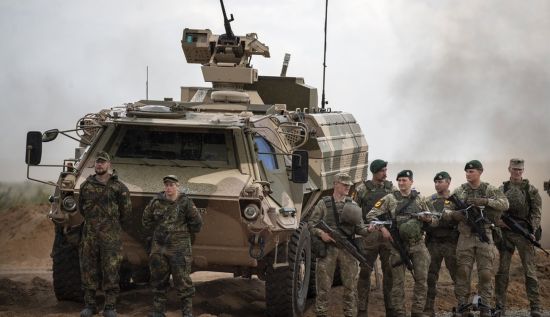
— Thank you for the detailed answer. Many questions arise from that, but let me shift slightly — the “coalition of the willing.” Is it a real driving force without the United States?
— So let’s get that straight: There’s a peace agreement. Russia is now at peace. And in order to prevent them from attacking again, we want to deter them by having a coalition of the willing force deployed in Ukraine with American enabling support and backup. That’s the idea.
Now, several things are wrong with that. It’s a good idea, but there are problems.
One: by conditioning the deployment on having a peace agreement, we’re allowing Putin to decide whether or not there is a force deployed to Ukraine, because all he has to do is say, “Oh, there’s no agreement,” and then we would not deploy.
Second: we should be able to deploy without any agreement from Russia. We should be able to support Ukraine in ways that do not bring these coalition forces into combat but provide meaningful support.
And third: by not sending a coalition force now, while the fighting is going on, we’re basically not conveying the message to Russia that we’re committed to Ukraine and will not allow Ukraine to fail.
Russia sees our hesitation and unwillingness to deploy until there’s a peace agreement and says: “You’re obviously just waiting. Ukraine’s security and prosperity are not a vital interest of the West.”
I believe it is a vital interest of the West. I do not believe the West will ever allow Ukraine to fall.
As a result, we should be sending that signal to Putin now, saying: we are invested in this, we’re not going to let this happen. That would again speed up the end of the war, rather than allowing it to drag out as long as Putin can drag it out.
— Zelenskyy will have to move fast. “Russia wants to make a deal,” Trump said. “Zelenskyy must act or miss an opportunity.” Not a ceasefire — but something else. Trump said this to Reuters. Why is this happening? Does Trump genuinely trust Putin?
— No, I don’t think Trump fully trusts Putin. He’s not controlled by Putin, he’s not naive, and he’s not under Putin’s spell.
But he does want a deal — for two reasons:
1. He wants a peace agreement to end the fighting. He likes dramatic, historic deals. Ending a war fits that desire.
2. He believes that after a peace deal, sanctions could be lifted and he could “do business” with Russia — which he thinks would benefit everyone and make him look successful.
That’s why he avoids putting pressure on Putin. He wants to preserve the possibility of striking a deal later.
But Putin knows this, and he exploits it.
He signals to Trump:
“We can make trillions of dollars together. We just need a little concession…”
So Putin gets Trump to avoid pressure on Russia — and instead pressure Ukraine, because that’s where Trump thinks a deal can happen.
We must make two things clear to Trump and to Americans:
1. Putin will never agree to a real peace deal.
He does not believe in a sovereign Ukraine and will never sign anything that recognizes it.
He is using the “deal” narrative to get the West to back off so he can continue the war.
2. The idea that there is a “pot of gold” in Russia after a peace deal is a fantasy.
Every American business that has tried to profit in Russia has been robbed or pushed out.
Putin will never allow genuine Western investment or profit.
The real opportunities — legal, profitable, long-term — are in Ukraine, not Russia.
That is what Trump, Steve Witkoff, and others must understand:
The business of peace will succeed in Ukraine. It will never succeed in Russia.
Read also: Russian Strike Drones: Why Their Numbers Are Growing So Rapidly — and What This Means for Ukraine