Today at 23:02
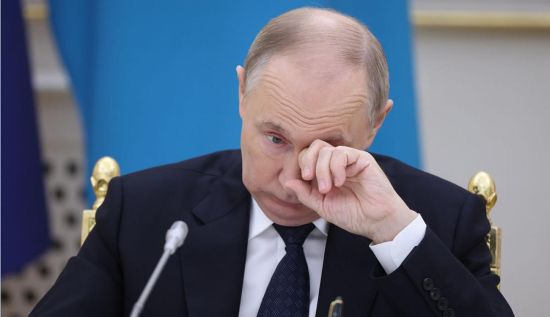
Russian President Vladimir Putin has systematically turned his own interpretation of history into a political weapon to justify Russia’s aggression against Ukraine and build support for the war both domestically and internationally, according to Niels Drost of the Netherlands-based Clingendael Institute.
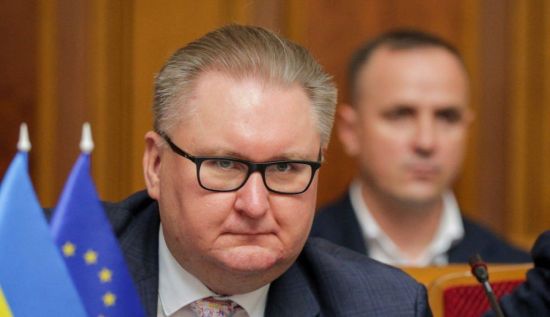
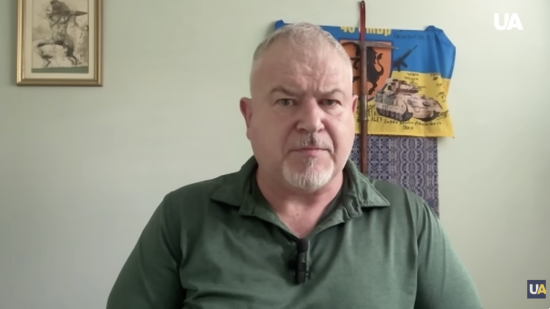
Speaking to Ukrinform in The Hague, Drost argued that Putin relies on a selective reading of the past to claim that Ukraine lacks a legitimate right to exist as an independent state.
“Putin claims that Ukrainians, as ‘Little Russians,’ are one people with Russians through a thousand-year shared history,” Drost said. “He uses his version of the past to argue that much of Ukraine is supposedly historical Russian territory and that Ukraine has no right to exist as a sovereign state.”
According to the researcher, history has become a central component of the Kremlin’s political messaging. By presenting a simplified and selective historical narrative, Putin seeks to legitimize Russian actions and shape perceptions among audiences that may have limited knowledge of Eastern European history.
“History is a powerful weapon,” Drost said. “Putin uses it to mobilize Russian society and create a persuasive narrative for foreign audiences unfamiliar with the region’s past.”
He pointed to Putin’s widely discussed interview with Tucker Carlson, during which the Russian leader spent a significant portion of the conversation outlining his historical interpretation of relations between Russia and Ukraine. Drost noted that such arguments can appear convincing to Western audiences that lack deeper historical context.
The expert emphasized that understanding the Kremlin’s use of history does not mean accepting or legitimizing it. Rather, he argued, understanding these narratives is necessary to effectively counter them.
“We must understand how Putin distorts history and uses it as a weapon,” Drost said. “Understanding is not justification. Without understanding, it is impossible to respond effectively.”
According to him, Putin’s rhetoric evolved over time—from speaking about the “closeness” of Ukrainians and Russians to claiming they are “one people.” These narratives became particularly prominent after Russia’s annexation of Crimea in 2014 and have since become a cornerstone of the Kremlin’s justification for the war.
Drost also warned that Europe faces not only military threats from Russia but a broader campaign of hybrid warfare, including propaganda, disinformation, influence operations, and sabotage activities.
“Putin very pragmatically exploits the weaknesses of others,” he said. “That is why understanding his intentions is critically important for making the right decisions and countering them.”
The researcher argued that many countries in Eastern Europe recognized the dangers posed by Russian revisionism long before the full-scale invasion of Ukraine in 2022, while parts of Western Europe underestimated the seriousness of Putin’s intentions.
He stressed that the historical experiences of countries such as Poland and other states on NATO’s eastern flank offer important lessons for understanding contemporary Russian policy. Drost specifically referenced comments by Polish Foreign Minister Radosław Sikorski on the importance of historical memory in assessing Russia’s actions.
The comments were made during a security conference in The Hague, where discussions focused on European security challenges and the role of younger generations in shaping future responses to geopolitical threats.
Read also: Russia Uses Drones to Pressure NATO and Test the Alliance’s Air Defenses, — Zelenskyy