Today at 01:09

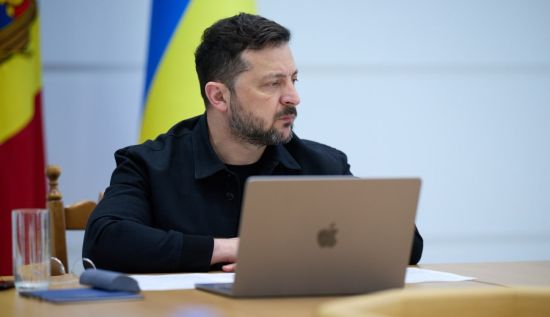
Prime Minister of Slovakia Robert Fico has expressed readiness to meet with President of Ukraine Volodymyr Zelenskyy to discuss oil transit, but proposed holding the meeting in a third country within the European Union.
Fico wrote about this on the social network X, UATV English reports.
“The President of Ukraine proposed a joint meeting with the Slovak side on all aspects of Ukrainian-Slovak cooperation. I accepted this invitation and asked the Office of the Government of the Slovak Republic and the Ministry of Foreign and European Affairs of the Slovak Republic, in cooperation with the Ukrainian side, to find a suitable date for such a meeting. At the same time, I prefer to meet with the President of Ukraine on the territory of one of the EU member states that the President of Ukraine frequently visits,” Fico wrote.
He also said that during a phone call with Zelenskyy the previous day, he requested “information on when and whether oil transit through the territory of Ukraine to Slovakia will be restored.”
“The conversation confirmed that we have different views on the condition of the pipeline… From my discussion with President V. Zelenskyy, I got a clear impression that the Ukrainian side is not interested in restoring oil transit through its territory,” the Slovak prime minister stated.
He added that information from Slovak intelligence services indicates that the pipeline is not damaged and that nothing prevents the transit of oil, while the Ukrainian president insisted that repairs would require considerable time.
Fico recalled that together with Hungarian Prime Minister Viktor Orbán, he had proposed establishing an inspection group composed of experts appointed by the European Commission and EU member states. The group would assess on site the actual technical damage to the Druzhba pipeline or its ability to continue oil transit to Slovakia. According to Fico, the Ukrainian side has so far not allowed either the Slovak ambassador in Kyiv or the EU ambassador to conduct such an inspection.
Orbán, in a video recorded near a refinery on Saturday, claimed that Zelenskyy rejected the joint proposal by Budapest and Bratislava to inspect the pipeline.
“The Ukrainian oil blockade shows that President Zelenskyy will stop at nothing. Starting today, this refinery and other key energy facilities across the country will be jointly protected by soldiers and police officers… Hungary will continue to resist President Zelenskyy’s blackmail and will not abandon its demand to resume oil transit through the Druzhba pipeline,” Orbán said.
Earlier, the European Commission welcomed Orbán’s readiness to accept the results of an inspection of damage to the Druzhba pipeline by a relevant mission initiated by Hungary and Slovakia, although the format of such a mission has not yet been defined.
Following a phone conversation with Fico, Orbán also announced that their countries would establish a joint investigative commission to assess the condition of the pipeline.
Previously, Orbán sent an open letter to Zelenskyy accusing the Ukrainian president of acting against Hungary’s interests.
President of the European Council António Costa and President Zelenskyy agreed that Ukraine would in the coming days assess how much time is needed to repair the Druzhba pipeline damaged by Russia.
Ukraine’s Ministry of Foreign Affairs of Ukraine twice summoned Hungary’s chargé d’affaires over what it described as Hungary’s distortion of Ukraine’s position regarding the Druzhba pipeline and false accusations against Kyiv.
On January 27, Russian forces struck energy infrastructure in the Lviv region. A drone may have hit a section of the pipeline through which Russian oil is supplied to Hungary and Slovakia. Naftogaz confirmed the strike but did not specify the exact location, noting only that it was the 15th attack on its facilities in a month.
Hungary has suspended diesel exports to Ukraine pending the restoration of oil transit. Budapest has also stated that it is considering halting electricity and gas exports to Ukraine if Kyiv does not resume the supply of Russian oil to Hungary via the Druzhba pipeline.