Today at 00:02

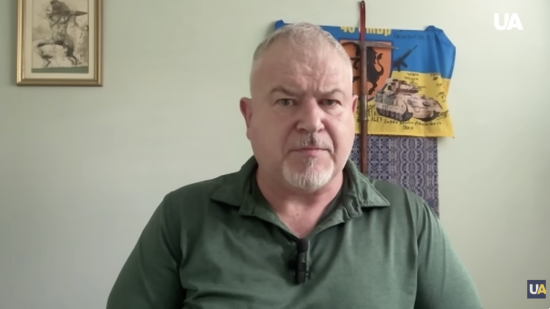
Latvian Chief of Defence, General Kaspars Pudāns, gave an exclusive blitz interview to UATV on the sidelines of the Kyiv Security Forum 2026.
The General officially acknowledged that the era of the West simply lecturing Ukraine is over. Now, Latvian soldiers travel to the Ukrainian front to gain experience, while AFU fighters arrive in Latvia to critique and test NATO defense concepts.
In this episode: why Russia envies Baltic prosperity, how Latvia is preparing its society for resistance, and why nuclear blackmail regarding Kaliningrad is nothing more than a Kremlin bluff to hide its own weakness.
– First of all, General Bon, thank you very much for your time. As the Chief Commander of the Latvian Armed Forces, I know you’ve been asked this many times, but how do you assess—would Russia ever dare to invade the Baltic states?
– I should admit that Russia has always had grievances about us becoming independent, prospering, embracing Western values, and joining NATO and the European Union. I think this is still something they cannot accept. They have a desire to regain their lost sphere of influence—economic, informational, and political. And what we see in Ukraine shows that when they lose influence, they can resort to military tools. However, since regaining our independence, we have continuously developed our defense capabilities and prepared for the possibility of conflict.
In recent years, the mindset has shifted toward understanding that we may have to fight, and we are focusing on strengthening our armed forces, the psychological readiness of our soldiers, and the resilience of our society. Our goal is deterrence, but we also understand that there could be a moment when we must use force.
– Ukraine has not only survived but has developed rapidly in defense technologies and innovation. Do you believe the time will come when the United States will treat Ukraine as a full partner and ally, or does Ukraine need to wait for political changes?
– To your first point, it was only a surprise for Russia. In Latvia, we believed that Ukraine would withstand aggression. I personally remember the first reports of Russian tanks being destroyed, and we understood that Ukraine would hold. What truly impressed us was how quickly Ukraine developed—not only asking for support but demonstrating its own capabilities and sustainability.
During my visit, I saw commanders proud not only of battlefield success but also of achievements in military production. This does not mean support should stop—on the contrary, it should evolve into stronger economic and industrial cooperation.
As for your question about the United States, that is more of a political issue and depends on leadership. But my advice would be to treat Ukraine as an equal partner. That is the essence of democracy—regardless of size or history, partners are treated equally. This is something Russia does not understand.
In Russian alliances, they dominate and eventually betray their partners. So my advice is never to trust Russia.
– Do you believe NATO is learning from Ukraine’s experience, which has been gained at such a high cost?
– I am sure we are learning. The question is the speed of implementation. From Latvia’s perspective, we are very grateful to Ukraine for sharing these lessons. Our soldiers are constantly present in Ukraine—not only supporting but learning and bringing that knowledge back. Soon, Ukrainian soldiers will also train in Latvia, testing our concepts and even criticizing our plans so we can improve. This process is already ongoing.
– Russian propaganda is accusing Latvia and Lithuania of creating tensions around Kaliningrad. Do you respond to that in any way?
– We have been accused of many things recently. This is simply a tactic by Russia to hide its own weaknesses. They cannot effectively counter Ukrainian drones or protect their population, so they look for someone else to blame. We will always be on that list.
At the same time, we see their actions—for example, hybrid pressure on our borders using migration flows. So these accusations are nothing new. They are simply an attempt to divert attention from Russia’s internal problems.
Read also: No Borders in Cyberspace: the Iran War Brought the Digital Front to Europe