Yesterday at 22:06

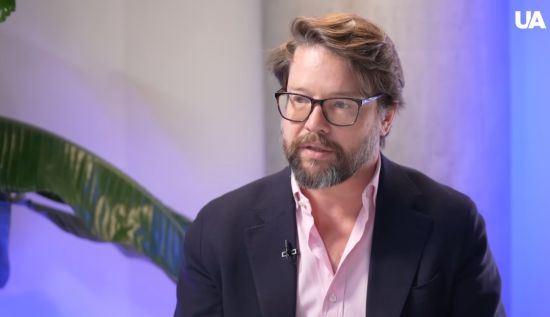
Europe is finally stepping out of Washington’s shadow and taking full financial and strategic responsibility for the security of the continent. On air of UATV English — an exclusive, in-depth interview with the former US Ambassador Extraordinary and Plenipotentiary to Ukraine, world-class diplomat William Taylor. Speaking with host Vladyslav Paraponov, the American expert shared the outcomes of his 14th visit to Ukraine since the beginning of the full-scale invasion.
Ambassador Taylor analyzed in detail the fundamental shifts in the transatlantic security architecture and assessed the change of initiative on the battlefield and in the air.
— Every time we meet for a conversation or an interview, I usually start with a question like this: how was your last visit to Ukraine different compared to the previous ones? We met almost a month ago in Kyiv at the KEF Security Forum, and I’m really interested in hearing what type of conversations you had in Kyiv last time and, again, how it was different from all the previous visits since the full-scale war.
— The last visit where we met almost a month ago now was, I think, my 14th visit since the big war started. As you say, the mood, the circumstances, and the situation on the battlefield change from day to day, from visit to visit. Ukrainians see it every day. Visitors see it once every month or two, sometimes less. So you asked the right question: what was different this time? And there was a difference this time.
I’ve been there when Ukrainians felt great and I’ve been there when Ukrainians felt not so great. This last time, in my experience and conversations, Ukrainians were feeling very good for a couple of reasons. One was, of course, the winter was over. Spring had finally arrived after a horrible winter as cold as anyone can remember. I was in Kyiv in January and February. It was cold, I know, but Ukrainians lived it every day. And Ukrainians lived it under Russian attacks on energy, electricity, and gas. It affected water. It affected elevators. It was a miserable winter and Ukrainians got through it. When I was talking to them three weeks ago, they were very happy that spring had arrived.
But number two, the Ukrainian army was doing very well last month, as all Ukrainians know. I was very eager to tell Americans when I got back from that visit that the Ukrainians took back from Russia more territory than the Russians gained. So the momentum shifted in favor of the Ukrainians and the Ukrainian military, and they were upbeat about that.
And in the air, the Ukrainians had launched more long-range weapons and more long-range strikes into Russia than Russia had sent into Ukraine. Again, a real shift.
The last thing that struck me on that visit — and again I’m very pleased to be able to tell Americans this story — is that the Europeans have finally come up with $106 billion, 90 billion euros. They were able to find a different way to provide this money to Ukraine and this will allow Ukraine breathing room for probably the next two years. The Europeans stepped up and that was, of course, largely due — at least one factor — to Orban losing influence in Hungary.
That contributed to a very positive feeling that the momentum and initiative were on the side of the Ukrainians, not the Russians.
— As you brought it up at the beginning of the conversation, I was going to ask you about that a bit later, but I’ve read your dispatch on the Atlantic Council website and one of the points you’re making there is that Europe has really stepped up. But what would you say to those Ukrainians who are more skeptical in that regard and who don’t see the tendency as optimistic on the part of the Europeans?
— I can understand that. But it does seem to me that the Europeans have been shocked by a couple of things.
One was, of course, the big invasion of Ukraine — what Putin decided in February of 2022. He shocked everyone. He shocked Europeans. He shocked Americans. He shocked Ukrainians. Probably shocked a lot of Russians.
That was a shock and the message to the Europeans was: this is a new ball game. This is a new world.
The Europeans said — and some Americans said the same thing — that they should have seen it earlier. But now they can see clearly that Russia is the problem, the big threat. It’s obviously the big threat to Ukraine. It’s the big threat to Europe and to the United States. That was one big shock to the European system and they have been reacting to that ever since.
But there was a second shock that prompted the Europeans to take some steps they hadn’t taken before. And that was the crazy threat President Trump made against Greenland. When President Trump apparently seriously threatened to take Greenland, that was a shock to Europe as well.
So the first shock was: Russia is the problem and a major threat. The second shock was: we can’t count on the United States.
If the president of the United States is seriously thinking about taking territory from a NATO member and a European Union member, then can we count on the Americans? And if the answer is no, then Europe has to step up.
For both of those reasons, I think the Europeans are stepping up. I mentioned that $105 billion loan and I understand there’s another hundred billion after that in the European budget. And we all know there’s $200–300 billion worth of frozen Russian assets in European, American, Japanese, and other banks.
All of that is to say that the Europeans have stepped up and there’s great potential there.
— What about the Iran war, and also, you mentioned Greenland. Don’t you think that those discussions — because at first it was mostly discussions about Greenland on major European and global forums starting from January this year — really shifted attention away from Ukraine? And the question is: how should we get back?
Because I remember quite well that in the last days of last year President Zelenskyy met with President Trump for the first time in their personal relations at Mar-a-Lago. It was a big shift and a major achievement. Expectations were also very high in Ukraine because of that. So the question is how do we get back to that dynamic, at least to the point where Ukrainians were meeting with Americans and everyone expected the next meeting? But right now the negotiations are almost done in their previous form, at least from the Ukrainian perspective. What do you think about that?
— I agree with the Ukrainian perspective. It looks to me like those negotiations — those three-way negotiations the Americans organized last year — that window seems to be closing. That opportunity seems to be fading.
It’s for a couple of reasons you’ve already mentioned. First of all, the Americans seem to only have two people in the whole US government who can negotiate, and it’s Witkoff and Kushner. They were the main negotiators with the Russians and the Ukrainians. And then, as you say, when the Iran issue comes up, it’s the same two people who get involved. It’s also the same two who handle the Gaza negotiations.
It’s inexplicable that the United States only has two negotiators and they’re not even in the State Department. They’re not diplomats.
This is to say that the prospects for that format are dim. Frankly, I don’t have much faith in that format. I don’t think the Americans are neutral in that discussion. Those two negotiators seem — well, they’ve been to Moscow eight or nine times. And do you know how many times they’ve been to Kyiv? Zero.
— As for now, it’s exactly right. I was going to ask you why you think they’re not coming to Kyiv. It’s not an obligatory thing, but just come to Kyiv and actually talk to President Zelenskyy, the administration, the president’s office. It doesn’t force them to do anything on Ukraine’s behalf, but still they haven’t come. Why?
— There is no good answer to that question. They should, of course. If they’re going to organize these negotiations and try to get the Russians to come to the table — and Ukrainians have always been willing to come to the table, the Russians haven’t — then in order to understand the Ukrainian position, those negotiators and other Americans should come to Kyiv.
As you say, they should talk to the president, talk to the negotiating team, talk to the prime minister, talk to the Rada (Parliament), talk to civil society, talk to journalists, talk to people in the streets, go to cafes, have conversations, get to know the country.
They need to understand where this war comes from and what it means. They would understand that this is not just about a small piece of territory. This is about sovereignty. This is about Ukraine’s future.
For these negotiations to get anywhere, those American negotiators need to understand both sides. I don’t have any problem with them going to understand the Russians, but I do have a problem with them only going to Russia and not coming to Ukraine.
And I don’t see that changing for reasons we’ve already discussed. They’ve got the Iran issue, which is still a mess. That negotiation doesn’t seem to be going very well either, but it’s taking up their time.
So then the question comes back to your question about the Europeans. The Europeans are now talking about stepping into these negotiations. Putin made this ridiculous suggestion that Gerhard Schröder should be the negotiator on the European side. Obviously nobody took that seriously.
But the Europeans are thinking about identifying a senior person — maybe a diplomat, maybe a senior government official, maybe a European leader — who could negotiate or bring the parties together.
In other words, while the Americans step back in terms of assistance and negotiations, the Europeans are stepping up in terms of assistance and maybe also in terms of negotiations.
Now, they have a bad history. We all remember the Minsk negotiations and the Normandy format, where the Germans and French tried to make progress and didn’t get anywhere. But maybe they’ve learned from that. Maybe they’ve learned lessons from the Normandy format and understand that pressure on Putin is what matters.
And on that point, Ukrainians are putting pressure on Putin on the ground. We already talked about the air campaign, taking out the shadow fleet, applying sanctions to oil exports. Ukrainians are putting pressure on Putin and that’s what needs to happen to end this war.
— Speaking about European leaders, either from the EU or from EU member states, who do you see — or maybe know — could become that person? Frankly speaking, after the elections in 2024 I expected it might be President Macron because at that time he and President Trump seemed to have a good relationship, especially when President Trump visited Paris as president-elect. But I didn’t see that dynamic continuing. Everyone talks about involving Europeans, but I haven’t seen the right place and time for the Americans to extend that invitation. What do you think in terms of potentially enlarging this negotiation format or maybe creating another one?
— It could indeed be the creation of another format. And I agree with you — it’s probably not President Macron.
There are others who could do this. The president of Finland could be a candidate. Finland knows something about the Russians. Not as much as the Ukrainians do now, but he understands what Ukrainians are up against. He’s also very well respected in the United States. I think President Trump and President Stubb get along fine as well, so that could be a possibility.
But the main point is that the Europeans do need to have a seat at the table.
Their security is directly affected by the Russian invasion of Ukraine. Their security is directly affected by a ceasefire. Their security is directly affected by what backup and what coalition-of-the-willing security guarantees are provided to Ukraine from European nations with support from the United States.
So for all those reasons, the Europeans are involved and should be involved in these negotiations, and they’ve got some good candidates to do that.
— Another interesting question I’d like to discuss with you is that this year both Ukraine and the United States will celebrate two milestones, two anniversaries. At the beginning of July it’s the 250th anniversary of American independence, and later in August, Ukraine will celebrate the 35th anniversary of Ukrainian independence.
I wonder what kind of reflections you have on those dates in terms of foreign policy and bilateral relations as a person who was and is involved in making this bond between Kyiv and Washington stronger and bringing Kyiv closer to Washington and vice versa.
— You’re right. These two anniversaries come this summer.
Americans can learn from Ukrainians about the defense of independence and the defense of freedom. Americans had to fight for our independence against the British, and we’ve had other wars since then and other threats to our nation.
Ukrainians are fighting today for their independence and for their freedom. They represent the best ideals that Americans fought for 250 years ago as well.
Americans should view Ukrainians as an inspiration, as a demonstration that you can’t take freedom for granted. Ukrainians were living their lives and then the Russians launched an unprovoked invasion.
Americans can learn from the fact that Ukrainians didn’t accept that. Ukrainians resisted, pushed the Russians back, and have been fighting incredibly for more than four years. They stopped the Russians and, as we discussed earlier, have begun to shift the initiative. Ukrainians are now on the offensive. They are taking the fight to the Russians and pushing them back little by little.
At the very least, there has been a change in momentum, and Americans on the 250th anniversary of our independence should take inspiration from that.
— I’m always eager to ask you another typical question every time we meet. Ukrainians — the entire society, the army, diplomacy, everyone — are doing everything they can in terms of advocacy abroad, particularly in the United States. But is there something we still haven’t done that we should do? Or maybe there is an aspect that we in Ukraine don’t see as a key factor that could change the status quo, change American policy toward Ukraine, bring American negotiators back to Kyiv to talk directly to President Zelenskyy, or help revive ideas like the drone deal that unfortunately hasn’t been implemented yet.
Is there something we should be doing but are not focusing on right now because we are focused on survival, strategic issues, reconstruction, or domestic policy more and more this year? What do you think?
— I think the Ukrainians, the Ukrainian people, and the Ukrainian government should continue — and I think they’ve already started this — to present Ukraine as a strong and valuable asset. Something valuable for Europe, valuable for NATO, valuable for the United States.
Again, this shift in momentum toward Ukraine being seen, perceived, and recognized as winning, as pushing the Russians back, as succeeding, as being the winner and holding off the Russians — that matters.
You talked about how to get President Trump or the Americans to re-engage. The answer is: keep doing what you’re doing now. Taking back the initiative, demonstrating your capacity and capability on drones in the air, on the ground, at sea, under the sea. Demonstrating your innovation and your society’s determination to win.
Europeans understand that Ukraine is valuable. That’s why they extended an invitation to join the EU.
NATO should recognize that as well, and I think sooner or later it will recognize the value of having Ukraine as part of NATO, just as Finland is part of NATO.
Ukraine would be an even greater contribution. We all know the capabilities the Ukrainian military and armed forces have demonstrated and why that would matter.
The main point is to reinforce not just the perception but the recognition that Ukraine is valuable, that it is an asset, that it contributes to security, contributes to economic development, contributes to defense-industrial capabilities for the West.
Ukraine is no longer simply in the position of asking for this or that. Yes, Ukraine should have Patriots and should have Tomahawks. But it turns out that Ukrainians are also working to provide their own versions of Tomahawks and Patriots and are working with other nations on military intelligence.
I would also say that it’s becoming clearer and clearer — and I think this is important in answer to your question — that Ukraine is confident. Self-confident. Confident in its own capabilities on the military side, on the industrial side, and eventually on the democratic side.
Ukraine is going to have elections after this war is over, and Ukraine does elections well. There will be many people who want to compete in those elections, and that’s what democracies are about. That’s what Ukraine is fighting for.
So I think the recognition that Ukraine can contribute — the recognition that it is an asset, that it is valuable, and that Europe and the United States need it — when that becomes fully clear, all the support will continue to come.
Read also: How Ukrainian Drones Are Systematically Destroying Russia’s Oil Refining Sector