Yesterday at 20:01

By lifting sanctions on Belarus in exchange for piecemeal releases of political prisoners, the Trump administration is creating a reliable rear for Russia to support its war economy
Every selective easing of pressure on Belarus automatically creates a new rear for Russia to bypass restrictions. This pattern is not a theoretical construct, but a confirmed practice recorded by both European regulators and analytical centers on both sides of the Atlantic.
The close integration of the two economies turns any sanctions loophole regarding Minsk into a ready-made channel for Moscow.
Starting from September 2025, the Trump administration has been systematically easing restrictions against the Belarusian regime. On September 11, OFAC issued a general license that allowed transactions with the state airline Belavia.
On November 4, the U.S. Treasury officially removed Belavia from the SDN list. In December, OFAC authorized transactions with the potash companies Belaruskali, the Belarusian Potash Company, and Agrorozkvit. And on March 19, 2026, the United States lifted the remaining sanctions on the potash sector and financial institutions of Belarus after the release of 250 political prisoners. Each step was presented as a humanitarian gesture or an element of ‘normalization,’ but the cumulative effect of these decisions has much broader consequences than the bilateral relations between Washington and Minsk.
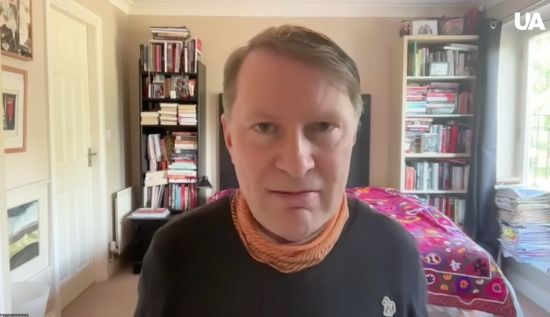
Read the FULL analysis by Bohdan Popov, Head of Digital at the United Ukraine Think Tank, communications specialist and public figure.
As Bohdan Popov argues, the gradual easing of sanctions on Belarus by the United States is producing consequences that go far beyond humanitarian signaling. In practice, each selective concession opens additional space for Russia to circumvent restrictions and sustain its war economy. According to Popov, this is not a theoretical risk but an established pattern confirmed by European regulators and transatlantic analytical centers: the deep economic integration between Minsk and Moscow means that any loophole for Belarus quickly becomes an operational channel for Russia.
Since September 2025, Washington has taken a series of steps to soften restrictions against the Belarusian regime. On September 11, the Office of Foreign Assets Control issued a general license allowing transactions with the state airline Belavia. By November, Belavia was removed from the sanctions list, and in December additional permissions were granted for transactions with major potash producers such as Belaruskali and the Belarusian Potash Company. On March 19, 2026, the remaining restrictions on the potash sector and parts of the financial system were lifted following the release of political prisoners. While each decision was framed as a humanitarian or normalization measure, Popov emphasizes that their cumulative effect significantly alters the sanctions landscape.
One of the most sensitive areas, he notes, is aviation. After the full-scale invasion of Ukraine, Russia lost direct access to Western aircraft components, maintenance services, and new deliveries from Boeing and Airbus. Investigations by European media indicate that Moscow has nonetheless continued to receive hundreds of millions of euros worth of spare parts through indirect channels. In this context, Belavia has emerged as a potential intermediary. With a fleet that includes American-made aircraft, the easing of restrictions allowed the airline to resume access to spare parts and servicing. Although formal prohibitions remain on using these assets for flights linked to Russia or other sanctioned destinations, Popov suggests that such measures are difficult to enforce in practice and create opportunities for circumvention.
At the same time, the aviation sector represents only the most visible layer of a much broader system. According to data cited by Popov, hundreds of Belarusian enterprises are integrated into Russia’s military-industrial complex. Ukrainian intelligence assessments indicate that a significant share of Belarusian industry is engaged in fulfilling Russian defense orders—from the production of ammunition and missile components to electronics and navigation systems. Previous sanctions introduced by the U.S. Treasury targeted a number of these entities, including major state-owned companies involved in supplying dual-use technologies. However, the gradual easing of restrictions risks undermining this pressure.
Popov also draws attention to the growing divergence between the approaches of Washington and the European Union. While the EU has extended and, in some cases, expanded its sanctions regime against Belarus, the softening of U.S. policy creates gaps that Minsk and Moscow can exploit. As Belarusian opposition leader Sviatlana Tsikhanouskaya has warned, partial lifting of sanctions—particularly in sectors such as potash—may encourage further pressure to weaken European restrictions as well.
In this context, Popov concludes that Belarus risks transforming from an object of sanctions pressure into an instrument for bypassing them. Instead of remaining isolated, it becomes a gray zone within the sanctions regime—an intermediary space where legal and illegal economic flows increasingly overlap. Such a shift, he argues, not only weakens the effectiveness of Western sanctions but also indirectly strengthens Russia’s capacity to sustain its war effort.
Read the FULL article on The Gaze: A Gray Zone: How Russia May Use the Easing of Sanctions Against Minsk
Read also: Did the West Lose the Red Sea and What This Means for the Strait of Hormuz