Today at 13:03

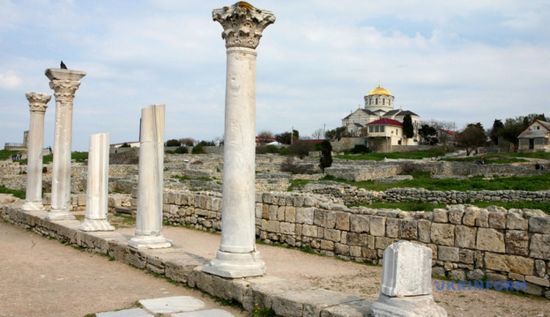
The UNESCO World Heritage Committee has voted to add “Ancient City of Tauric Chersonese and its Chora” to the List of World Heritage in Danger, during its 48th session held in Busan, South Korea, the Ministry of Culture of Ukraine reported, as UATV English informs.
The decision was adopted under Article 11, paragraph 4 of the World Heritage Convention and paragraphs 177–179 of the Operational Guidelines, and constitutes formal international recognition of serious threats to the site’s outstanding universal value stemming from Russia’s occupation of Crimea and Sevastopol.
Ukraine’s Ministry of Culture said the threats include large-scale illegal archaeological excavations, removal of artifacts, unauthorized construction, destruction of archaeological context, and changes to the site’s historic environment and legal protection status. Ukraine also has no access to the site and cannot ensure its proper management, preservation, or monitoring.
“This is an extremely important international decision that officially confirms the threats to the site posed by the temporary Russian occupation of Crimea,” said Ukraine’s Deputy Prime Minister for Humanitarian Policy and Minister of Culture, Tetiana Berezhna, adding that the world can see systematic Russian destruction of Ukrainian cultural heritage.
First Deputy Minister of Culture Ivan Verbytskyi, who leads the Ukrainian delegation in Busan, said the ruling confirms the real condition of the site under occupation and the scale of damage from illegal excavation and construction work, adding that it opens the door to greater international monitoring and coordinated efforts to preserve the site.
The Committee urged all parties to refrain from any actions that could cause further irreversible harm to Chersonesus, its buffer zone, and the surrounding historic landscape. It extended the same call to other Crimean sites on Ukraine’s Tentative List, including the Khan’s Palace in Bakhchysarai, the cave-town landscape of Crimean Gothia, the Crimean Astrophysical Observatory, and the Sudak Fortress complex. The Committee also called for stronger international cooperation to prevent illicit trafficking of cultural property originating from occupied Crimea.
During the session’s open discussion on the state of conservation of Chersonesus, delegations from Poland, the Czech Republic, and Switzerland voiced support for Ukraine, stressing the need to apply the Convention’s mechanisms for enhanced protection of the site.
Lina Doroshenko, Ukraine’s national coordinator for the implementation of the 1954 Hague Convention and its protocols and Ukraine’s expert on the World Heritage Committee, said the ruling followed years of systematic work gathering, verifying, and legally assessing evidence.
“This is not just a decision about the status of a monument. It is a clear international acknowledgment that the actions of the occupying state constitute a systemic threat to Ukrainian cultural heritage,” Doroshenko said.
The Ministry of Culture thanked all those involved in preparing the case, including Ukrainian archaeologists, historians, heritage specialists, human rights defenders, law enforcement, the Ministry of Foreign Affairs, Ukraine’s Permanent Delegation to UNESCO, the National Commission of Ukraine for UNESCO, the Regional Human Rights Center, the Office of the President’s Representative for Crimea, the Security Service of Ukraine, and the Prosecutor General’s Office.
Ukrainian officials stressed that inclusion on the endangered list does not diminish the site’s value or status — rather, it triggers a Convention mechanism designed to bring heightened international attention, monitoring, and support for its preservation. Ukraine said it will continue documenting violations in occupied territories and using all available international legal mechanisms to protect, preserve, and eventually restore its cultural heritage.
Read also: EU Ambassadors Agree on 21st Sanctions Package Against Russia