Today at 14:34

The financing of Russia’s aggression against Ukraine has become the axis around which the entire global trading system is fragmenting
The world trading system of 2025–2026 looks less and less like a single open market and more and more like a mosaic of competing jurisdictions, in which tariffs, sanctions, and export controls have become instruments of foreign policy. For transnational business this means a new reality: sourcing decisions are no longer made solely on price and logistics alone, but also on a map of geopolitical risk.
Three developments reveal the scale of this fragmentation: the transformation of the tariff into a tool of coercion, the growing divergence of Western sanctions regimes, and the reshaping of global energy flows after sanctions against Russian oil companies.
The Ukrainian context here is not merely background as it is precisely the financing of Russia’s war against Ukraine that forms the axis around which the new geography of trade is being built.
Read the FULL article by Ivan Us, PhD in Economics, Associate Expert at the “United Ukraine” Think Tank.
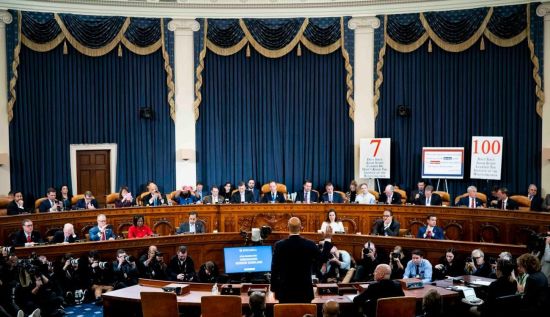
Us argues that the nature of tariffs has fundamentally shifted: where classic tariffs shielded domestic industry, the 2025-era version increasingly serves to punish third countries for their foreign-policy choices. He points to the bipartisan Sanctioning Russia Act of 2025 (S.1241), sponsored by Senators Lindsey Graham and Richard Blumenthal, as the starkest example — its Section 17 would force the U.S. president to impose tariffs of at least 500% on countries that knowingly buy Russian oil, gas, petroleum products, or uranium.
The expert notes that the bill’s sponsors say it has backing from more than 80 senators and is aimed squarely at the top buyers of Russian resources — China, India, and Brazil. He explains that the bill languished in committee while Washington pursued talks with Moscow, but that changed in January 2026 when President Trump signaled approval after meeting with Graham, while asking for more executive flexibility to be added. Us observes that as of mid-2026 the bill still hasn’t reached a final vote, though its passage is widely seen as near-certain once it does.
Us highlights a paradox in trade policy: the same administration pushing punitive tariffs was simultaneously exempting entire categories of goods from its “reciprocal” tariff regime — and both approaches ran into legal trouble. He cites analysis showing that Executive Order 14257 automatically excluded copper, timber, pharmaceuticals, semiconductors, critical minerals, and various energy products, while steel and aluminum fell under a separate regime entirely. He adds that in November 2025 over 200 agricultural goods, from coffee to fertilizer, were added to the exemption list — yet this entire tiered system collapsed within a year when the Supreme Court, in Learning Resources v. Trump on February 20, 2026, ruled 6-3 that the underlying statute, IEEPA, never gave the president tariff-setting power in the first place, since that authority belongs to Congress.
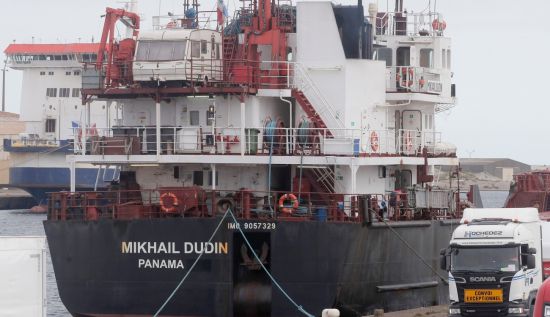
The expert emphasizes that Western sanctions coordination, once fairly unified, has given way to real divergence between the U.S., UK, and EU by 2026. He cites warnings that Washington has scaled back the diplomatic work of aligning its restrictions with allies, leaving multinational companies facing a compliance nightmare. Us points out concrete gaps: the EU has banned imports of petroleum products refined from Russian crude in third countries since January 21, 2026, while the U.S. still allows this under certain conditions. He notes the EU’s approach keeps tightening — the 20th sanctions package on April 23, 2026 brought the “shadow fleet” vessel ban to 632 ships, and the Commission unveiled the outlines of a 21st package on June 9.
Us describes a further layer of complexity in OFAC’s “50% rule,” under which any entity majority-owned in aggregate by sanctioned persons is automatically treated as blocked, even without appearing on the SDN list — a rule that quietly sweeps in a wide web of subsidiaries and joint ventures. He illustrates the scale of this with the October 22, 2025 sanctioning of Rosneft, Lukoil, and dozens of their units, noting that many of their trading and logistics affiliates in the Gulf and Southeast Asia fell under the same blocking purely through ownership ties. As a telling edge case, Us cites India’s Nayara Energy, in which Rosneft’s 49.13% stake keeps it just under the blocking threshold — allowing it to keep processing Russian crude even as buyers grow wary, with the U.S. granting it a separate reprieve while the EU and UK sanctioned it outright.
The expert traces how this fragmentation is reshaping global oil trade. He notes that Rosneft and Lukoil together handle roughly half of Russia’s oil exports, most of which had flowed steadily to Asia since 2022 — a flow thrown into doubt by the October 2025 sanctions and their November 21 wind-down deadline. Us reports that Indian imports of Russian oil dropped sharply as soon as November 2025 after nearly three years of growth, with major refiners starting to verify cargo origins and some state refiners halting purchases from the sanctioned firms altogether. Citing trade data, he notes that by December 2025–February 2026 Russia’s share of India’s oil imports fell below 25% for the first time in two years, with volumes dropping to around 1–1.2 million barrels a day from 1.6–1.8 million previously — a real decline, though not a total cutoff — while Chinese buyers reportedly canceled some shipments too.
Us points to the price gap as the clearest sign of this shift, noting that the spread between Russian Urals crude and Brent widened from about $12 a barrel in October to over $26 by December 2025, with some individual cargo discounts reaching $23.5 a barrel — the widest since March 2023, up from roughly $12–13 before the sanctions.
Taken together, the expert argues, these three trends — tariffs as coercion, diverging sanctions regimes, and shifting energy routes — show that global trade is splitting along geopolitical lines. He concludes that for multinational companies this means shifting focus from cost optimization to managing jurisdictional risk, with core skills now including scrutiny of ownership structures, tracking differences across U.S., EU, and UK regimes, and planning for sudden shifts in both sanctions policy and, as the February Supreme Court ruling showed, judicial rulings that can unravel entire tariff frameworks overnight.
Us stresses that Ukraine sits at the center of this story, not on its margins: the effort to cut off financing for Russia’s war is what turns tariffs into coercive tools, drives each new EU sanctions package, and reshapes the map of oil trade. He concludes that for businesses, analysts, and regulators alike, tracking developments tied to Ukraine isn’t a matter of political preference but a practical necessity for managing risk in an increasingly fragmented global economy.
Read the FULL article on The Gaze: How the Financing of Russia’s War Is Reshaping the Architecture of Global Trade
Read also: How the EU’s €90 Billion Loan Could Reshape Ukraine’s Defense Industry