Today at 11:44
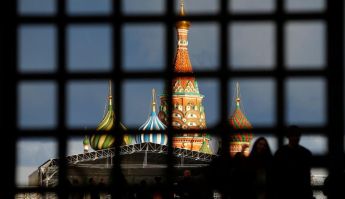
The demographic situation in Ukraine’s temporarily occupied territories is worsening, as Russia continues a deliberate ethnocide policy aimed at erasing Ukrainian identity and replacing the local population with Russians and migrants from Central Asia, the North Caucasus, and other regions, according to the Main Directorate of Intelligence of Ukraine’s Ministry of Defense (HUR), as reported by UATV English.
“The aggressor state Russia has brought the situation of the Ukrainian population in Ukraine’s temporarily occupied territories to catastrophe. Birth rates are extremely low, while mortality is extremely high, and these figures far exceed even the average for Russia itself,” HUR said.
The agency noted that in 2025, natural population growth in occupied Donetsk region stood at –9.9‰ — 2.4 times worse than the overall figure across Russia.
HUR pointed to the scale of demographic loss in eastern Ukraine as particularly telling: over a decade, Donbas’s population has shrunk by nearly a third, falling from roughly 7.37 million people across Donetsk and Luhansk regions combined in 2001 to about 3.75 million by early 2024.
The critical situation in occupied territories, driven by Russia’s genocidal war, is marked by continued outmigration of Ukrainians, HUR explained. Contributing factors include active combat, sharply deteriorating medical and social services, repression, forced Russification, mobilization into the Russian occupation army, and the lack of property rights protections.
At the same time, Russia is actively relocating its own citizens into occupied Ukrainian territory as part of an effort to fully replace the region’s ethnic makeup, using special programs, incentives, financial benefits, and career opportunities to encourage resettlement.
“As of July 2026, 200,000–300,000 ethnic Russians are present in occupied Crimea and Sevastopol. The aggressor’s plans for 2042 include relocating another 130,000 Russians to Sevastopol alone,” the agency said.
As of 2024, occupied parts of Donetsk, Luhansk, Zaporizhzhia, and Kherson regions were home to 200,000 ethnic Russians and roughly 100,000 labor migrants from Central Asia and the Caucasus, with about 10,000 additional “labor migrants” registered in occupied Donetsk region alone since the start of 2026.
HUR explained that most ethnic Russians relocated to occupied Ukrainian territory work within occupation administrations, security and repressive structures, and state-funded institutions and enterprises controlled by occupying authorities. Russia has also sent medical workers, teachers, and construction workers to these areas, while settling large numbers of military pensioners and residents from remote Russian regions in occupied Crimea.
To incentivize relocation, Russia has built a system of substantial financial bonuses. According to HUR, Russians assigned to occupied Ukrainian territory receive double salaries, housing compensation up to 7,210 rubles per day, and per diem payments up to 8,480 rubles — allowing a Russian official on a month-long assignment to earn over 470,000 rubles (more than $5,000), over eight times Russia’s average salary.
Intelligence also noted that occupation programs like “zemsky doctor” and “zemsky teacher” require Russian participants to work in occupied Ukrainian regions for at least five years. Additional incentives include granting land plots and expropriated Ukrainian housing to relocated Russians — effectively legalizing looting in occupied territory, with stolen housing sold through preferential mortgage programs and land given free to participants in the war against Ukraine. In 2025 alone, 4,000 land plots in Crimea were distributed to Russian military personnel from various regions.
HUR added that the Kremlin uses war participants brought to Crimea in propaganda events as part of its broader Russification campaign on the peninsula, and has adopted long-term “development plans” outlining its colonization intentions for occupied territories.
One example cited involves a planning document for Mariupol and Kalmius districts in occupied Donetsk region, which projects the population growing from a current 228,000 to 518,000 by 2035, partly through relocating Russian citizens. Similarly, the Kremlin’s colonization plans for occupied Crimea extend through 2036 and 2042, with a key focus on creating attractive conditions to draw young Russians and skilled professionals to the peninsula.
HUR emphasized that this policy of colonization and Russification carries the hallmarks of a war crime under Article 8, paragraph b, subparagraph viii of the Rome Statute of the International Criminal Court — namely, the transfer by an occupying power of its own civilian population into occupied territory.
As previously reported, HUR has said Russia’s continued policy of ethnocide in occupied Ukrainian territories is reflected in low birth rates, high mortality, and a shifting ethno-national composition of the population.
Read also: Russia Has Not Reduced Drone Attacks but Is Shifting Strike Tactics, Air Force Spokesperson Says