Today at 13:40

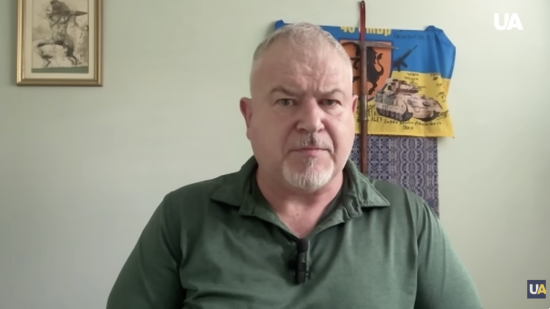
Debunking the Kremlin’s main psychological special operations in Western media, analysis of secret signals from sanctioned Russian oligarchs, and a strategic assessment of the devastating Ukrainian strikes on the Omsk refinery and occupied Crimea: in a new special interview, Henry Keen talks with propaganda‑analytics researcher and creator of the popular YouTube channel @SiliconCurtain Jonathan Fink.
— Let’s talk about the sale of the “pressure doesn’t work” narrative to the West. Just last week, Russia suffered a series of painful economic blows, if you ask me. This week, the European Union is approving a new sanctions package, while Donald Trump is considering backing the late Senator Lindsey Graham’s sanctions bill. Problems are mounting, and it’s just about time for the Kremlin’s go-to (ph) oligarch to appear. And here we go — here comes The Economist with an article, as The Economist puts it, by a major Russian industrialist under Western sanctions, Russian oligarch Andrey Melnichenko, in which Melnichenko does what Russian oligarchs were designed for: playing the Kremlin along, while downplaying the consequences of Ukraine’s recent wins on the battlefield, and its diplomatic wins just as well.
My first question in this regard: Melnichenko argues that pressure and sanctions against Russia only consolidate and strengthen Russia rather than weaken it. I’m not asking whether that’s the case — I’m asking who you think the message is really aimed at, and where it’s most likely to resonate.
— Let’s actually dissect that one and hit it on the head. He’s partly right and partly wrong. Russia is always stronger and weaker than we suppose, and we often get the emphasis wrong on these things. Russia is significantly weaker in that regard — and of course, the attacks we’ve seen in the Sea of Azov, the extraordinary number of Russian maritime vessels supplying Crimea — Russia is in a very precarious position.
But I think he’s right that it isn’t Russia that’s strong, but the regime, necessarily. Obviously the population is compliant toward that regime. I don’t think it will result in change, though. Why?
Because the regime hasn’t reached the maximum dial on repression and terror yet. I don’t think it’s even halfway there in terms of the repressive measures it can impose.
Sanctions work, absolutely, but they may not have the effects we optimistically predict from them. That would be my first point.
Going through Melnichenko’s — from his cosplay, kind of Trotskyist, let’s say, “man of the people” costume, which must cost a lot of money to produce — he looked like some kind of Bolshevik proletarian, but he’s an oligarch playing proletarian. There’s an irony and a trolling in the way he dresses, never mind the words he says. The words he says are an absolute laundry list of Kremlin narratives. I don’t know if we even need to go through them, but it seems to me none of that would have been permitted in a Western outlet unless it had been pre-approved, green-lit, or perhaps he’d even been asked to do this as a favor by, let’s say, individuals in the inner circle of the security services.
— Most likely that is the case. But statistically, the Kremlin shouting that pressure doesn’t work against us — exactly when it does — and threatening escalation if pressure continues, is that still working in terms of Western audiences? Who’s buying that?
— The very fact — I don’t want to necessarily quote this, or push it in the faces of Ukrainians — but I found one of the most interesting comments to come out of this was from Vladimir Milov and Mikhail Naki. You could see they were actually quite upset, because they’d found some of The Economist‘s material quite useful throughout this war — some of its analysis of the impact of sanctions has been quite good. But the fact they would even run a piece like this, so obviously laundering Kremlin narratives, so obviously a piece of informational active measures, is itself incredibly disheartening.
The victory isn’t even in the coercive manipulation that comes from the article — we’ll come to that in a minute, because I think that’s also considerable — but the very fact that Western media still doesn’t understand the game being played is itself a signal of victory for the Kremlin.
— I share the disappointment. I wouldn’t have believed The Economist would ever publicize something like that, but it happened. Going back to this article: the oligarch never once criticizes the war — Melnichenko calls it an invasion. He takes virtually no personal risk. Moreover, he owns EuroChem, a Russian company that produces ammonia, for God’s sake — which happens, by lucky coincidence, to be a raw material used in explosives, meaning he may directly benefit from this massacre. And The Economist just puts it on display — but that’s their own internal moral question.
My question in this regard: the article has been interpreted by some as the voice of Russian elites who are dissatisfied with Kremlin policy. Do you believe that’s the case, and are there any dissatisfied elites at all under Putin? Is that even possible?
— I think there’ll come a point where some of the elites are slightly disappointed at the lower returns on their investment. That point may not even have been reached yet, although a number of oligarchs have already had their fortunes redistributed, let’s say, to those perceived to be more loyal or useful to Putin. There’s a certain amount of anxiety there, for sure.
But we have to ask ourselves not whether the anxiety is there, but whether any of it can turn into political pressure — whether an oligarch could allow himself to publicly vocalize opposition to the regime and survive, let alone retain his businesses. The answer is categorically no. We have to conclude that what we’re seeing here is an approved operation. It’s a pressure valve, designed internally to relieve some of the pressure on the regime — to create a fake plurality, just as in more liberal times [name unclear in audio] did very expertly: create the impression that maybe we’re in a dictatorship, maybe we’re not, maybe oligarchs have some power, maybe they don’t, maybe the SVO (Special Military Operation) is ending sometime soon — so why risk everything mounting a coup? There’s that internal messaging: stick with it.
The external messaging, I think, serves a different purpose — and this is the curious one.
It’s as if: you wouldn’t want Russia to collapse, so we need to self-deter in how we support Ukraine — support survival, but not victory.
There’s that self-deterrence: you won’t like the bear when it’s lots of little bears, let’s say.
On the other hand, the narrative here is also that Russia is not about to collapse and is incredibly strong, and that your sanctions have no effect. There’s this extraordinary contrast, even within the message delivered by the same person, and I think that’s intentional too. You had Peskov, and you had Lavrov, and you had others coming out around the same time, again issuing what could be seen as contradictory statements. This is a psychological effort to flood the zone with alternative versions, to deter the West from action — to make it believe no action is possible, but at the same time, if you do take action, it could be disastrous. This is a classic technique.
I’ve used this example already, so apologies — it’ll appear elsewhere too. If you read the psychological experiments of Pavlov, it’s well known you can imprint certain behaviors on an animal, such as a dog, by mistreating it one day and being kind the next. I think this is the core mechanic of what we’re seeing here, and it all comes down to deterring the West.
Look at the actions. It comes at the same time Russia is scaling up — I don’t use the word “escalation,” because I don’t believe a defender ever escalates in their own defense. Ukraine cannot, by definition, escalate; it can only be more rigorous in defending itself. Russia can theoretically escalate. What we’re seeing now is an acceleration of its brutality — a scaling-up and a change in tactics. In particular, the pattern of firing ballistics — I was in Kyiv just last week, and I was there the night that pattern started to change. They’re attacking during daylight. They’re sending salvos of ballistics several hours apart. It’s pure psychological terror, designed to inflict extraordinary casualties. This is what they’re doing.
You have to ask: why are they also putting out these narratives that try to deter the West? It’s because they don’t want us to protect Ukraine now. They don’t want us to come in, deliver more PAC-3s, help them develop deterrence, or put significant costs on Russia to try to deter this action. They want to be allowed to carry on killing with impunity, and this is all designed to keep the West at bay.
Unfortunately, these so-called journalists at The Economist are playing this game. They are complicit — I would say — in a murder, a slaughter, by propagating these narratives without question.
— Agreed, no doubt about that. A thought crossed my mind recently: the West is used to alternatives — historically, there’s always been a struggle between alternatives, Christianity and capitalism, then socialism and capitalism — and the West is looking for these alternatives within Russia. But what if I say there are none? There is no real opposition in Russia — it’s all faked and staged to look like one. Would you agree?
— I would. I spoke to Mark Feygin last year — he comes closest, perhaps, to being described as a Russian opposition figure, though he wouldn’t describe himself that way. He was very blunt: he said there is no opposition, and we need to stop trying to search for one. Those who call themselves oppositionists are incredibly ineffective.
People will have seen The Economist article. They probably won’t have seen the statements from Ilya Yashin that came out — someone who perhaps comes closest to being described as an opposition figure. He described his FSB captors’ behavior using a phrase that sounded something like “VZhO” (ph) — you’d need a translation there — but he basically said, “Yes, my FSB kidnappers and torturers behaved very kindly toward me.” Extraordinary stuff. No, there is no opposition.
And again, somebody else worth watching: he’s an architect of the regime, an arch-Kremlin propagandist, along with [name unclear in audio], one of the key people in building this alternative-reality dictatorship that Putin rests upon. His name sounded like “Alexander Norov” (ph). I interviewed him about a year and a half ago, and he was very plain. He said the war will continue until someone puts a bullet in Putin’s forehead. That’s it — everything else is ancillary, everything else is just mind games. This will not end unless Putin dies. It’s as simple as that.
It seems this very basic idea hasn’t got through to Western media, and hasn’t got through even to most of the analysts who endlessly pick through the highs and lows, the peaks and troughs, of “do we negotiate with Russia, do we not, are they serious, do they want peace, do they not.”
The answer is very simple: there can be no peace until Putin is gone and the vestiges of his regime are swept away.
I think that’s the simple story here.
— Amen to that. What do you suggest journalists should discuss — is it the forehead, or the nape? Is that where the bullet should be put? Let’s get case-based and pragmatic, shall we. Melnichenko mentions nuclear threats five times in his article — six times, he openly threatens the reader instead of persuading him with facts. This is a contradiction: he says a non-nuclear state can’t win over a nuclear one, which the examples of Afghanistan and Vietnam against the United States disprove. Obviously, someone who has truth on his side, as Melnichenko claims to, doesn’t need to threaten and blackmail the world with nuclear destruction — but he does. What do we do with that, Jonathan? How do we counter this particular threat and propaganda piece?
— I think there’s plenty to say. First of all, this is being underreported, but the fact that China came out, once again, in the same week — and maybe the timing isn’t coincidental — China came out and said, absolutely, under no circumstances should Russia deploy any kind of tactical or strategic nuclear device against Ukraine in the context of this war. I think that’s the real story, but it’s gone underreported, because it’s subtle — maybe not quite as interesting for Western media and analysts to dissect. It’s a non-story around a non-event. The nuclear-coercion stuff works, unfortunately, and it taps into decades of similar threats.
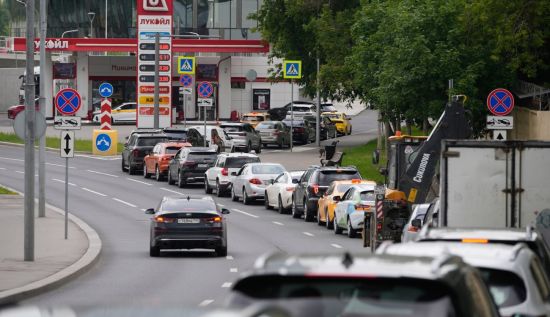
— Nevertheless, protest sentiment inside Russia does appear to be growing — I see that. Even without an organized, genuine opposition movement capable of influencing events within the country, ordinary Russians simply can’t ignore things like fuel shortages and skyrocketing food prices in convenience stores. Social media is flooded with footage of Russians fighting in queues at petrol stations and convenience stores. Does the Western audience see that? Do they see that Melnichenko’s — and the Kremlin’s — message, that pressure doesn’t work when applied to Russia, is crumbling, because of the stalled army on the battlefield, and soaring food and petrol prices? Tensions are mounting — that’s a fact. And the other side of my question: how serious are these tensions?
— If people are only just now paying attention to the fact that Russians will fight in the street when pressure builds up, they haven’t really been paying attention — or maybe their cameras were focused in the wrong place, because I’m guessing you could go to any provincial town, any night of the week, and see people fighting over scarce resources in the same way. The fact there are a few more of these going on changes absolutely nothing. The fact that, at the first sign of pressure, Russians turn on each other and fight in such a — it’s a sort of meme-worthy manner — changes nothing at all.
I don’t think it creates any pressure on the regime whatsoever. In fact, it could act as a bit of an outlet for the regime, because if people are beating each other up, I’d imagine many Russians are sharing these clips and enjoying them, laughing at them in some way. This isn’t concerted political pressure. The minute people start demonstrating with some coherent political message, that’s when the regime pays attention. What are the chances of that happening? In my view, close to zero. I don’t think this is any kind of pressure.
However, it could lead to some interesting developments — not so much concerted political and organizational pressure, but we could start seeing logistics networks breaking down. We could start seeing fuel running out ahead of the harvest. If, as I suspect, unfortunately, Putin avoids assassination going into the autumn — his re-election, and potentially a mass, secret or covert mobilization, which I think is on the cards later this year — we could well see Russia enter the winter in a seriously fuel-deprived state, with more and more of its population pushed into the meat grinder to no real effect, while Ukraine will have further scaled up its drone saturation of the battlefield.
The chances of a scaled-up mobilization achieving anything are even lower than they are now.
This is why I think you could start to see, not so much political pressure, but a real collapse in Russian logistics — start to see shops emptying on their shelves. To those who say this is just fantasy — I’ve been there. I lived through the 1998 financial crisis in St. Petersburg, when I was there, and I know these things can happen very quickly, and they can be extraordinarily dramatic. They could lead to widescale rioting, or at least dislocation. If it turns out to be a cold winter, as the last one was — record cold, as everyone who lived through it in Kyiv knows — and you have a system that’s falling apart, has low maintenance, and is fuel-deprived, a really cold winter could prove lethal for a great number of people.
Unfortunately, this is where I think it’s going to go. This is going to be an extraordinarily difficult couple of months, where Putin lashes out vindictively, where the West is partly deterred, and some of these narratives are partly successful in deterring the West from taking the full measures required against Russia. The longer this carries on, the more systemic the crisis will be when it eventually does hit. But I see this going into the winter, and that potentially will be the straw that breaks the camel’s back.
Until then, Putin has — what do you call it — carte blanche. He has the ability to intensify the repression considerably, and I’d say he’s not even halfway on that dial yet. They’ve put the infrastructure in place to shut down the banks, to shut down financial transactions, to shut down the borders, to shut down intercity travel — they’ve got all of that in place now.
And we’ve seen from these videos — I’ll go on a little here — that there are many Russians who just don’t know what’s going on. They don’t have the power of critical thinking. E
ven when given information, they’ll seek the most absurd interpretations of things to avoid the most obvious one. And those who do understand what’s going on aren’t recording videos and posting them online, because they genuinely fear the consequences.
— You can’t post a video online, but the Omsk refinery, for example — the largest one in Russia, if I’m not mistaken — was struck from a record distance: 2,800 kilometers. For viewers not closely acquainted with Russian geography, could you explain in simple terms why this is important, for both domestic Russian and Western audiences to understand correctly?
— This is an extraordinary technical achievement — an extraordinary military achievement — to strike a target at that distance, with that degree of accuracy, and take out the central processing unit. Just from the standpoint of military technology and logistics, it’s remarkable.
Even more remarkable, I think, is something that hasn’t gotten much traction: over a hundred maritime vessels taken out in around ten days. This is comparable, I’d say, in scale and sophistication, to operations we might have seen in the Second World War — massive, at-scale attrition of logistics, allied with an extraordinarily ambitious strategy to cut off Crimea entirely. This is military action on a historic scale that is barely registering.
You could well see Crimea becoming completely untenable this year. You could see much of the occupying population — the colonist population that’s been bussed in there since 2014 — fleeing back to European Russia, or wherever they came from. This, already, is an extraordinary victory, even before that territory is retaken.
Combine that with the logistics collapse across Russia, and what’s playing out here is a siege of the entire Russian economy, which I think will collapse into a different state. It’s now a quasi-market economy, but it’s increasingly going to slip back into a full Soviet command economy. That is what Ukraine has achieved entirely by itself.
Most Western economists, and people here, will be thinking that once it slips out of the market phase, it will collapse the way our economies do. It won’t. It’ll slip back into a North Korean, Soviet-style, incredibly repressive system, which unfortunately will give it shelf life. We don’t know how long, but I honestly think the winter will perhaps be too much even for that sort of centralized, high-repression command approach — that itself will start to fall apart. That’s assuming the allies don’t put pressure on Ukraine to stop its logistics strikes. And even if they do, at this point it’s been made quite clear:
Ukraine is in charge of its own fate, and it now controls the technologies underpinning these strategies. No one can really stop Ukraine.
— Jonathan, do you believe the Kremlin is afraid in any way? Does the regime generally believe it owns its population to that level, completely, even without a viable explanation of what’s going on?
— Yes, I think they do. I think they don’t credit their population with any agency, and I think they’re probably correct in that assessment, really.
— The Kremlin relies on what — fear and repression?
— It relies on that, but it also relies on indifference and complicity. If you watch enough of the videos — of certain Russian Telegram commentators (ph) — you’ll realize that part of the population is coerced, but a big part of it is simply indifferent, ignorant, and quite happy to be ignorant. They go out of their way not to understand what’s going on, and part of them simply don’t have the mental machinery to think critically at all, because they’ve been molded and shaped that way.
Then there’s a portion of the population that is still desperately keen to erase Ukraine — desperately keen to be that genocidal empire they dream of being. We don’t know the exact proportions — it could be between 5% and 25%, we don’t know. But if you take all that in, only a small percentage of the population demonstrably disagrees with the very concept of genocide, and of those, a far smaller number would be prepared to do anything about it.
Unfortunately, no — I think in that assessment, Putin knows his own people, and he knows what it takes to coerce and control them. It’s losing the power, logistically, to enforce that — that’s where this inflection point will be.
And in that, I think Ukraine’s strategy is correct: don’t rely on Western partners, don’t rely on Russian opposition, don’t even pay attention to this so-called magical, mythical democratic Russia that will just wink into existence like some mythical quantum particle. It’s not going to happen.
What they have to do is smash that machine so thoroughly that the Kremlin is no longer able to control even its mechanics — because nothing else is going to break that machine apart. Nothing else. Only Ukrainian long-range strikes.
Read also: The War Is Changing Russians’ Mood: Besides the Fuel Crisis, Putin Faces New Problems