Today at 19:04

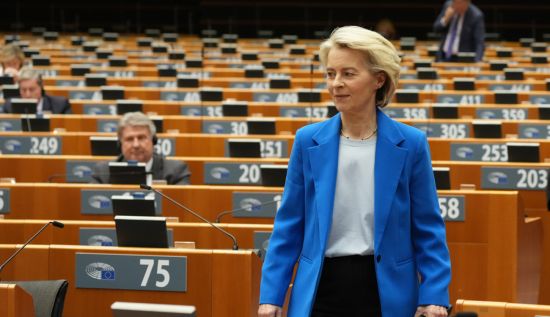
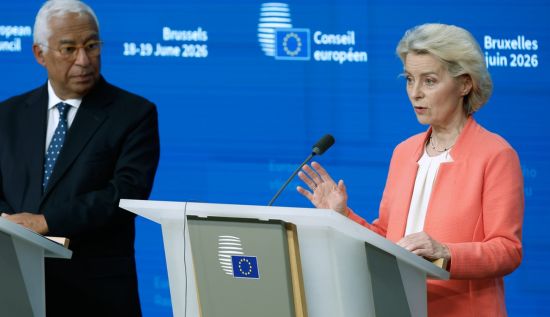
Following the official opening of the first accession negotiation cluster, Ukraine and Moldova will be able to progress toward European Union membership according to their own reform performance and pace of implementation, European Commission President Ursula von der Leyen has said, UATV English reports.
Speaking to journalists in Brussels, von der Leyen emphasized that while the two countries began this stage of the accession process together, future progress will depend on each candidate’s ability to meet EU requirements.
“From this point forward, each candidate country is responsible for its own progress,” she said, explaining that Ukraine and Moldova face different reform challenges and obligations.
According to the European Commission president, the accession process remains strictly merit-based, with advancement determined solely by the fulfillment of agreed criteria and reform commitments.
She noted that this approach provides candidate countries with a clear roadmap, allowing them to understand exactly which steps are required to move closer to membership.
“Progress will be assessed on merit. The requirements are clear, and once candidate countries fulfill them, the European Union will meet its commitments as well,” von der Leyen stated.
European Council President António Costa echoed this position, stressing that differentiated progress does not mean slowing down the enlargement process.
Instead, he argued that the speed of accession depends directly on the pace of reforms undertaken by each country.
Costa pointed to Moldova as an example of a candidate country that has demonstrated strong momentum in implementing the reforms required by Brussels.
At the same time, he emphasized that the current geopolitical environment creates an additional sense of urgency for both the European Union and candidate countries.
“The geopolitical situation requires all of us to work harder and faster,” Costa said.
However, he stressed that accelerating the process does not mean lowering accession standards.
According to both EU leaders, maintaining the credibility of enlargement requires preserving the existing criteria while ensuring that reforms are implemented as efficiently as possible.
Von der Leyen added that urgency must be understood not only by candidate countries but also by EU member states responsible for approving future steps in the accession process.
“This does not mean abandoning the criteria. It means that all sides should work harder and faster to meet them and move forward as quickly as possible,” she said.
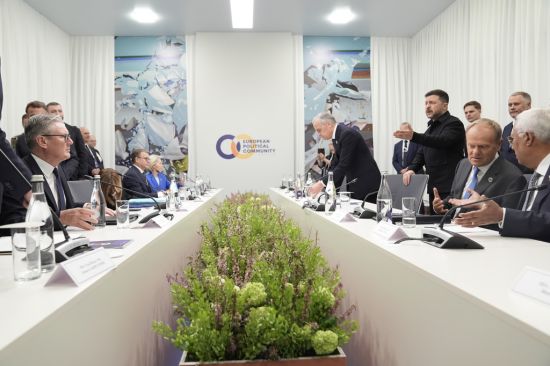
The comments followed the official opening of the first accession negotiation cluster with Ukraine and Moldova during intergovernmental conferences held in Luxembourg on June 15.
The launch of negotiations marked a significant milestone in both countries’ paths toward EU membership.
Until recently, the process had been delayed by Hungary’s prolonged opposition to opening negotiations with Ukraine. As a result, the issue was considered as a joint package covering both Ukraine and Moldova.
The opening of the first cluster now allows the two countries to proceed with accession talks, although their future progress will be evaluated individually based on their respective reform achievements and compliance with European Union standards.
Read also: Britain Successfully Tests New Missiles It Plans to Provide to Ukraine