Yesterday at 22:06

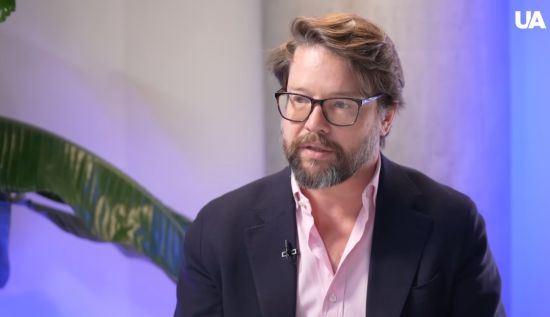
Ukraine is officially rewriting Western military doctrine, and its experience is becoming the primary import for NATO armies. An exclusive, large-scale interview with the former Commanding General of United States Army Europe, retired Lieutenant General Ben Hodges. In a conversation with host Saken Aymurzaev, the American general provided a deep assessment of the strategic reality of 2026.
General Hodges broke down in detail the three monumental achievements of the Armed Forces of Ukraine over the past year, which have fundamentally transformed the nature of modern warfare. Why are leading Western nations already seeking to adopt Ukrainian defense innovations and battlefield experience, and why, according to the general, is Ukraine destined to turn into the main hub of the entire European defense industry in the future?
— Why did this war become so long, so terribly long?
— I think the Ukrainian people and the Ukrainian leadership knew that they had no choice but to fight because of what would happen if they surrendered or accepted Russian control. They knew what would happen, and that determination is what has kept this fight going for so long.
On the other hand, for Vladimir Putin, he will only stop when he is convinced he cannot win or until something significant happens inside Russia. That is why we are still here 12 years after the beginning of the war and more than four years after the beginning of the large-scale invasion.
— And unfortunately Putin is still in power.
— Yes, he is. But I think we don’t know exactly what’s going on inside Russia. I would never claim to fully understand the pressures and forces there. I do hear more and more reports about unhappy Russians because life there has become worse. I think Russians see that they are losing this conflict with Ukraine and they don’t see an end to it.
So I think at some point Ukraine’s strategy of destroying Russian oil and gas infrastructure, while simultaneously inflicting enormous casualties on Russian armed forces, is going to push Russia toward some kind of breaking point where maybe the oligarchs around Putin decide that enough is enough.
— Can you describe the main achievements of Ukrainians during this last year?
— I’ll give you three things.
Number one: Ukrainians have stopped Russia’s ground attacks. It’s clear that Russia does not have the ability to overwhelm or break through Ukrainian defenses. That is extremely important because it means Russia is not going to take significantly more territory except perhaps in very small places.
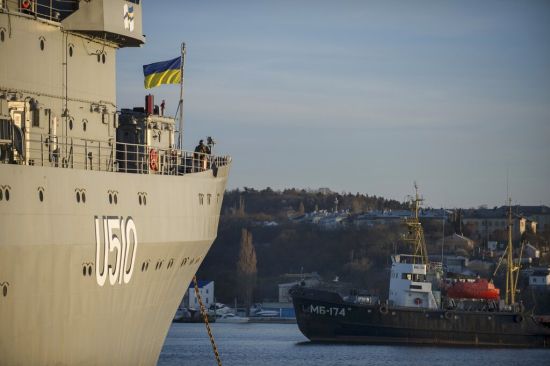
The second huge accomplishment has been the destruction of the Black Sea Fleet. Ukraine has effectively pushed the Black Sea Fleet out of the Black Sea even though Ukraine does not have a traditional navy with traditional ships. Instead, Ukraine achieved this through innovation.
And the third achievement is that Ukraine is now seen not only as an innovation hub, but also as what may eventually become the defense-industrial heart of Europe. I think in the next 10 years Ukraine will become the center of Europe’s defense industry. More and more companies and countries will invest there, as long as Ukraine continues making it attractive for them to do so.
Ukraine has changed the character of war.
— Ukraine’s main export right now is not only weapons but battlefield experience.
— Exactly. Every country in Europe, along with the United States, Canada, and others, should be inviting Ukrainians to help train their soldiers. Nobody has the kind of experience Ukrainians have.
But it’s not only experience. It’s also the mindset and the culture. That is something that needs to be imported as well.
— Then the next question is more theoretical. Has this war changed modern warfare forever? The concept of war itself?
— I don’t know. At the end of the day, the fighting, the bloodshed, the suffering of innocent people, the destruction — all of that would look familiar to any veteran of the First or Second World War. Trenches, artillery, casualties — this is a very hard-fought kinetic conflict.
What’s different, of course, is the use of drones, both for attack and for counter-drone operations. But a drone is still a weapon. You cannot hold territory indefinitely with drones or protect populations with drones alone. You still need soldiers — women and men who are well trained, disciplined, and committed.
So I wouldn’t say it has changed warfare forever, but it is forcing all of us to rethink what weapons are necessary and how to create a military culture capable of adapting so rapidly.
— In our previous interview you said that logistics and resources decide the outcome of any war. If we talk about Ukraine, has Ukraine built a sustainable system regarding logistics and resources?
— What I actually said was that war is a test of will and logistics.
Clearly, Ukrainians have demonstrated superior will — not only soldiers, but Ukrainian society as a whole.
On the logistics side, there will always be shortages. You never have everything you need. But I don’t hear as many concerns anymore about artillery ammunition, for example. Partly because Ukraine now uses drones almost like artillery, but also because Ukraine has increased its own production capabilities and partner countries have expanded their ammunition production as well. That issue has improved significantly.
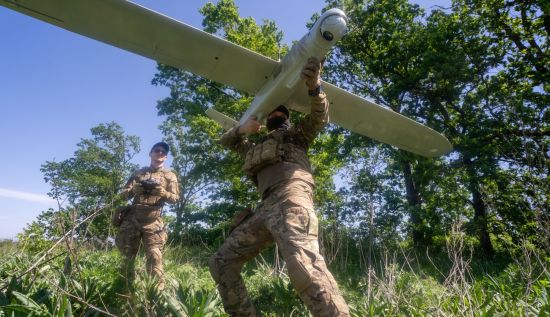
At the same time, despite Ukraine’s incredible advances in capability, there still isn’t enough scale. You now have systems like Flamingo and other drones capable of flying more than 1,000 kilometers, but there still aren’t enough of them to completely change the outcome.
So I think achieving scale is just as important as achieving quality.
— Let’s talk about the near future. I recently visited the Baltic countries and there is a very real feeling of preparation there — preparation for a possible Russian invasion. How do you think, could Russia one day test NATO in this region, for instance through the Suwałki corridor?
— Of course, the best way to prevent Russia from ever attacking the Baltic countries or other parts of Europe is to help Ukraine defeat Russia completely. Make sure Russia has nothing left.
But if Ukraine is not successful, if Russia somehow achieves a favorable outcome, then I think the chances of them attacking Latvia or Lithuania increase. It becomes more possible.
Then you have to ask: why would Russia attack NATO?
I think it would happen because they believed the United States was not committed and that Europe still had not done what it needed to do to defend itself.
And the objective of a Russian attack would not be to take over all of Europe. It would be to destroy NATO. To do that, they could launch a limited attack, for example in Daugavpils in Latvia, and then stop and confront NATO with the question: “Do you really want a nuclear war over Latvia?”
If the answer is no and NATO does not respond, then Article 5 would be exposed as an empty commitment. I think that is a conceivable scenario Russia might try. But it would depend on their assessment that we were not committed or prepared.
And they would not necessarily need massive ground forces. I would expect huge drone and missile attacks like the ones they already use against Ukraine, targeting transportation infrastructure throughout the Baltic region because they understand how important logistics and troop movement are for NATO defense.
— Is NATO truly ready without American forces?
— It could be. If you combine the economies, wealth, technology, and militaries of the EU countries plus the UK, Canada, and Norway, it dwarfs Russia significantly.
So yes, the capabilities are there. Initially it would probably be disorganized until they became better coordinated, but the capability exists.
What I don’t yet see is the political will and confidence.
Obviously, without the United States the nuclear deterrent becomes much smaller. But you don’t need thousands of nuclear weapons for deterrence. The Russians just need to believe that France or Great Britain would actually use a nuclear weapon against St. Petersburg, for example.
— How dangerous is the Trump administration’s decision to reduce the American presence in Europe?
— It’s actually more dangerous for the United States than for anyone else. It’s a self-inflicted wound that damages trust in us.
It reduces our influence inside the alliance and weakens our military capability on the ground. The actual US presence in Europe is not that large — around 80,000 Army, Navy, Air Force, and Marine personnel, both permanent and rotational.
That doesn’t even fill Wembley Stadium in London. It’s not a huge force. And when you start reducing it, you weaken yourself.
But the biggest danger is that our allies begin doubting our commitment, and Vladimir Putin could miscalculate and decide this is the moment to attack NATO because the United States appears disinterested or uncommitted.
That’s the real danger.
— Considering that Putin himself and his top advisers come from the security services rather than the military, could future aggression become more hybrid rather than a direct invasion?
— Of course, the 2022 invasion itself was largely an FSB-led operation. It was a military invasion, but it was planned and organized by the FSB, which is partly why it was so poorly organized.
There’s no doubt that while Russia conducts this large-scale conventional war in Ukraine, it is simultaneously conducting gray-zone operations against the rest of Europe: sabotage, disinformation, airspace violations, shadow fleet operations, illegal activities, espionage.
That’s already happening across Europe.
And until the rest of us figure out how to push back against hybrid operations — even if it’s not always publicly obvious who is behind them, though we know who it is — we need to find ways to impose consequences on Russia for these gray-zone activities.
— As for the war with Iran, what do you think is the purpose of the current administration there?
— Right now I think President Trump’s main goal is to get out of it. Regardless of what they say publicly, I think they realize this has become a catastrophe that achieved none of its strategic objectives.
It looks to me like the Iranians believe they can outlast the American side.
So where does this go from here? I think President Trump is looking for a way to declare victory and leave. Meanwhile, the Iranians still control the Strait. They still have the same regime and still possess enriched uranium. So I’m not sure what exactly was accomplished.
On the other hand, I’m very proud of the professional competence of the US Navy and Air Force and what they achieved operationally.
But destroying Iranian vessels is not strategically decisive if Iran still controls the Strait.
I don’t know how this is going to play out. The Saudis and the UAE can now see that perhaps the United States is not a fully reliable partner. So I think, in the long term, America’s position in the Middle East has also weakened.
— General, how is the current US strategy viewed inside the American military community?
— Of course, I can’t speak for all serving officers. But from my conversations with many people, there is deep frustration over the administration’s disdain toward allies.
Most people in the military also believe we should continue supporting Ukraine. We all grew up understanding that Russia was the enemy. And I’m not seeing anything from this administration that helps us counter Russia or even China.
We are spending enormous resources on Iran in a war that probably was not necessary, and I don’t understand how this serves our broader strategic objectives.
So I think many professional military officers are deeply frustrated.
— So now we wait for November and the elections?
— Yes. This will be a very hard-fought and extremely important midterm election.
— And the last two questions are more personal. What worries you most today as a military professional, and what gives you hope?
— What gives me hope is that I still believe in America. We have many good people. Our institutions have survived a lot over the last two and a half centuries.
And if enough good people stand up for those institutions, we will come through this period as well.
But this is the greatest test I have seen in my lifetime.