Today at 01:04

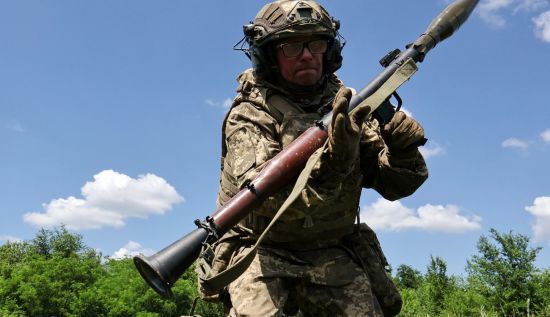
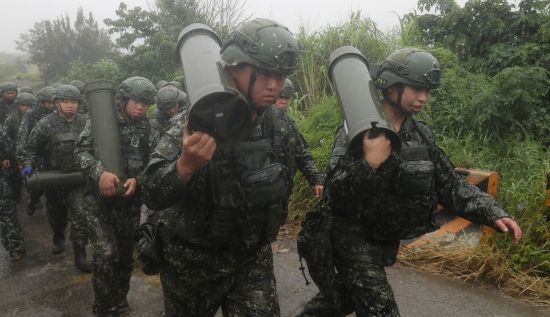
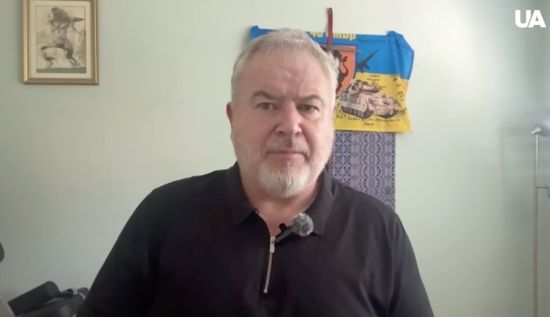
Ukraine is becoming a key element of the West’s new security architecture. Political analyst Andreas Umland breaks down the significance of the massive “Spring Storm” exercises in Estonia and the unique role of Ukrainian forces within them. While Finland officially recognizes the AFU as the most combat-ready army in the West, NATO corridors are buzzing with a revolutionary idea: Ukraine as a security guarantor for the Baltic states.
— Andreas, tell us, in your opinion, how does the Kremlin interpret these exercises, especially with Ukraine’s involvement? Or do they see it, dislike it, but there is not much they can actually do about it?
— I think this is a problem for the Kremlin. They probably understand that if there is an escalation in the Baltic countries, Ukraine could come to their aid, and that might be more effective than what NATO countries could provide. The Kremlin also has ambitions in that region.
There is a scenario where, if a ceasefire is reached in Ukraine, Russia could redirect its large mobilized army to another region—the Caucasus, Central Asia, or the Baltics. In Moscow, they may believe it would be easy to seize territory from Estonia or Lithuania.
But if Ukraine is involved in defending those countries, it would be far more difficult.
— This is not the first time Ukraine, even though it is not a NATO member, has taken part in such exercises. These exercises are clearly important. But can we say that this level of participation increases the likelihood that Ukraine will eventually become a member of NATO?
— Yes, such participation is a strong argument in favor of Ukraine joining NATO. That is why it is a logical and strategic step for Ukraine to take part in these exercises.
My colleague Frederick Wesslau from the European Policy Institute even proposed that Ukraine could provide security guarantees for the Baltic states after the war. This would allow Ukraine to integrate into the European security architecture and also give back for the support it has received, especially from Latvia, Estonia, and Lithuania.
— Let’s talk about the geography of these exercises and the presence of NATO troops in a mobile state. Does this mean that participating countries are paying less attention to previous fears of provoking Russia?
— Yes, that is one of the key lessons from the Russia–Ukraine war. Strategic ambiguity from Western nations previously led the Kremlin to believe that Ukraine would be left alone and easily defeated.
Now that lesson has been learned. Clear signals are being sent to Moscow that any escalation in the Baltic region would trigger a broader conflict.
It would not be a limited conflict like Russia versus Estonia—it would involve many NATO countries.
Ukraine, although not a NATO member, has received more support than the Kremlin expected. Western countries do not want to repeat the mistake of sending unclear signals.
— There are many exercises happening simultaneously—large-scale NATO drills in the Baltics, Poland, Turkey, and even Arctic exercises like Cold Response. What does this scale of preparation indicate?
— Weakness and lack of preparedness actually have an escalatory effect. They create the impression in Moscow that it can achieve quick and cheap victories.
Now the issue is not only Russian imperialism but also whether the regime can exist without war. Russian society, the economy, the army, and even education are highly militarized. People are constantly prepared for war.
That is why there is concern that after a ceasefire in Ukraine, this battle-hardened army could be redirected elsewhere. Countries like Turkey are already preparing for possible escalation in the Caucasus. Others are preparing both militaries and civilian populations.
Many countries have finally realized the scale of the threat. This should have happened much earlier—after the Russo-Georgian War, after the annexation of Crimea, and the war in Donbas. Now, finally, the Russian threat is being taken seriously.
— In your opinion, how will the position of the United States regarding its presence in Europe evolve?
— That is a difficult question. It is hard to predict decisions coming from the White House, especially under Donald Trump. There are doubts about how much expert input is still involved in decision-making.
However, I believe the transatlantic connection between Europe and the United States will remain. There are deep cultural and historical ties. Even though Trump’s presidency is undermining some institutions, including NATO, those ties will eventually prevail.
At the same time, the United States will continue to shift focus toward the Pacific. In the short term, European countries cannot rely on optimistic scenarios. They are increasingly preparing for the possibility of reduced U.S. involvement or even a breakdown in the alliance, which is why discussions about independent European security are growing.
— The President of Finland recently said that no army in Europe can fight a modern war the way Ukraine does. He also emphasized that Europe should not think it is only helping Ukraine, but also consider how Ukraine can help Europe.
— Yes, and I think very few leaders still believe that Europe alone is helping Ukraine. The issue now is more about inertia. In Central and Eastern Europe and in Finland, the Russian threat is taken very seriously.
But in countries like the Netherlands or Spain, it still feels distant. That is where the problem lies.
At the same time, Ukraine’s military strength is widely recognized, as well as the fact that its experience and support will be crucial if other European countries come under threat.
Read also: Dark Tourism in Ukraine: Why Everyone Wants to Visit Chornobyl