Yesterday at 19:54

Commander-in-Chief of Armed Forces of Ukraine Oleksandr Syrskyi’s interview reveals the real frontline situation: from repelling Russian attacks to new warfare tactics. The general discusses the role of drones, enemy losses, and key challenges for the Ukrainian army. Special attention is given to resources, mobilization, and strategic plans for the near future. How the course of the war is changing and what Ukraine is preparing for — watch this interview.
— General, thank you very much for giving us some of your precious time. I understand that the front is always shifting and the situation changes very quickly. How would you describe it today?
— As of right now, at this very moment, the situation is extremely tense and complicated, but it is still under control. It is definitely not the absolute worst compared to other areas around here. It is currently under our broad strategic control, but the situation is exceptionally complex and constantly shifting given the current conditions.
The ongoing offensive operation by the armed forces of the Russian Federation is actively unfolding along 13 main directions, with corresponding counteroffensive actions being taken by the armed forces of Ukraine.
— How is it different from what Ukrainians see on TV and in the media, and what you see? You see it differently, and the military sees it differently too, especially since you have the most complete picture.
— Of course. When I imagine the situation, first a map appears in my mind, then a specific location. Those of us in the military have a unique perspective—we instantly visualize a very specific geographic area.
Considering that we know most of the front and have been there at different times, we understand what is happening and where the enemy is concentrating their main efforts.
For example, in the Pokrovsk and Toretsk directions, and in the Oleksandrivka direction, where today the greatest number of offensive actions is being recorded.
There is also increased activity in the area around Kostiantynivka. In this direction, the enemy is actively trying to break through, attacking our units from multiple sides.
However, at this moment, our soldiers are holding them back. A constant counter-sabotage operation is ongoing in the city, and all attempts to infiltrate are being neutralized.
— When we talk about the situation at the front, people often understand it through enemy losses or territorial gains. For example, The New York Times recently reported that in February, Ukraine regained more territory than Russia captured. Does this reflect reality?
— No, it does not. Starting January 29, we initiated a strategic offensive operation in the Oleksandrivka direction with the goal of inflicting significant losses on the enemy.
As of today, we have liberated over 480 square kilometers of territory, and offensive actions are ongoing.
— So this is since late January—February and March?
— Yes, during February and March.
At the same time, the enemy is responding. Our actions forced them to change their plans.
Originally, they planned a large-scale offensive on all 13 directions starting March 1. However, they had to revise their strategy and redeploy forces from other directions to Oleksandrivka.
— How successful has this offensive been?
— Success is measured by liberated territory—480 square kilometers so far.
This exceeds the results of the previous counteroffensive, where we liberated over 430 square kilometers.
— Russia promoted a “spring offensive.” Do you feel it? Did it fail?
— They never really stopped offensive actions. These operations continued from 2025 into 2026.
Their strategic plans for 2025 failed. They attempted to capture Donetsk, Luhansk, parts of Dnipropetrovsk, Zaporizhzhia, and create buffer zones—but failed.
They repeatedly announced capturing cities like Kupiansk and Pokrovsk, but these claims were false.
Even now, our defenders hold positions, and the enemy attacks daily, suffers losses, and retreats.
— Where is their systemic weakness?
— First, they are fighting on land that is not theirs. Second, they rely on numbers rather than quality. Third, they underestimate the enemy—us.
Their forces are often poorly trained, while our strength lies in training, reforms, drone warfare, and professional units.
Their losses are a result of this imbalance.
— What is Ukraine’s main strategic goal this year?
— Our goal is to conduct defensive operations to contain the enemy, prevent territorial losses, and wear down their forces.
At the same time, we are preparing conditions for large-scale offensive operations, building reserves, training personnel, and conducting targeted counteroffensives where the enemy is weak.
The ultimate objective is to regain initiative—and currently, the enemy is forced to play by our rules.
— Is it difficult to force the enemy to play by your rules?
— Extremely difficult. It requires detailed planning, preparation, and strict secrecy. Any leak can ruin an operation.
— What was your toughest decision as commander?
— Every decision is difficult. Sometimes decisions must be made instantly when the situation changes. That requires reserves and understanding the capabilities of units.
There are no easy decisions in war.
— What about the Kursk operation? How difficult was that decision?
— It was a calculated risk. At that time, the situation was extremely difficult. The enemy was advancing on multiple fronts, increasing troop motivation and recruitment.
We needed an unexpected move to disrupt their plans—and we achieved that by forcing them to redeploy forces.
— Do political decisions align with military ones?
— War is always rooted in politics. For us, this is a just war. For them, it is not. Underestimating the enemy is dangerous—and we do not do that.
— How strong is the enemy today?
— They are strong—one of the most powerful armies in the world.
They have advanced weapons, drones, missiles, and aviation.
They conduct 70–90 air strikes daily and use hundreds of guided bombs. This is a serious challenge.
— What is their biggest advantage and mistake?
— Numbers and technology in some areas, including air defense and missile capabilities. However, they underestimate us.
We have better training, planning, and motivation.
We prioritize preserving soldiers’ lives and making informed decisions.
— How effective are Ukrainian strikes on Russian territory?
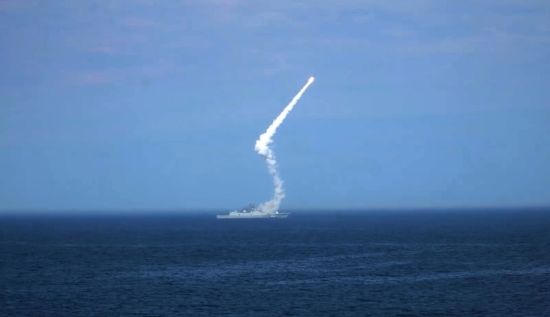
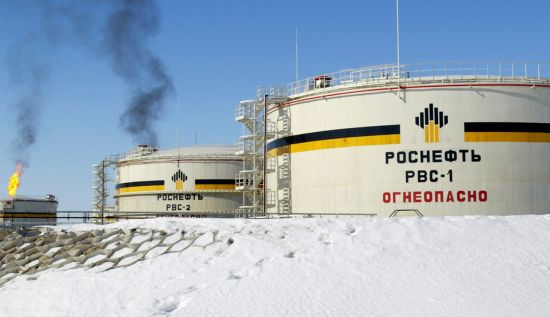
— They are highly strategic. We target oil infrastructure, which funds their war—about $700 million daily. We also strike missile production and control systems. This reduces their military-industrial capacity.
— I would like to scale this up. For example, we have accurately hit strategic targets such as Ust-Luga and Primorsk. What does that mean for us in the east? How does a soldier in the trench feel about it? How do you feel as the commander-in-chief? Does it make it easier? Does it destabilize the enemy? You also monitor morale within their army—do you see internal tension as a result of the situation at the front?
— There is no direct, immediate connection between a strike and its effect on the front line. These effects occur gradually and indirectly.
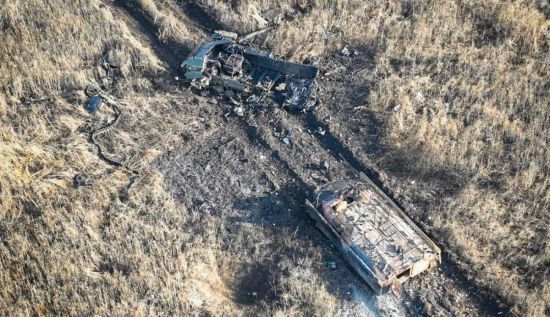
Currently, we observe delays in supplies and significant disruptions in weapons deliveries. Tanks do not arrive, missiles are not launched. There is also a reduction in missile stockpiles and a steady decrease in the number of launches, including Shahed drones.
Their original plan was to produce 44 drones per day in 2025 and up to 1,000 per day in 2026. These targets are unrealistic, and they have not reached them. This limits their capabilities.
It affects both financing and the expansion of their armed forces. We see financial shortages in the regions, delays in payments, and growing dissatisfaction among the population. This dissatisfaction directly impacts the morale and psychological state of their servicemen, reducing their willingness to carry out combat tasks.
— War is ultimately about people. What is lacking the most now—personnel, equipment, or decision-making?
— If you ask any commander today, two years ago the issue was shells and rockets. Now, the key issue is people—well-trained, professional, and motivated servicemen.
Mobilization remains the primary source for replenishing the armed forces. Our task is to ensure this process is carried out efficiently, lawfully, and as smoothly as possible, without violations or procedural abuses.
— Mobilization. We all know that war is first and foremost about people. Someone has to carry and use the weapons. In the end, someone has to fire them to destroy the enemy. What is lacking the most right now? Is it people, equipment, or some management decisions that are missing? A state system has to make certain decisions.
— Of course, if you ask any commander at the front right now, two years ago the issue was shells and rockets.
But now, it is about people.
Highly trained people — professional and skilled servicemen who are fully prepared and ready to fulfill their military duty.
Because mobilization is the main source for replenishing the needs of the armed forces.
And here, our main task is to carefully oversee the situation to ensure that this entire process proceeds smoothly and efficiently.
You could say — as comfortably as possible for those people who are being mobilized.
That is to say, so that there are absolutely no violations, no breaches of the law, and no violations whatsoever in the official procedures used during the mobilization process.
— How would you rate mobilization in Ukraine on a scale from one to ten?
— I am afraid I might not be objective. But probably around six or seven. I would like it to be higher.
— More people or better quality training? What would you like to see more of to give a higher rating?
— I would very much like to see a significantly higher standard of comprehensive and professional training.
And I would like to have more highly motivated and dedicated personnel who remain committed to staying with their specific military unit, and who consistently and effectively carry out every one of their assigned duties and mission tasks.
— When people talk about motivation, they often talk about fairness. The main excuse of those who are not very motivated is that mobilization is unfair. Different approaches are being proposed in society. What kind of mobilization would you consider fair?
— This is a very complex concept — fairness.
Of course, it is fair when all citizens are required to fulfill some form of duty.
There should be no clear distinction between those who are subject to mandatory mobilization and those who are not, despite the fact that they have every reason to be mobilized.
That is where fairness should be, at least from my perspective.
— What would you say to those who are trying to avoid military service today? How would you address them?
— First of all, it is important to remember that we are all citizens of our country, and we must fulfill our civic responsibilities.
And now, at a moment when a hostile aggressor is advancing against us, we must do our duty.
We must stand firm to defend our nation, protect our children, and safeguard our loved ones.
Honestly, I do not know how they will look each other in the eye after the war, or how they will look their own children in the eye.
This is largely a moral issue.
It is not only about motivation, but about understanding one’s duty. These are not empty words.
— There is another difficult issue — some people leave their units without permission. AWOL is a real issue in Ukrainian society. What is being done to address this? Should there be stricter punishment or additional incentives?
— A significant amount has already been done to encourage service members who left their units for various reasons to return.
All necessary conditions have been created, and many service members return daily to reserve battalions, where they are assigned either to their previous units or to new ones.
As for stricter punishment — based on my experience, I would not say that is the key solution.
I am not a disciplinarian. In my opinion, there are already enough strict measures in place, and the command is already strict enough with those who violate the law.
I see this primarily as a matter of creating the right conditions so that the number of AWOL cases is minimized at every stage of mobilization.
— What else can be done?
— First of all, improve the conditions of mobilization itself.
We understand that the main reason people go AWOL is not because they do not want to serve, but because they are afraid for their lives. And this is completely natural.
Therefore, the entire process — from arriving at a recruitment center to training — must be organized in a way that is as smooth as possible.
At every stage, personnel must treat mobilized individuals with humanity and respect. There must be no insults, no cold formalism.
Everyone wants to be treated as a human being. This approach must be present at every stage.
If this is achieved, there will be significantly fewer problems.
We are already working on improving conditions — both accommodation and safety.
Training centers are equipped with shelters, living conditions are improving, and issues such as food supply have decreased.
Training now meets modern battlefield requirements. The duration has been extended to 50 days, with an additional 14-day adaptation period.
Everything is being done to ensure a smooth transition from civilian life to military service.
— And what about reforms?
— We are currently implementing a major reform — the transition to a corps-level command system.
Previously, we had a large army but lacked professional command structures at the operational level.
Temporary command groups were formed, but they did not ensure effective leadership or accountability.
Now we are creating permanent corps headquarters to improve command efficiency.
Previously, some command groups were responsible for up to 20–23 brigades, which was extremely inefficient.
The new system is designed to optimize command and control and reduce overload.
At present, we are in the second stage of this reform, forming full corps-level structures with all necessary units — artillery, air defense, engineering, and unmanned systems.
This system is dynamic because units constantly rotate and move during combat operations.
The goal is to create a more effective and flexible command structure.
— What are these new assault troops?
— Assault troops have already existed for about a year and a half.
They proved their effectiveness during operations, including the Kursk operation. These units are mobile, flexible, and capable of rapid action. They are now essential for modern warfare. They do not replace airborne troops — they complement them.
Airborne troops remain elite units equipped with advanced weaponry and used for critical operations. Assault troops support them, stabilize situations, conduct short offensive actions, and reinforce key areas.
— What are the technological priorities today?
— War is not only a clash of armies — it is a competition of technologies.
Since the enemy has a numerical advantage, our task is to compensate for it through technological superiority.
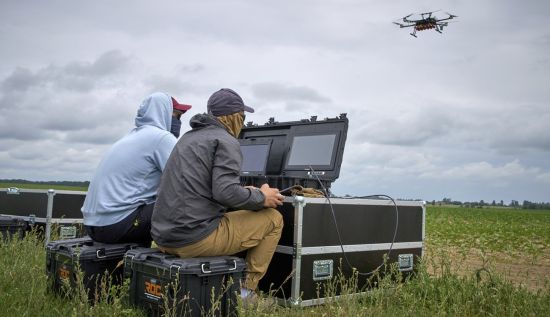
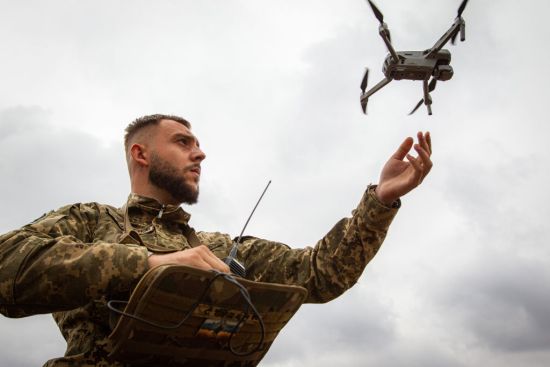
Drones now dominate the battlefield. We are expanding the use of unmanned systems — aerial, ground, and robotic platforms — to reduce risks for personnel.
Artificial intelligence is also being integrated into targeting, control systems, and air defense. We are creating specialized units and expanding drone capabilities across all levels of the armed forces.
This is currently the most important direction of development.
— Finally, what does victory look like to you?
— Victory means defeating the enemy and achieving peace on our terms — a just peace. We will not lose our territory.
We will create conditions in which the enemy cannot dictate its terms. At that point, we will be able to say that we have fulfilled our mission.
Read also: The War Can Only End without Ceding any Territory, but Along the Line of Contact