Yesterday at 19:54

For many external observers, Ukraine’s position in peace negotiations may appear counterintuitive: if the goal is to end the war, why does Kyiv not simply withdraw from parts of Donbas claimed by Russia?
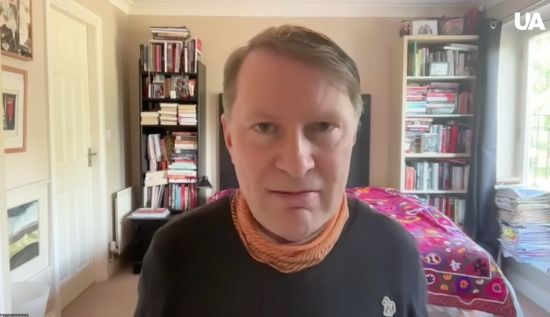
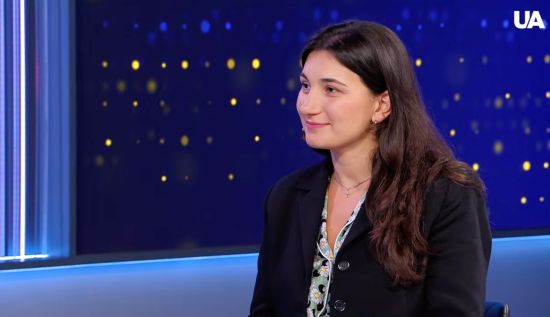
As Igor Popov explains, the core issue lies precisely here—Russia is not proposing a compromise, but attempting to formalize politically what it has failed to achieve militarily. In essence, Moscow is seeking at the negotiating table what it could not secure on the battlefield.
This demand is particularly problematic because it extends beyond already occupied territories. It includes areas currently controlled and defended by Ukrainian forces. For Ukraine, agreeing to such terms would not represent a step toward peace, but rather a forced concession under pressure—one that risks encouraging further demands. Popov emphasizes that such a scenario would establish a dangerous precedent for Europe, whereby an aggressor state could initiate war and subsequently demand additional territorial gains as a condition for a ceasefire.
Read the FULL article by Igor Popov, head of United Ukraine Think Tank, expert on political and security issues.
Historical parallels, as Popov notes, suggest a very different logic of conflict resolution. During the Korean War negotiations in 1951, the United States insisted that the demarcation line reflect the actual position of forces on the ground, not abstract political claims. This principle later shaped the 1953 armistice, which fixed the line of control and established a demilitarized zone. Crucially, South Korea was not compelled to cede territory that had not been captured by North Korean forces. A similar pattern can be observed in Cyprus, where the so-called Green Line reflected the de facto positions of the parties at the moment of ceasefire in 1974, without granting additional territorial rewards to the side that initiated aggression.
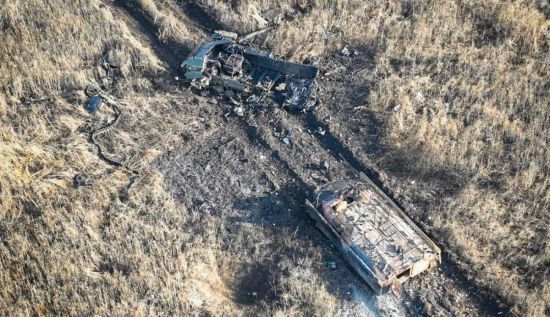
From a military perspective, Popov argues, Russia’s demands are equally unfounded. According to assessments cited by Reuters, based on data from DeepState and Ukrainian command sources, Russian forces captured only 126 square kilometers in February 2026—the lowest monthly gain in nearly two years. At the same time, Oleksandr Syrskyi reported that Ukrainian forces had, for the first time since mid-2024, regained more territory than Russia had seized. While this does not indicate a decisive breakthrough, it highlights a key reality: the front remains highly contested, and Russian advances are both slow and costly.
This dynamic is particularly significant in the Donetsk region, where Ukraine has maintained defensive positions since 2014. Around cities such as Kramatorsk, Sloviansk, Druzhkivka, and Kostiantynivka, a complex system of fortifications, logistics, and defensive infrastructure has been developed over years. As Popov underscores, these positions represent not only financial investment but also the cost of thousands of lives. Requiring Ukraine to abandon them would effectively spare Russia the need to continue paying the price of further offensives in time, manpower, and resources.
In this context, Popov concludes that a realistic compromise must follow a different logic. Russian demands are deliberately inflated—either to secure additional territory or to portray Ukraine as unwilling to negotiate. A more pragmatic approach would involve freezing hostilities along the existing line of contact, without legal recognition of occupation and without transferring new territories to the aggressor. While such a settlement would fall short of a comprehensive peace, it aligns with historical precedent, reflects the actual military situation, and preserves the fundamental principles of European security.
Read the FULL article on The Gaze: The War Can Only End without Ceding any Territory, but Along the Line of Contact
Read also: Ukraine Built the World’s Best Air Defense – Interview with Glen Grant