Today at 10:22

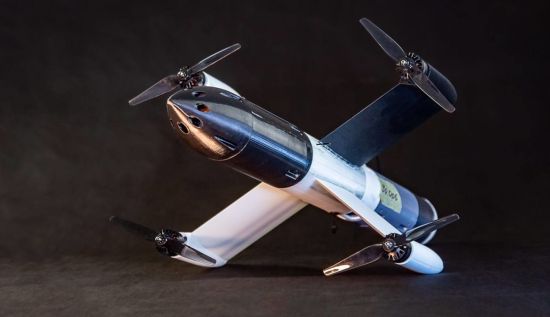
Ukraine and Turkey are entering both the war’s final phase and the post-war period with fundamentally different — yet highly complementary — strengths. Turkey has become one of the world’s dominant industrial producers of strike unmanned aerial vehicles, while Ukraine has turned into a real-time combat laboratory where drone technologies evolve month by month under frontline pressure.
Together, these two trajectories create a unique strategic opportunity that currently has no equivalent elsewhere.
Read more in the article by Dmytro Levus, foreign policy expert and analyst at the United Ukraine Think Tank, on The Gaze.
Over the past five years, Turkey has transformed from a regional defense producer into a global UAV heavyweight. According to international estimates, Ankara now accounts for roughly 60% of global exports of strike drones. Turkish companies such as Baykar and TAI have demonstrated not only scalable serial production, but also sophisticated export logistics, political backing, and the ability to deliver weapons systems rapidly to international partners.
In the medium term, Turkey is approaching the capability to manufacture hundreds of thousands — potentially over a million — drones annually, a volume that would give it not just market share, but real influence over global standards in unmanned warfare.
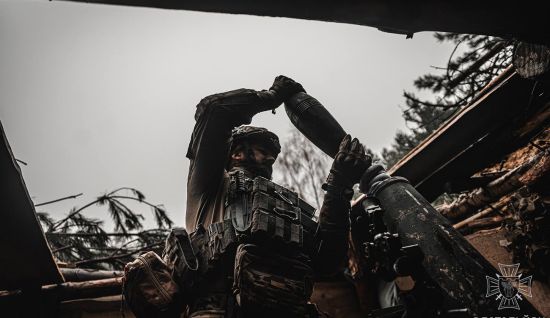
Ukraine’s advantage lies elsewhere. Since 2022, the country has built an adaptive drone ecosystem operating at a tempo unmatched in Europe. Ukrainian manufacturers test new solutions directly in combat, rapidly adjusting designs in response to evolving Russian tactics.
Kyiv has publicly stated that its defense industry is capable of producing millions of UAVs per year, spanning nearly all major classes: FPV strike drones, reconnaissance systems, long-range reusable strike platforms, one-way deep-strike drones, naval drones, and ground robotic systems. This is no longer a collection of volunteer initiatives, but the foundation of a future export-oriented defense industry.
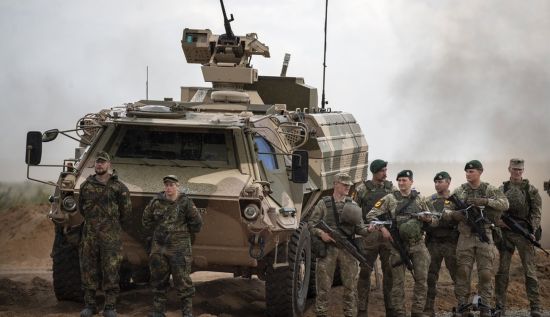
Ukrainian–Turkish cooperation already exists in practice, including joint ventures and plans for localized production. The strategic question is what happens after the war: rivalry or integration.
Competition would push both sides into price dumping and overlapping markets, weakening their positions. Integration, by contrast, would allow the creation of a single production and export chain, combining Ukrainian battlefield innovation with Turkish industrial scale and global market access.
Such a model could evolve into a powerful military-technological cluster capable of reshaping the global UAV market and setting new norms for unmanned warfare.
A deep Ukrainian–Turkish drone alliance would not be about symbolism or political rhetoric. It would be about efficiency, influence, and deterrence. For Ukraine, it offers access to global markets, technological capitalization, and long-term security autonomy. For Turkey, it secures continued technological leadership and access to the most demanding testing environment in modern warfare.
If fully realized, this partnership could become one of the defining defense-industrial alliances of the post-war era — and a factor that Russia would be forced to take into account.
Read the full article by Dmytro Levus, foreign policy expert and analyst at the United Ukraine Think Tank, on The Gaze.