Yesterday at 20:05

If a peace agreement between Russia and Ukraine is ever concluded, the United States could assume a leading role in monitoring a large buffer zone in Ukraine, envisioned as a way to protect the country from Russian aggression.
NBC News reported this, citing four people familiar with the plan discussed by military officials from Ukraine’s partners, including the U.S.
The buffer zone would be a large demilitarized area — its boundaries yet to be determined — within Ukraine, separating territories controlled by Moscow and Kyiv.
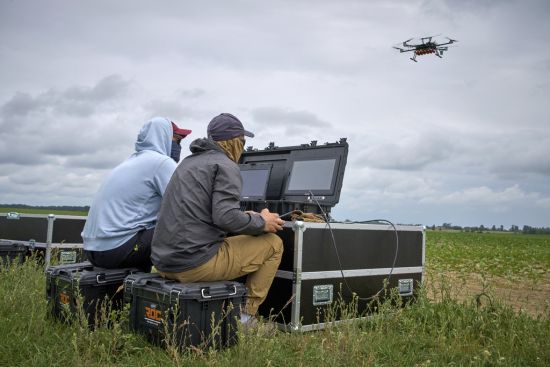
Partly thanks to its technological capabilities, the U.S. would take the lead in monitoring the buffer zone, using drones and satellites alongside other intelligence assets, while coordinating with other countries that would also participate in monitoring.
According to people familiar with the plan, the buffer zone could be secured by troops from one or several non-NATO countries, such as Saudi Arabia or even Bangladesh. They said U.S. troops would not be deployed on Ukrainian territory.
Any plan remains preliminary until Kremlin leader Vladimir Putin and Ukrainian President Volodymyr Zelenskyy agree to it, and until leaders of the countries providing security guarantees — including U.S. President Donald Trump — also give their approval.
The plan was developed after Trump’s meeting with Putin in Alaska on August 15. It was initially expected that the meeting would lead to further negotiations, possibly direct talks between Putin and Zelensky, but progress toward a peace deal has since stalled. Nevertheless, Ukraine’s allies continue working on potential security guarantees, which are likely to be key to any peace settlement.
Among the challenges in planning are decisions about which specific Russian actions would trigger a response from Ukraine or monitoring forces, and what type of response would be permitted, one source said. The rules of engagement still require refinement and would likely be contested during disputes after a deal is reached and a buffer zone established.
At the Pentagon, discussions are being led by U.S. Air Force General Dan Kane, Chairman of the Joint Chiefs of Staff, with the broader talks also focusing on deterrence, training, and defense-industrial cooperation.
According to a U.S. official, a week after Trump’s meeting with Putin, Kane briefed Trump on four options for security guarantees and recommended the most forward-leaning approach.
The individuals familiar with the plan who spoke to NBC News did not say whether Trump had approved or ruled out any of the options.
As reported, following the “coalition of the willing” meeting, French President Emmanuel Macron announced that 35 leaders were ready to present a political proposal to provide Ukraine with security guarantees, with 26 countries expressing readiness either to send troops or to provide certain means to support the guaranteeing forces.
According to him, the U.S. contribution will be finalized in the coming weeks.
Meanwhile, President Volodymyr Zelenskyy said that participants of the “coalition of the willing” summit in Paris, during their conversation with U.S. President Donald Trump, discussed ways to end Russian aggression and security guarantees for Ukraine.
Read also: UN General Assembly Opens Debate on Situation in Occupied Ukrainian Territories