Yesterday at 22:06

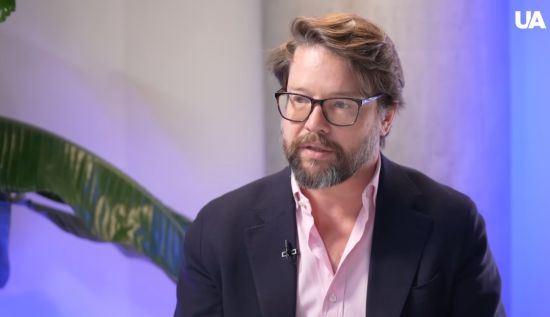
The failure of American backroom deals, Ukraine’s technological triumph on the front lines, and the legal noose tightening around Beijing’s neck. On air with UATV English — an exclusive interview with renowned international lawyer and former US State Department official David Tafuri. In a conversation with host Henry Keen, the American diplomat shares critical insights following his recent visit to Ukraine and his personal evaluation of frontline digital systems.
— Today our focus is on finding real leverage over the Kremlin, the paradoxes of American sanctions policy, and the political consequences of the technological leap of the Ukrainian defense industry. To help us understand these processes, renowned American international lawyer and former US State Department official David Tafuri joins us live from Washington.
I introduced you briefly, but you wear many hats. Maybe you’d like to add something.
— I think you did a good job. I’m an international lawyer and I also do a lot of media commentary. I was just in Ukraine and got back a few days ago. I had a very good visit and I think I was able to observe some things that have changed since the last time I was there.
— And what was that?
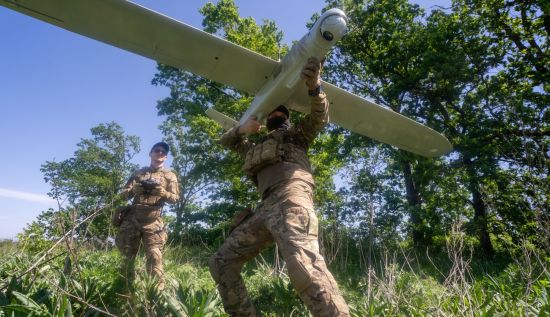
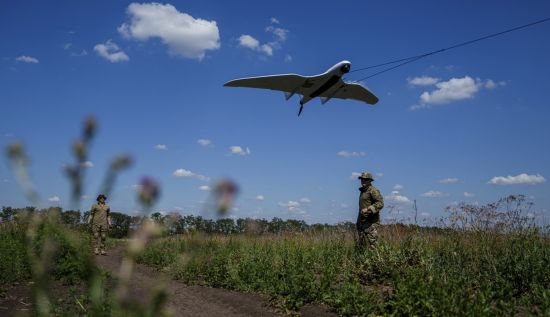
— I think things are turning in a positive direction for Ukraine. The hard work and resources Ukraine has invested in drone technology and anti-drone technology seem to be producing results on the battlefield.
I also noticed that last month was the first time Ukraine gained ground against Russia. That is obviously a positive sign for Ukrainians and for the Ukrainian armed forces.
— I know that because I live and work in Ukraine, but it’s very important that you noticed it too. It really is a positive sign.
So let’s get to the core of it. The Trump administration declares its intention to find a diplomatic solution, but from my perspective it faces constant rejection from the Kremlin and simply wipes it away while continuing to ignore Moscow’s unwillingness to make any concessions.
Moscow continues its usual game of escalation while simultaneously trying to maintain favorable relations with key global partners. This rhetoric has become increasingly interesting, especially regarding China.
Xi Jinping recently stated during talks with Donald Trump that Putin might regret the invasion of Ukraine. Was that a signal of Beijing’s readiness to support Washington’s political pressure on the Kremlin? Or what was that?
— I’m really not sure. President Xi obviously worked very hard to make that meeting with President Trump positive. There was a lot of pomp and ceremony because Xi understands that President Trump values personal relationships with foreign leaders.
So I think President Xi probably said a number of things he believed President Trump wanted to hear. That doesn’t necessarily mean Xi actually believes them or plans to act on them.
It would be wonderful if China pressured Russia to withdraw from Ukraine.
I think Xi is correct in observing that Putin will regret this war — he probably already does.
Maybe Putin has said things privately that gave Xi that impression and perhaps that suggests Putin might eventually change his position. But as you noted regarding ceasefire negotiations, Putin’s demands remain exactly the same as they were at the beginning of the full-scale invasion.
— Exactly. Since Putin’s maximalist demands remain unchanged — and because he himself remains unchanged as an obsolete Soviet KGB officer, to put it mildly — what actual political and legal leverage does the White House have to force the Kremlin to make real concessions during negotiations? Or are there none at all?
— The White House has enormous leverage over Russia. Unfortunately, it simply hasn’t been using it recently.
That leverage exists in two main forms. One is economic sanctions and economic retaliation against Russia. The second is providing weapons and support to the Ukrainian armed forces.
The sanctions regime still exists. There was this temporary waiver of US sanctions on Russian oil already at sea. I think that was a mistake by the Trump administration, and hopefully we won’t see similar waivers again.
If the administration increased sanctions pressure, strengthened enforcement, and imposed tariffs or secondary pressure on countries buying Russian oil — India, for example — while simultaneously restoring stronger military support to Ukraine, then that combination could potentially force Putin into real compromises and more reasonable ceasefire conditions.
Only then could there be a serious discussion about a real ceasefire.
But until the United States, together with Europe, takes those two steps, I don’t believe Putin will compromise.
— That makes two of us. Now to that oil waiver again. Russia and Belarus are once again waving the nuclear club around, announcing joint nuclear exercises. From a political standpoint, is this nuclear blackmail actually working on the West in general and the United States in particular?
— Earlier you asked what leverage the White House has. Now you’re asking about Putin’s leverage.
The reality is that Putin has very little leverage. The one major thing he does have is that Russia is a nuclear power with one of the world’s largest nuclear stockpiles.
That’s why Putin occasionally makes veiled threats about using nuclear weapons. It’s really the only thing Russia has that can seriously frighten NATO.
The Russian army has proven itself far weaker than anyone expected. It can barely handle the Ukrainian army despite Ukraine having fewer resources and personnel.
So nuclear weapons are the one thing Putin can still use as intimidation — reminding the world that Russia possesses them.
But if he actually used nuclear weapons, the global reaction would be so severe that Putin himself would probably have to worry about being removed from power.
— Don’t get me wrong, I don’t want Putin to go nuclear, but “is he bad or mad?” is still a big question for me personally.
While the West continues trying to balance pressure on the Kremlin with global market stability — sometimes making rather paradoxical decisions — Ukraine simply keeps hitting the target.
So if I say, David, that strikes like the one announced just hours ago against the FSB headquarters in Crimea, where reportedly more than 100 FSB officers were killed, hit the Kremlin harder than any Western sanctions ever could — would you agree with that?
— I don’t know if I would directly compare those two things, but I do think Ukraine has had tremendous success striking deep inside Russia, including Moscow, and hitting Russia where it truly hurts: oil facilities, intelligence headquarters, strategic infrastructure.
Those strikes are having an impact on the war. They’re probably lowering morale among the Russian population, and most importantly, attacks on Russia’s oil infrastructure make it harder for Russia to generate the revenue it needs to sustain the war machine.
All of those things are important and they all need to continue.
Putin is tremendously stubborn, so the only thing that’s going to move him is both losing on the battlefield and facing increasingly severe economic consequences through sanctions, tariffs, and other forms of retaliation from NATO countries and other states supporting Ukraine and wanting this illegal war to end.
— Going back to the oil waiver — you said it was a mistake. Why exactly was it such a mistake for Washington?
— It was a tremendous mistake because it gave Putin an opening to sell more oil.
Any time you create a waiver like that, even temporarily, it helps normalize the sale of Russian oil. It makes buyers around the world more willing to purchase it.
Before the Iran war started, Russia was already facing difficult circumstances. One of its largest buyers, India, had started gradually reducing purchases of Russian oil. Then suddenly Russia was able to say: “Look, the United States says it’s okay. It’s fine to sell Russian oil and fine for you to buy it.”
That helped Russia increase both sales volume and prices.
And that matters because under sanctions Russia usually has to sell oil at a huge discount. Every time sanctions are eased, Russia earns more revenue.
— Ukraine is not stopping though. Necessity breeds innovation, as they say.
Ukraine’s military innovations are now shaping not only the battlefield but also a completely new diplomatic reality. Ukraine is no longer simply asking for assistance — it’s delivering highly valuable capabilities to the market.
Cheap scalable air defense. Real combat expertise. Integrated systems like Delta that coordinate everything.
So is the United States ready to acknowledge that Ukraine actually has the cards — and maybe all of them are trumps?
— First of all, I’m glad you mentioned Delta.
I had the opportunity to visit a Ukrainian brigade involved in drone assault and air-defense operations, and we were shown how Delta works. It’s a magnificent system. The level of Ukrainian innovation has been incredible.
I also like what’s happening now with many countries around the world — especially Gulf countries after the Iran war — seeking cooperation with Ukraine. That demonstrates Ukraine has something extremely valuable to contribute both to allies and to NATO countries.
There is broad recognition of that. That’s why there is so much interest in Ukrainian military technology.
Ukraine does face difficult decisions, however. It still needs most of its drones and anti-drone systems for its own war effort against Russia.
But if there are surplus systems that can be exported to allies, that would increase goodwill toward Ukraine and further demonstrate the usefulness and effectiveness of the Ukrainian military as a partner for countries supporting Ukraine.
— Reuters recently reported that China directly trained Russian military personnel involved in the war against Ukraine.
Do you believe there will be consequences from the United States — perhaps secondary sanctions against Beijing — or nothing at all?
— I think there absolutely should be consequences, both for China’s support of Russia and for credible reports that China has also supported Iran even after the Iran war began.
There are reports that China may have supplied shoulder-fired rockets to Iran that could potentially be used against US military aircraft.
So yes, there should be consequences.
I think there is significant dissatisfaction inside the Pentagon regarding China’s actions. Of course, the broader relationship with China remains extremely important, and President Trump has to make decisions based on that broader relationship.
But the United States also needs to make clear that it is unacceptable for China to assist Russia in its illegal war against Ukraine.
Read also: Ukraine will become the center of Europe’s Defense Industry, — Interview with Ben Hodges