Today at 14:41

The fuel shortage has brought the war into the everyday lives of ordinary Russians and dealt a psychological blow to the Putin regime
For a long time, Putin framed the war against Ukraine as a colonial conflict that did not directly affect ordinary Russians. Although state propaganda tried to portray it as a continuation of World War II and as an existential confrontation with the collective West on which Russia’s future supposedly depended, for most Russians it remained a distant colonial war that, by and large, did not disrupt daily life.
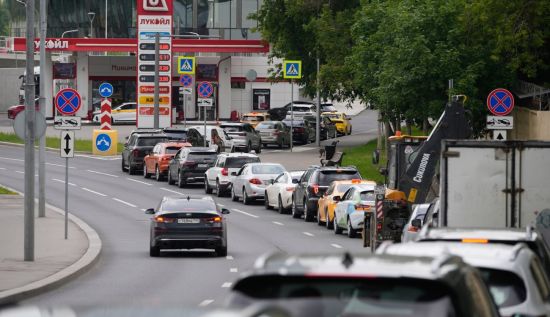
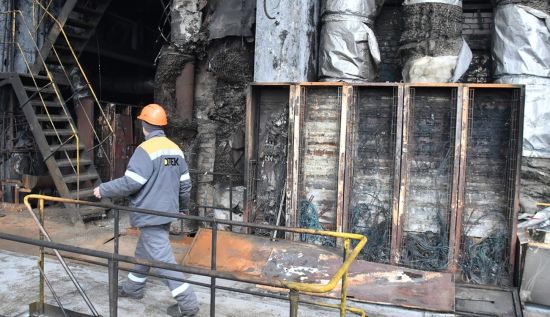
Now, however, everything is changing because of the fuel crisis. It is affecting an increasing number of Russians, even in regions far removed from the front line and unlikely ever to be reached by Ukrainian drones or missiles. Yet even there, people are waiting in long lines for fuel, revealing just how deeply Russian daily life depends on it.
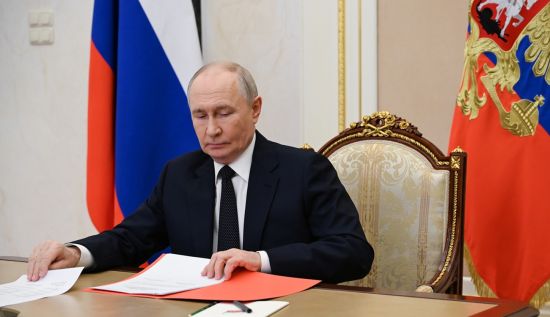
Putin is clearly testing the public mood, trying to determine how to respond. He makes public statements and gives awkward, tightly scripted interviews. Taken together, these appearances suggest that he is far from confident. It is becoming increasingly difficult for him to reconcile the two competing narratives through which the Kremlin has sought to explain the war.
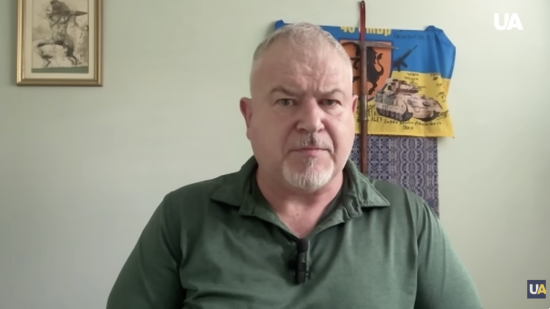
Read the FULL article by Petro Oleshchuk, political scientist, Ph.D., expert at the United Ukraine Think Tank.
Oleshchuk argues that Russian wartime propaganda has increasingly revolved around two central narratives designed to reinforce public confidence in the regime. The first portrays the war as unfolding entirely according to plan, insisting that Russia has suffered no meaningful setbacks, that its armed forces continue advancing on all fronts, and that ultimate victory is only a matter of time.
The political scientist notes that the second narrative complements the first by depicting Russia as a besieged state confronting the collective West. According to this message, Russian society must remain united because Western countries are allegedly seeking to weaken and destroy Russia. Despite this external pressure, propaganda consistently assures domestic audiences that Russia will ultimately prevail.
According to the analyst, these narratives have been supported by an extensive information campaign backed by substantial state resources. The Kremlin has sought to create the perception of an unstoppable military offensive while simultaneously projecting confidence in Russia’s strategic trajectory.
The expert argues that large-scale strikes against Ukrainian territory have played an important role within this communication strategy. While many of these attacks have had limited direct military value, he contends that their primary purpose has been psychological—intended to terrorize the civilian population and undermine Ukraine’s willingness to continue resisting.
In Oleshchuk’s assessment, the Kremlin expected these two processes to reinforce one another. Ukrainians were supposed to become demoralized by continuous attacks, while Russian citizens would receive constant confirmation through state-controlled media that their country was steadily moving toward an inevitable victory.
Oleshchuk argues that the Kremlin can no longer simply ignore developments that have begun to undermine one of its central wartime narratives. In his view, Putin is increasingly likely to respond by escalating the conflict in an effort to restore both domestic and international perceptions of Russia’s inevitable victory. According to the analyst, several potential scenarios appear increasingly plausible.
The political scientist identifies the first and most immediate option as an intensification of Russia’s missile and drone campaign against Ukraine. While he doubts that such attacks would significantly alter the military balance, he warns that they would almost certainly result in additional war crimes and increased civilian casualties.
According to the expert, future strikes are likely to focus on symbolic civilian targets intended to reinforce the perception that Ukraine faces unavoidable destruction and, ultimately, defeat. He argues that although Russia has employed terror tactics throughout the war, the Kremlin previously attempted to portray attacks as legitimate strikes against military infrastructure or attributed civilian casualties to Ukrainian air defense. More recently, however, Russian officials and propagandists have become increasingly willing to acknowledge the coercive and intimidating purpose of these attacks more openly.
The analyst nevertheless questions the effectiveness of this strategy. In his assessment, further destruction inside Ukraine offers little reassurance to ordinary Russians confronting domestic problems such as fuel shortages. Images of damaged homes, churches, or cultural institutions are unlikely to alleviate growing concerns about everyday economic hardship within Russia itself.
Oleshchuk argues that a second scenario would combine continued long-range strikes with an attempt to expand military operations along additional sections of the front. Referring to assessments by Commander-in-Chief of the Armed Forces of Ukraine Oleksandr Syrskyi, he notes that Russia may seek to launch new offensives toward the Chernihiv and Sumy regions in an effort to stretch Ukrainian defenses and demonstrate that Moscow has regained the strategic initiative.
The political scientist cautions, however, that this option also faces significant constraints. Available evidence suggests that Belarus is unlikely to become directly involved in the conflict, making a large-scale offensive from Belarusian territory improbable. Instead, any expansion of operations would more likely originate from Russia’s Bryansk region.
The expert further argues that Russia is likely to continue relying on familiar instruments of coercion, including intimidation, political pressure, and renewed nuclear rhetoric. Nevertheless, he contends that such actions fail to address the Kremlin’s underlying political challenge.
According to Oleshchuk, the most significant setback facing Putin is psychological rather than purely military. He believes that the image of inevitable Russian victory—carefully cultivated through years of wartime propaganda—has been weakened by Ukraine’s long-range strikes on Russia’s energy infrastructure. In his view, these developments have challenged the Kremlin’s narrative not through rhetoric but through tangible consequences experienced inside Russia.
The analyst emphasizes that the fuel shortage has evolved beyond an economic issue into a broader political and psychological problem. As more Russians experience the direct effects of the war in their daily lives, sustaining previous propaganda narratives becomes increasingly difficult.
In conclusion, Oleshchuk argues that Putin’s most likely response will be further escalation rather than public acknowledgment of these challenges. This may involve intensified attacks against Ukrainian cities, attempts to widen the battlefield, or renewed efforts to raise tensions with NATO. However, the expert concludes that such measures can generate only temporary informational or political effects. They do not resolve the deeper structural problems confronting the Kremlin, including fuel shortages, inflationary pressures, the erosion of the narrative of inevitable victory, and the gradual psychological weakening of the regime’s authority within Russian society itself.
Read the FULL article on The Gaze: How the Russian Myth of “Inevitable Victory” Is Crumbling in the Fuel Crisis
Read also: When Fear Gives Way to Ridicule: Putin’s Most Dangerous Crisis