Today at 14:41

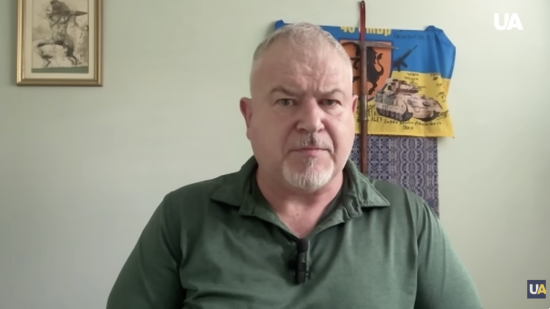
Read the FULL article by Petro Oleshchuk, political scientist, Ph.D., expert at the United Ukraine Think Tank.
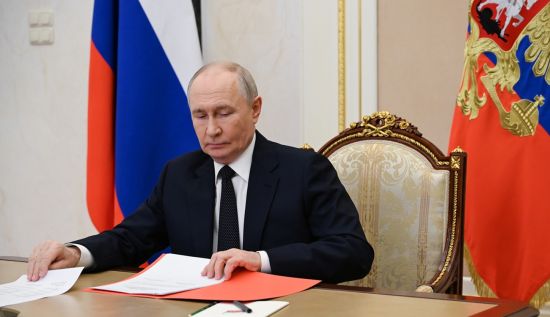
Oleshchuk argues that Vladimir Putin’s recent surge in public appearances marks a noticeable departure from his previous communication style. Whereas the Russian president often remained absent from public view for extended periods, relying on carefully scripted statements, he now comments on current events almost daily. According to the analyst, however, these appearances largely avoid addressing the problems that matter most to ordinary Russians.
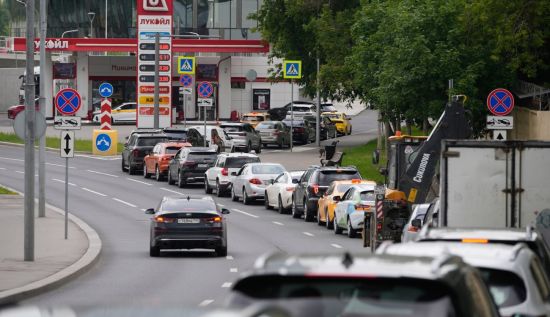
The political scientist notes that while public concern inside Russia increasingly revolves around fuel shortages and broader economic disruptions, Putin continues to emphasize military achievements and alleged battlefield successes. He also persists in portraying Europe as seeking Russia’s strategic destruction, a narrative that, in Oleshchuk’s view, bears little connection to the country’s immediate domestic challenges.
The expert argues that this reflects a deeper crisis in the Kremlin’s long-established communication model. Throughout his rule, Putin has typically avoided commenting on acute crises while they are unfolding, preferring instead to remain silent until the situation stabilizes before presenting himself as the architect of a successful resolution. Oleshchuk contends that the current fuel crisis exposes the limitations of this familiar strategy.
According to the analyst, the crucial difference is that the present situation extends beyond the realm of media narratives. Previous incidents, including Ukrainian operations in Russia’s Kursk region, directly affected only certain parts of the population and could therefore be treated by much of Russian society as distant events. The fuel shortage, by contrast, touches the everyday lives of citizens across the country, making it far more difficult for the Kremlin to ignore or downplay.
The author argues that this represents one of the first nationwide domestic crises Russia has experienced since the beginning of the full-scale invasion of Ukraine. In his assessment, the challenge for an authoritarian regime is not simply public dissatisfaction with ineffective governance but the risk that the ruler becomes an object of ridicule rather than fear.
Oleshchuk suggests that Putin increasingly appears detached from the realities confronting ordinary Russians. The carefully cultivated image of a calculating strategist who always remains several steps ahead is becoming harder to sustain when visible domestic problems remain unresolved. In this sense, the analyst believes that the Russian president risks undermining one of the principal foundations of his own political authority.
The political scientist emphasizes that Putin’s political legitimacy has long depended on a media environment dominated by television. Traditional television enabled the Kremlin to construct and maintain a carefully controlled public image, presenting Putin as the central figure in an almost continuous political narrative. According to Oleshchuk, this model has become considerably less effective in the digital era.
The expert notes that internet platforms operate according to fundamentally different principles and are far more difficult for governments to control completely. Although Russian authorities have attempted to tighten censorship through restrictions, website bans, and even internet shutdowns, these measures have simultaneously amplified public awareness of the consequences of Ukrainian strikes.
According to the analyst, Ukraine’s campaign against Russia now operates on several interconnected levels. Beyond its military objectives, long-range strikes generate economic pressure while simultaneously producing political and psychological effects by bringing the realities of war into the daily lives of Russian citizens.
The author argues that these developments also expose the growing disconnect between Putin’s rhetoric and contemporary realities. While the Kremlin continues to emphasize symbolic geopolitical achievements and relatively obscure battlefield developments, many Russians are increasingly preoccupied with practical concerns such as fuel availability and everyday economic stability.
Oleshchuk contends that Putin himself has chosen this communication strategy rather than being forced into it by circumstances. Instead of demonstrating active leadership during a domestic crisis, he continues to present himself primarily as a geopolitical leader focused on grand strategic ambitions, leaving immediate social concerns largely unaddressed.
The expert believes that this approach contributes to the gradual erosion of the regime’s public image. Although authoritarian systems often possess significant institutional resilience, he argues that they become vulnerable once their central figure begins to inspire irony rather than intimidation. For personalist regimes, the loss of symbolic authority may ultimately prove as dangerous as economic or military setbacks.
The political scientist also draws attention to the evolving role of Russian propaganda. He argues that mass-media narratives, television broadcasts, major Telegram channels, and other pro-government communication platforms are now heavily focused on reassuring citizens that no serious fuel shortage exists. Rather than eliminating public concern, however, this coordinated messaging highlights the authorities’ inability to convincingly address the underlying problem.
According to Oleshchuk, the image of Putin as an infallible strategist is therefore being weakened not only by Ukraine’s military operations or Russia’s economic difficulties but also by the Kremlin’s own communication strategy. A leader who continues to celebrate geopolitical victories while citizens experience tangible domestic disruptions risks losing the aura of competence that has long underpinned his rule.
In conclusion, the analyst argues that Ukrainian strikes should be understood as producing effects that extend well beyond the battlefield. They influence Russia militarily, economically, politically, and psychologically by exposing the domestic consequences of the war to the broader population. At the same time, he contends that the themes dominating Russian propaganda—including efforts to deny fuel shortages, minimize the effectiveness of Ukrainian operations, and reassure the public about potential mobilization—reveal the issues that most concern the Kremlin itself. Ultimately, Oleshchuk concludes that while authoritarian regimes can endure significant external pressure, they face a far greater challenge when the fear surrounding their leader begins to give way to public ridicule.
Read the FULL article on The Gaze: When Fear Gives Way to Ridicule: Putin’s Most Dangerous Crisis
Read also: Iran’s Regime Outlasted the War. Can It Outlast the Peace?