Today at 14:41
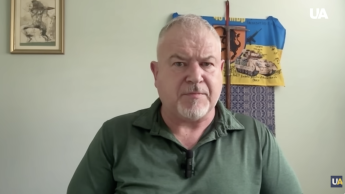
Ukraine is shifting from defense to the systematic attrition of Russia, raising the cost of war for the Kremlin. Strategic communications expert Cormac Smith explains the “trident strategy”: eliminating Russian forces on the frontline, destroying logistics in the rear, and striking Russia’s military-industrial base.
This discussion centers on attacks against the shadow fleet and oil refineries, the isolation of Crimea, long-range missiles, Patriot manufacturing within Ukraine, and new NATO decisions.
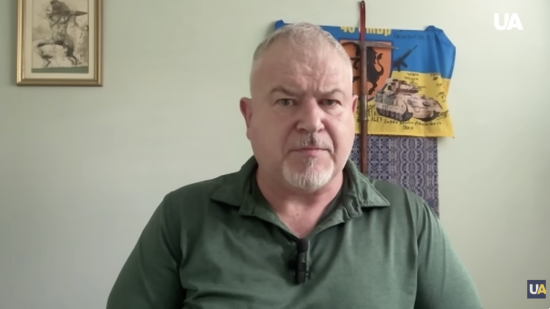
— So, today we’re talking about how Ukraine is raising the cost of this war for Russia — from strikes on the shadow fleet, oil refineries, and the Crimean Peninsula, to drone operations directly on the front line. We’ll talk about Patriot systems, of course, Ukraine’s own ballistic capabilities, and what to make of the new signals coming out of the NATO summit in Anora (ph). To discuss what these changes mean for the front line, for the West, and for the Kremlin’s behavior, we’re joined by Cormac Smith, a strategic communications expert who has worked with Ukraine for many years and understands very well how Ukrainian successes are perceived abroad. Hello, Cormac. Thank you for joining.
— Henry, it’s always a pleasure and a privilege to join you.
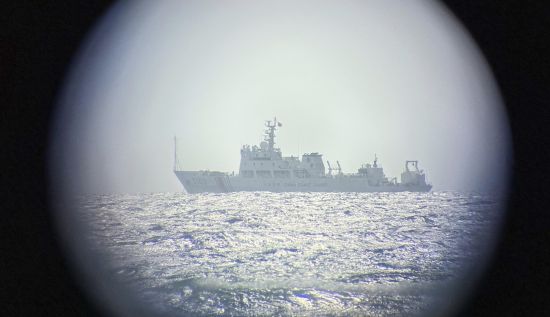
— Same here. Topic number one — military, Cormac. In the last 96 hours alone, Ukraine has hit 35 vessels linked to Russia’s shadow fleet and to its logistics more broadly. If I say that the fact Ukraine is physically striking the loopholes Russia uses to circumvent sanctions matters more than the tankers themselves being burned — would you agree with that?
— I would agree absolutely, Henry. In another interview recently I used the analogy of the trident. The trident, as you know, is the beloved symbol of Ukraine, and it has three points. At the moment, Ukraine is driving all three points of the trident into the body of Russia.
We see what’s happening on the front line, where numerous reports indicate that Ukraine is killing at a rate of somewhere between six-to-one and eight-to-one. In fact, their target isn’t necessarily to reclaim land, but to kill a thousand Russian soldiers a day. That’s interesting in itself — they are decimating Russia’s forces on the front line, and last month, for the first time, Russia made no advance whatsoever.
The second point of the trident — and we’ll probably talk more about this later — is where Ukraine is now decimating Russia’s logistics chain: fuel trucks, ammunition trucks, vehicles evacuating the wounded, vehicles bringing food supplies to the front line. I didn’t check the figures today, but it’s something like four to five hundred fuel and other logistics trucks a day that Ukraine is now destroying. That’s going to have a massive effect on the ability of troops on the front line to keep fighting, because it cuts their supplies. But it must also be crushing their morale, and morale, of course, is so important in this fight.
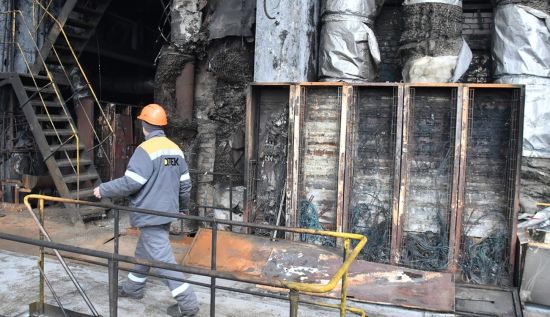
The third point of the trident is the long-range strikes. Now that Ukraine has its own long-range missiles, and the handcuffs are off — because neither Trump, nor Merz, nor anybody else can say “you can’t use our missiles behind Russia’s borders” — we know this has probably taken out up to 30% of Russia’s oil industry at the moment. Russia, the gas station with nukes — it has nothing else — is having to import diesel and petrol for the first time in recent months. This is really hitting the Russian economy badly. It’s hitting the oil revenue Russia uses to pay for its war.
But just as important, it’s bringing the war home to the Russian people. It’s breaking that unwritten agreement Putin, and every tsar before him, has always had with the Russian people — that they keep their nose out of politics, and their little tsar will protect them. Well, it doesn’t look like their little tsar is protecting them very well. And of course, the most important point here is the strikes on Moscow and St. Petersburg, where the middle classes and the very rich oligarchs live — the very people whose support Putin relies on. It’s bringing it home to them. We’ve seen massive strikes on oil refineries in Moscow. Wasn’t it remarkable a few weeks ago, during the St. Petersburg International Economic Forum, when the world’s decision-makers and opinion leaders were gathered there to be shown the potential of the great Russian Federation — that Russia couldn’t even protect its own docks and its own oil facilities in St. Petersburg? So yes, this is very important, and it’s very effective.
— Is it bringing the war closer to an end?
— We can’t say that yet.
— Well, at least it’s moving in that direction, because Russia is already restricting diesel exports — seriously — while Ukrainian strikes are hitting refineries from Yaroslavl to Omsk, which is 2,500 kilometers away from Ukraine. Could a fuel crisis become more painful for the Kremlin than actual battlefield losses? Because I don’t think the Kremlin cares about life at all, and Russian life in particular.
— Look, Henry, I’ve been saying since my very first interview, back in the middle of January 2022, that this thug Vladimir Putin would have no compunction about murdering tens of thousands of innocent Ukrainians, nor would he have any compunction about feeding tens of thousands of his own people into the meat grinder. We’ve seen the proof of those words over the last four and a half years.
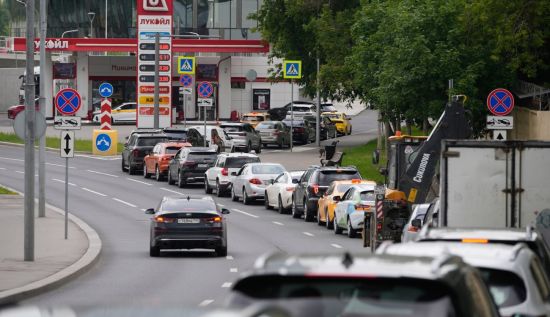
So what these deep strikes are doing, as I said, is bringing it home to the Russian people. We’re seeing some quite frankly hilarious scenes — fights breaking out at petrol stations, queues for petrol, and so on. That agreement — that the little tsar Putin will look after his people — has been broken, and it’s being brought home to them daily. It’s affecting their lives daily. And that’s not even talking about what’s happening in Crimea.
— “Little Tsar” — I like the way you put it. Well, another surprise — actually, 1,180 surprises — for the “little tsar.” Operation Ashan (ph) reportedly hit 1,180 targets in two stages. It says something new. Is that just an operation — another operation, brilliant, but just an operation — or a new pattern, a new model of Ukrainian defense? Not waiting for the Russians to launch another wave of terror against Ukraine, but preventing it and hitting fast and hard while the enemy is preparing?
— It’s a new tactic, and it’s a very important one. Going back to my analogy of the trident and its three points, I’d put this operation in the second point of the trident — decimating the logistics chain. What it’s doing is targeting armor, artillery, and military vehicles destined for the front line, and stopping them from getting there in the first place. Given that the trident only has three points, I’d include it there — it operates over a very similar range to where the logistics chain is being decimated.
But I think what Ukraine has done this year is very clearly open up two additional fronts in this war behind enemy lines: operations like this one, and the strikes on the logistics chain, which operate over a similar range, and then the deep strikes, which we’ve just talked about. So yes, it’s something new, it’s a new tactic, but it’s part of the overall strategy that I believe Ukraine has been prosecuting so effectively in 2026.
— Right. Well, don’t get me wrong — Russia still has one dangerous advantage: ballistic terror, ballistic missile strikes against Ukrainian cities. But now there’s a license to produce Patriot systems in Ukraine. I know it’s speculation, but when do you think we might start seeing the results?
— Well, I think we have to be very cautious here — I was asked about this on another interview, here in the UK. Let’s assume — Donald Trump has said, “I haven’t spoken to the manufacturers yet, but we have a lot of influence over these people and it will happen.” One always needs to take anything Donald Trump says with a very large pinch of salt. But let’s assume it does happen. I’ve been speaking to people and trying to do some research, and I think, at the very earliest, it’s likely to be a year before Ukraine is rolling its own manufactured Patriot missiles off the production line and ready for use.
In the meantime, is America going to resume the supply of Patriots? I doubt it very much, because their excuse has been that their own stocks are low — and of course they’ve been using a lot of them in the war with Iran, around the Strait of Hormuz. What we’ve seen in recent days is that all bets seem to be off there, and we seem to be back to a standoff between America and Iran.
So there’s still a very significant gap. It’s hoped — and I’m not a military man with the necessary detailed information — that the Europeans can fill that gap to some extent. But I’m afraid the hard truth is that this is still going to mean tremendous hardship for Ukraine, and for Ukrainian cities and civilians in particular, going into winter — because it’s a clear strategy of Russia’s to target civilians and civilian infrastructure to try to break the will of the Ukrainian people.
We saw one night — was it last weekend? — with 29 ballistic missiles, and Ukraine didn’t manage to shoot down a single one. We know over 50 civilians have died in a matter of 72 hours or so. So — it’s good news in the long term, because it provides strategic independence, because even if there were a ceasefire tomorrow, and a settlement favorable to Ukraine, we know Russia isn’t going away, and it will remain, for many years to come, a very significant security threat — not just to Ukraine, but to the rest of Europe.
So going forward, it’s absolutely essential that Ukraine keeps developing its own missiles, which it is doing — with the Flamingo, for example, and a number of other shorter-range ballistic missiles. It’s doing this very well.
The big gap at the moment is the Patriots, which are effectively the only missile that can reliably shoot down some of the hypersonic missiles Russia uses. So it’s good news in the long term, but in the short term, I’m afraid there’s a lot of pain in store for the Ukrainian people.
Just before I stop talking — my own view on this. In 1940, Hitler carried out the Blitz on London, in which twenty-three and a half thousand Londoners died. If Hitler didn’t break the will of the British people in 1940 with the Blitz — Putin, sure as hell, won’t break the will of the Ukrainian people. Easy for me to say, from a safe, comfortable home in London, but from getting to know Ukrainians and living among you, that is what I believe. But yes — it’s still hard news. Sorry, that was a very long-winded answer.
— No — very detailed and emotional, and this is exactly what our audience likes and loves about you, so don’t worry about that. Ukraine isn’t sitting idle, meanwhile — it’s working on its own FB-9 (ph) ballistic system. When, and if, it becomes an operational weapon — say, tomorrow — how would that change the Kremlin’s calculations about strikes on Ukraine? Would they even care, do you think? I ask because there is no “Russia,” really — there’s just Putin. He decides for the country, and he’d care about Russians dying in Moscow or St. Petersburg about as much as he cares about the roughly 40,000 dying daily on the battlefield in Ukraine — which is not at all.
— Well, look — the sooner Ukraine gets these various missiles into operation, the better, and the better Ukraine can defend its own people.
But that’s actually not what’s going to change Putin’s mind. Putin, and the people around him in the Kremlin, will only change their minds, or come to peace negotiations, when the price becomes unbearable — too much to pay. And the way that happens is by holding the feet of the Russian people to the fire.
That’s already happening with the fuel shortages, and it’s becoming more and more obvious that the war is real. And let’s face it — this is a war the majority of Russians were probably insulated from for nearly four years.
I looked at a statistic recently: with Ukraine’s long-range strike capability, they can now hit targets up to 3,000 kilometers away — that’s the range of the Flamingo, I believe — but they also have long-range drones, which put nearly 50% of the Russian Federation within range. And within that 50% lives around 75% of the population — including, of course, the people who matter most to Putin.
With Ukraine killing, or seriously wounding, over a thousand people a day, that can’t be hidden either. It’s going to become increasingly obvious that those body bags — of sons, husbands, brothers — are coming back to communities right across the Russian Federation.
I don’t think the Russian people care one bit about the atrocities being carried out in Ukraine — they’ve shown absolutely no sign of that. Ukrainians who’ve fallen out with relatives and friends across the border make that very clear to me. But it’s only when they’re made to pay the price. Russia only understands strength and power, and I’d suggest the Russian people don’t have a great moral compass when it comes to Ukraine. This will only change when the price becomes too much to pay.
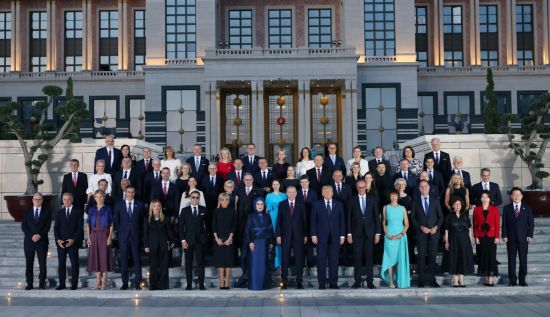
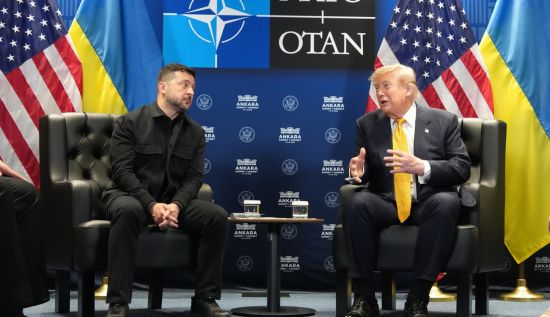
— All right — well, I agree. I’ve been here five years, and as soon as we put enough pressure on them — look at Peskov these days, asking Donald Trump to pressure Ukraine into stopping its strikes on Russian infrastructure. Isn’t that unbelievable? What a strange thing to be happening. But right after the NATO summit — let’s move to this — at the NATO summit in Anora (ph), Ukraine received several very positive signals at once: a Patriot production license, US readiness to buy Ukrainian drones, and Financial Times reports of a possible increase in military support, which is already happening. Is this no longer just aid to Ukraine, but a shift toward partnership? Because it’s also an investment — it’s becoming profitable, and it’s becoming obvious that Ukraine is also becoming a security provider for the West, and that the West is starting to believe that — not just you and me saying it, but really believing it seriously.
— Look, this shift has been happening for some time — certainly with the European countries. About a year and a half, two years ago, I’d say the shift started happening positively, with European companies partnering with Ukraine to produce munitions and weapons.
Ukraine has also finally been recognized for the great expertise it has, particularly in drone warfare.
What’s happened with the US has been very different. As soon as Trump came in, they effectively cut off all direct aid to Ukraine — they would only sell weapons to the Europeans, for the Europeans to give to Ukraine. And there have been many signs, at critical moments, that key munitions — Patriots in particular — have been slow-walked into Ukraine. America, it seems, has kept providing military intelligence, which we have to say is absolutely critical, because there are areas of military intelligence that, as I understand it, Europe isn’t yet capable of replacing.
But the important thing — there are really three things I want to say here. First, Europe is already partnering with Ukraine, and that will only get better. Second, Ukraine is now being recognized — I said in an interview the other day that Ukraine is probably the most lethal fighting force on the face of the earth today, man for man, woman for woman. Yes, America can bomb from 50,000 feet, or fire missiles from 2,000 kilometers away, but when you put boots on the ground — which is inevitable — that changes the calculus. We know Donald Trump and those around him are terrified to put boots on the ground against Iran, because as soon as they do, the vast majority of Iran’s very vicious fighting forces — tens of thousands of them, still intact — come into play. As soon as Trump puts the boots of the “greatest army on earth” on the ground in Iran, body bags are going to start coming back to the United States, and we know from recent polling that over 80% of the American electorate won’t stomach that.
But here’s the thing — and it’s always very hard to call Donald Trump — is there a change in his direction? I’d like to think there is. Trump likes to back winners, and we’ve come a long way from that horrible meeting in the Oval Office, where Trump tried to tell Zelensky he “had no cards.” Zelensky and the Ukrainians have proven, in the eighteen months since, that they have a lot of cards. That’s got to be obvious to Trump, and to the Americans by now. And remember — within what I’d now call the Trump regime, there are pro-Ukrainian voices, Marco Rubio foremost among them, who will constantly try to bring the administration back toward more positive support for Ukraine.
So maybe — and I’m speculating, and hoping for the best — Donald Trump is starting to see Zelensky and Ukraine as winners, and sees the massive potential in Ukraine, not just for doing business over rare earth metals, but as a very powerful and reliable security partner. America will still block Ukraine from joining NATO — but we need Ukraine in NATO, because Ukraine in NATO makes NATO, and the West, so much more powerful.
I go back to a beautiful line — Andrii Sybiha, Ukraine’s current Foreign Minister, a lovely gentleman I worked with while I was out there, said before Christmas — and he’s a very mild-mannered man — speaking to us in the collective West, he said: “You need us, because we know how to kill Russians. You don’t — yet.” Maybe that message is finally starting to get through, even to the thickest heads — and by that I mean people like Donald Trump. Excuse me — I’m not a diplomat anymore, I don’t work for a government, I can speak freely.
— That’s fine, Cormac — we have plenty of diplomats to ask the same question to. That’s exactly why you’re here, to speak straightforwardly. So, in your view, how is the sequence being read in Washington? Putin talks about peace negotiations while, at the same time, launching massive attacks on civilian cities — he always does that. Does this strengthen Ukraine’s position in Trump’s eyes?
— Exactly — that, plus the victories on the battlefield. I think there are signs that Trump may be tiring of Putin somewhat. It was interesting to see Peskov again this week, being very careful to distinguish between Ukraine’s European allies and the Americans, making the point that it’s still the Americans who could broker some kind of peace deal and bring Ukraine to the table. We had that “agreement” that was never really an agreement.
Those of us with eyes to see and ears to hear know that what happened in Alaska, before Christmas, was basically an agreement between Trump and Putin that Trump would do his best to force Ukraine to give up that extra 20% of Donetsk oblast — the fortress belt, the gateway to Kyiv and the rest of Ukraine — which, of course, was never something Ukraine could agree to. We remember the massive pressure, and the 28-point document, which was clearly written in the Kremlin and translated into English, probably using AI, in the White House, then foisted on Ukraine and the rest of the world.
Now there are signals that Putin may be increasingly disappointed, feeling let down that the Americans aren’t sticking to what he saw as that agreement. That’s not going to happen — we’ve moved beyond that. But it was interesting, during the week, to hear Peskov effectively appealing to the Americans — who he clearly sees in a far more favorable light than the Europeans — to force Ukraine back to the table. That ship has sailed. Zelenskyy has a lot of cards.
I was asked to predict whether we’ll see a peace settlement in 2026, and I very much regret to say I don’t see one — because there’s no signal yet, from the Kremlin or from Putin, that they’ve changed their ultimate strategic goals one iota. They still talk about the “denazification” of Ukraine — effectively, a goal to wipe Ukraine and Ukrainian nationhood and identity off the map. I always come back to a quote from a good friend, a senior Ukrainian diplomat, who said to me in the very early weeks:
“It’s very simple, Cormac. If Russia stops fighting, there will be no war. If we stop fighting, there will be no Ukraine.”
I think the vast majority of Ukrainians — not just diplomats and soldiers — know that. They’ve seen what happened in Mariupol, in Bucha, in Irpin, and all the other places, and the absolutely sickening atrocities carried out there by Russian soldiers.
So, as tough as it’s going to get over the winter, Ukraine has no choice — but Ukraine is playing, I think, a very smart hand at the moment. Are they winning yet? Maybe not yet. But Russia certainly isn’t winning either. I’d go as far as to say Russia is losing. They haven’t lost yet, but they are certainly losing.
— Well — is Ukraine winning? I don’t think that’s really the question. We’ve been here five years running, and I believe that alone can already be considered a victory. And we’re hitting back hard. To sum it all up: Ukraine is striking Russian fuel, the shadow fleet, leaving Russia with effectively no navy in Crimea, and blockading the whole peninsula militarily — while also building its own Patriot capability, slowly but gradually, without yet having a license, and working on its own ballistic missile system. We’re hitting Russia where it hurts most — not through negotiations, not through statements, but through real losses in fuel, logistics, and Moscow’s own sense of security — and that’s what will change the Kremlin’s behavior.
— Money. That’s what they’re afraid to lose, and they’re losing a lot of it. They’ll simply run out of resources. I sincerely believe that, because it’s already happening.
Read also: How the U.S. and Ukraine Could Rewrite the Patriot Supply Chain