Today at 11:01

Despite the extraordinary challenges of full-scale war, Ukraine has succeeded in building a flexible and resilient defense innovation ecosystem that is reshaping modern military development, according to Turkish defense expert Alper Özbilen.
In an interview with Ukrinform, Özbilen, a senior strategist specializing in defense technologies, artificial intelligence, and cybersecurity, said Ukraine’s most significant achievement extends beyond individual technological breakthroughs.
“In my opinion, Ukraine’s greatest long-term achievement is not simply the technologies it has developed, but the human capital, innovation culture, and defense innovation ecosystem it has created during the war,” he said.
According to Özbilen, Russia’s invasion has accelerated a broader transformation within the global defense industry by demonstrating the growing importance of agile private-sector innovation.
He argued that small technology companies and startups have repeatedly proven capable of responding to rapidly changing battlefield requirements more quickly than traditional defense manufacturers.
“Russia’s war against Ukraine has significantly accelerated this trend. It has shown that startups, agile development teams, and flexible technology companies are often able to respond to emerging battlefield needs much faster than large, conventional defense contractors,” he said.
As an example, Özbilen pointed to Ukraine’s Brave1 defense innovation cluster, which has brought together government institutions, military units, technology companies, and investors to accelerate the development and deployment of combat-tested technologies.
The Turkish expert also highlighted a broader transformation in the nature of modern warfare.
According to him, the future of military competition will not be determined by the number of unmanned systems a country possesses, but by its ability to integrate multiple technologies into a unified operational network.
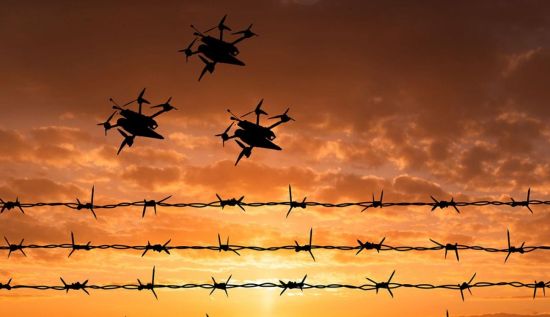
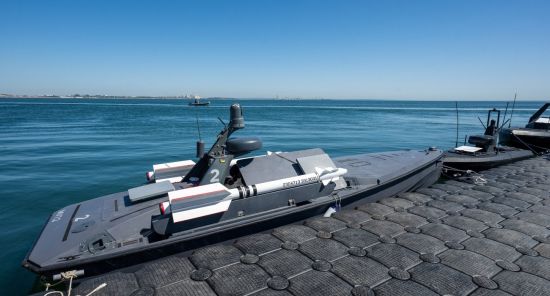
“The key transformation is not an increase in the number of drones, but the transition toward a network-centric model of warfare in which aerial, ground, and maritime unmanned systems, electronic warfare capabilities, AI-supported decision-making systems, and precision-guided weapons function as one integrated force,” Özbilen explained.
He argued that this shift fundamentally changes the criteria for military effectiveness.
Rather than emphasizing numerical superiority, future armed forces will compete through their capacity to build intelligent, interconnected, and rapidly adaptable systems capable of evolving alongside changing battlefield conditions.
According to Özbilen, countries that can quickly upgrade technologies, integrate new capabilities, and coordinate multiple platforms within a single operational architecture will hold a decisive advantage in future conflicts.
His assessment reflects a growing consensus among international defense analysts that Russia’s war against Ukraine has accelerated the evolution of military doctrine and defense innovation worldwide.
Earlier, Özbilen also argued that one of the most important lessons emerging from the war is that modern conflicts are no longer decided primarily by the size of armies or the quantity of equipment.
Instead, he said, success increasingly depends on how rapidly armed forces and defense industries can adapt to technological change, incorporate new battlefield lessons, and continuously innovate under operational pressure.
Ukraine’s wartime experience, he suggested, has become a leading example of how innovation, private-sector flexibility, and technological integration can reshape military capabilities even under the most demanding conditions.
Read also: Ukrainian Drones Hit Russian Oil Refineries Nearly 200 Times This Year