Today at 13:16
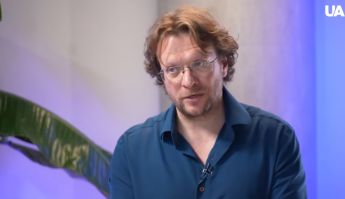
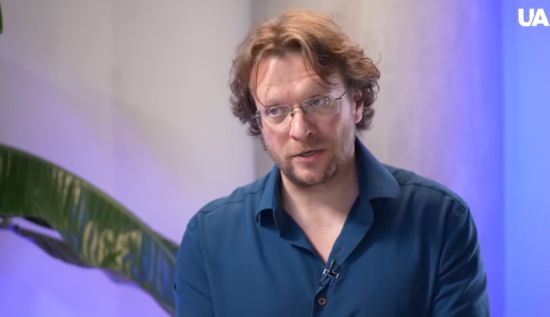
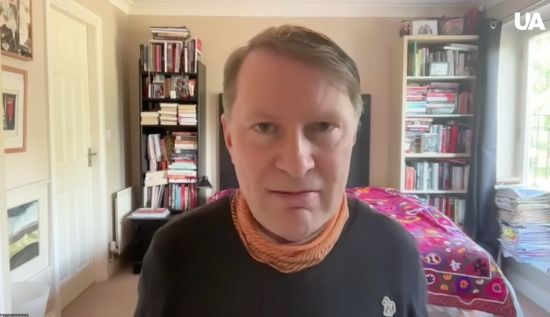
Ukraine is breaking stereotypes not only on the battlefield but also in the cognitive realm. In this episode of the “People of Good Will” program, host Saken Aymurzaev speaks with the renowned British journalist, author, and propaganda researcher Peter Pomerantsev. This conversation with Peter Pomerantsev took place during the Lviv Media Forum 2026.
In this interview, you will discover: Paranoia as a weapon against the Kremlin: Why internal fear and the shutting down of oil wells destroy Putin’s system faster than any external narratives.
A new era of information warfare: How Russia and China are attempting to “poison” artificial intelligence models (such as ChatGPT and Claude) and why cybersecurity has evolved into information security. Lessons from World War II: What Sefton Delmer’s tactics entail, why “fighting the cure for authoritarianism” is futile, and how to weaponize a dictatorship’s internal divisions against itself.
The evolution of Ukraine’s perception: How our country has transformed in the eyes of the West over recent years from a recipient of aid into the primary donor of military innovation (MilTech) and an instructor for the North Atlantic Treaty Organization.
Peter Pomerantsev explains why the psychological dimension and the resilience of social systems will prove decisive in this war, and also previews his new book, “20 Ways to Defeat Authoritarian Propaganda.”
— Hello everyone, you’re with Saken Aymurzaev, and this is our project People of Goodwill. The guests of this program share how and where they support Ukraine in its heroic struggle against Russia’s criminal aggression. Today, I am very pleased to introduce our guest, the well-known journalist, publicist, and writer Peter Pomerantsev.
Peter Pomerantsev is a British essayist, writer, and researcher of propaganda. He was born in 1977 in Kyiv and has lived in the United Kingdom from an early age after his father, the Soviet dissident poet and radio host Igor Pomerantsev, was forced into emigration. He studied English literature and German at the University of Edinburgh. From 2001 to 2010, he lived and worked in Moscow. He has condemned Russia’s full-scale invasion of Ukraine. His work focuses on propaganda, and he is the author of several books on the subject. He is also a co-founder of The Reckoning Project, which documents war crimes committed by the Russian army in Ukraine. Hello, Peter. Great to have you with us today.
I wanted to start with a very specific and interesting case. May 9th. What Russia does around this date is propaganda. It is propaganda as a kind of ideology, almost a cult of propaganda.
What Ukraine did this year is counter-propaganda, an information operation. President Zelenskyy’s decree is, in my view, a brilliant move. How do you interpret this?
— Well, in a sense, all military operations are also information operations. Ukraine is currently holding the front very effectively. But at the same time, it is sending a message to Russia that mobilization is inevitable, that you are approaching a moment of a very difficult choice.
There have also been various drone strikes and so on, and then comes the next informational step. In wartime especially, we have to think in these kinds of combinations.
Kinetic reality creates opportunities for different informational moves and different openings. But in the end, especially in this war, the psychological dimension may be the most decisive because the front line is not moving much right now.
It becomes a question of who has the stronger system, whose resilience is stronger, whose will is stronger, who has more confidence in their social system — in Ukraine, a system of support, and in Russia, a system of control. This is a very strange war. The most important thing is what is happening on the front line, but then how it is interpreted and used very often becomes decisive.
— I would even call it audacity. Ukraine is demonstrating a kind of informational boldness, and it is working against Russia’s sluggish, massive propaganda machine.
— Yes, asymmetric moves are very important. They are also very important for partners because if we remember December and January, there was already a narrative that Russia was winning.
It is very important to show that this is not the case, that actually the opposite is true. In this sense, Ukraine is currently winning. We heard Rubio’s words recently, and we heard Driscoll’s speech where they praised the Ukrainian army and Ukraine’s progress. All of this is impossible without reality. It cannot be fabricated.
But it is very important afterwards to correctly use that reality for psychological purposes.
— How is the perception of Ukraine changing? You travel a lot, you teach, and you speak to people. Despite all this wave of Russian propaganda, what is the perception among partners and allies?
— In the last few months, it has been revolutionary. Ukraine has entered the imagination of key audiences in the West. And I’m talking about key audiences not only in the West but also in the Middle East.
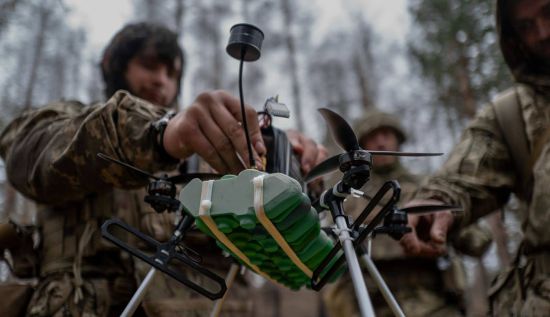
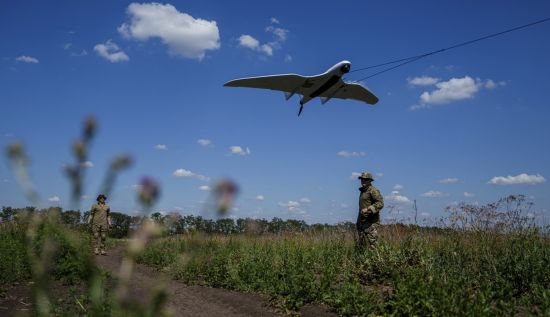
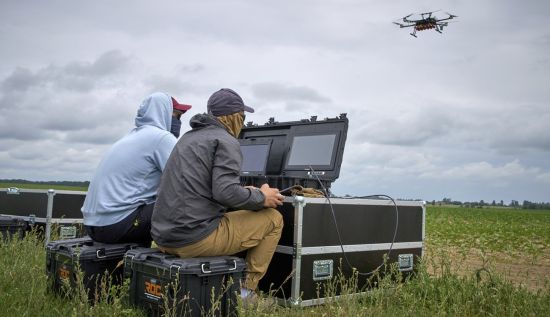
From being a recipient of aid, it has become a donor country in military technology, in drones, in innovation.
Those who know Ukraine also know that even in Soviet times this was a center of engineers, innovation, military industry, and military thinking. The strongest institutions were here. If you know Soviet history, this is not new. But if you are someone in Western Europe or the United States, where the perception of Ukraine was that it is a weak and struggling place, then of course this is a revolution in people’s minds.
— For us it is taken for granted.
— Well, yes. And if you know history less well, if you didn’t know about the institutes of mathematical linguistics that existed here in the 1970s and 1980s, where ideas that later became part of the internet were essentially being developed before being destroyed by the Soviet system, then maybe you didn’t know that this place always had some of the most brilliant engineers.
For many people, it comes as a shock. They simply didn’t know. And Russia also spent many years trying to make Ukraine look absurd, portraying it as a country of incompetence, of bunglers, and so on.
In the end, it didn’t work. Reality proved otherwise.
— And as for Russia itself, what do they think about themselves?
— They think a lot about themselves.
— We last did an interview together three years ago, and we talked a lot about propaganda. A very important part of that conversation was your project documenting war crimes. How has that evolved over the past three years?
— The crimes are continuing. Our goal from the very beginning was to bring together different tools to pursue justice and accountability. We combined the work of lawyers, journalists, sociologists, and political experts.
Of course, for an ordinary person, this process of justice seems very slow. But in the context of Ukraine, it is moving much faster than in other cases. I know that doesn’t help much if you are a victim. But in Yugoslavia, it took ten to twenty years after the war for investigations, inquiries, and some form of justice to even begin.
In Ukraine, it is already happening. There was major news about the creation of a European tribunal. There is also a case against Putin in The Hague, and so on. The question is how people usually receive compensation.
I think the first form of compensation may be financial compensation for losses — first of all for homes and similar damages. But there are also discussions about compensation for other kinds of harm.
I know that for non-lawyers all of this seems extremely slow and ineffective, but compared to other wars, there is a lot of progress.
— And if we talk about propaganda, over the past three years many say that the Russian army is learning. Military experts acknowledge that it learns from mistakes.
But in terms of propaganda, are they learning from mistakes too? Are they improving it, or is it the same train that has been moving for many years now?
— Look, what is the difference between democracies and authoritarian regimes?
Authoritarian regimes constantly invest in and develop their propaganda. For them, it is an inseparable part of politics.
In democracies, there are no such institutions. We don’t have ministries of propaganda and so on.
Russia, China, and other such powers are continuously developing their technologies. They are constantly experimenting with the newest tools. It is simply part of the system. Every day they invent something new. A democracy, when there is no active war, shuts down its propaganda institutions and loses a great deal of time.
Ukraine is fighting as best it can, but Ukraine has other priorities and its budgets are limited. There are some signals that there will be more focus on the cognitive sphere, but comparing this with Russia or China is very difficult. The scale is different.
— Does propaganda become more expensive? Meaning, do you need to constantly invest more money into it, or does it become cheaper as technology develops?
— In a way, it becomes cheaper. Yes, it becomes cheaper in the sense that AI will soon replace parts of it. It will become cheaper. But developing AI still requires a lot of money.
In some areas it will bring savings. In others it will become more expensive. There is still no effective Russian large language model. There isn’t one yet.
— But there is Alice.
— Well, it’s a bit strange.
— At this forum, representatives from Taiwan gave a very interesting presentation about exactly what we are discussing — how much China is investing in artificial intelligence and digital technologies. The speaker said that we need to think about this seriously and respond at that level. Is anything being done in this direction in counter-propaganda?
— Right now, the main focus is on the detoxification of large language models.
Russia and China are trying to poison systems like ChatGPT and Claude — large AI systems — in order to influence them. For example, to make them write that Bucha was staged.
There are organizations trying to stop this at a technological level. They understand what the adversary is doing and try to counterbalance it so that companies are aware of these campaigns and can respond to them.
The goal is to make sure they understand what is happening and can prevent it. It is not very different from the struggle over how algorithms can be manipulated. It is a very similar technology.
— So in the end, this is cybersecurity?
— Yes, in a broad sense everything is cybersecurity in a way.
But it’s not classical cybersecurity. It is information security.
— This book is about a very interesting person, by the way. What has happened to this book? Has it been translated? Have you received feedback on how people perceive it? Tell us a bit more because not all viewers may know this fascinating story.
— Yes, it is a story about the Second World War. It describes secret British operations aimed at undermining Nazi propaganda inside Germany. The British created a large number of pirate radio stations that used the principles of Nazi propaganda against the Nazis themselves.
They did not try to promote morality or truth. They used conspiracy theories, hatred, and even, in a sense, racism against the Nazis and their system. The idea was that evil can only be fought with evil. Of course, this raises many questions about morality, ethics, and effectiveness. It is also quite an entertaining story.
— And how do you personally feel about such a method of fighting?
— The idea that you can persuade people to become good once they have already chosen an authoritarian path is very difficult. What actually works in Russia against Putin, I don’t know.
Certainly not arguments based on international law.
— All right, let’s imagine, for example, that we push the idea that he is a British spy placed there to destroy Russia. Would that work?
— To me, that seems very naive. And why would we need to do that? It happens on its own. Prigozhin might have helped, of course. But the most serious problems for Putin have not come from the democratic flank. They have come from the far-right flank.
Now we see constant waves of conspiracy theories inside Russia that begin to undermine trust in the authorities themselves.
I’m talking about ideas such as: he was installed, he doesn’t really rule, he’s sitting in a refrigerator, and many similar narratives.
The main topic now is different — that there is a new power group linked to the FSO, that they are planning something, that Mishustin is planning something. It is clear that this does not come from us. It comes from different groups inside Russia trying to gain Putin’s attention. It creates tensions and fractures.
— Let’s talk a bit more about bans, internet restrictions, and blocks. Can this trigger protest? Can it accumulate into protest?
— I don’t really believe in protests in Russia. But this has done two things.
And again, these are all consequences of paranoia. Their paranoia is what is damaging them, not some search for freedom among national minorities. It is the system’s own illness. There are two things.
First, it destroys the social model that Putin built, where most people could simply avoid thinking about the war. Now they are forced to think about it. That disrupts the balance he created. I don’t yet know the consequences, but it disrupts it. More importantly, it is simply inefficient.
They needed Telegram to understand what is happening at the front, for business, for communication between governors and citizens. Now the system is becoming extremely inefficient. They had a system of internal feedback and authoritarian self-correction, and it is starting to break down. They are damaging their own strange but partly functional system.
It is very inefficient. Paranoia, as always in Russia. The system is built on paranoia. The president himself is paranoid. That paranoia encourages very bad policy decisions. And then groups that understand how inefficient it is still have a strong incentive to continue because they benefit financially from it. That produces systemic errors.
— But this vicious circle must break somewhere.
— We can help it break. Ukraine’s partners can help. I think Russia’s weakness lies precisely in this logic. One needs to think in those terms: how to stimulate it, how to influence it, how to work with it.
As Sefton Delmer knew, when you are dealing with huge propaganda systems, you must understand the system and work with its currents to your advantage. The idea that you can simply come from the outside with beautiful ideas will be very difficult.
It is still a dictatorship, and you need to enter its system and use it against itself.
Read also: Ukraine changed the rules of war! — Interview with Senator Tom Brewer