Today at 13:16

Ukraine is currently setting the pace in defense innovation, and Germany is increasingly looking to Ukrainian wartime experience as it seeks to modernize its own armed forces, according to Admiral Christian Bock, head of the Bundeswehr Innovation Center, in remarks to a Ukrinform correspondent.
Speaking on the sidelines of the New Age Defense conference in Berlin, Bock was asked whether Europe or Russia was currently leading the competition in military innovation. His answer was brief and unequivocal: “Ukraine.”
The admiral argued that Ukraine’s battlefield experience has placed it at the forefront of military technological development, while Europe’s industrial and financial strengths provide the foundation for translating those lessons into long-term capabilities.
“We are starting to gain the advantage because we have the industrial base and the financial resources. And we have a partner like Ukraine, which provides real-world experience and insights. By combining that knowledge with our budgets and industrial capacities, we can succeed,” Bock said.
According to the Bundeswehr official, one of the most important lessons of Russia’s full-scale invasion is that military organizations must be capable of adapting continuously to new threats and rapidly integrating emerging technologies.
“You have to learn new lessons every day because the battlefield changes every day. New threats emerge constantly, and you need an agile system capable of incorporating those experiences immediately and adjusting accordingly,” he said.
Bock noted that modern warfare is increasingly shaped by the interaction between hardware and software, with software evolving at a much faster pace. For the Bundeswehr, one of the key challenges in peacetime is learning how to replicate the rapid innovation cycles that Ukraine has developed under wartime conditions.
“What impresses me most is Ukraine’s ability to adapt — to use available hardware, software, and societal resources in a coordinated way against an opponent,” he said.
The admiral emphasized that Ukraine’s resilience is not based solely on military capabilities but also on the involvement of society as a whole.
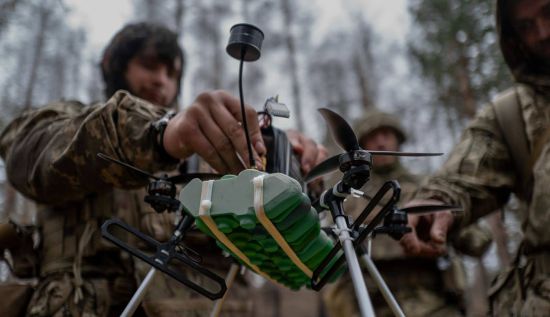
“It is not only the armed forces that have to respond to threats. The entire society must be involved. In addition, robots and unmanned systems provide the weaker side with opportunities to gain an advantage and ultimately prevail,” Bock noted.
Commenting on Ukraine’s Delta battlefield situational awareness platform, he described it as one of the clearest examples of rapid digital adaptation during wartime.
According to Bock, Delta demonstrates how an open and flexible digital environment can provide fast information sharing and operational awareness while continuously evolving to address security challenges.
At the same time, he acknowledged that NATO members cannot simply replicate the Ukrainian system due to different security standards and regulatory requirements.
“For NATO countries, directly copying the system is not currently possible because of security regulations. However, we are certainly interested in developing similar solutions,” he said.
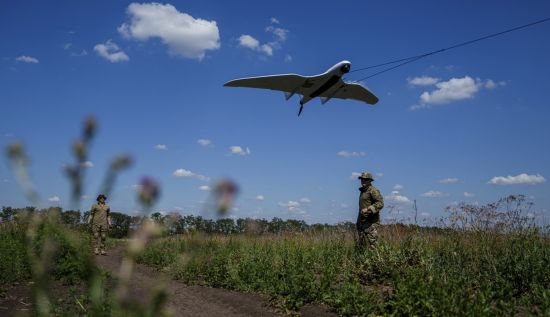
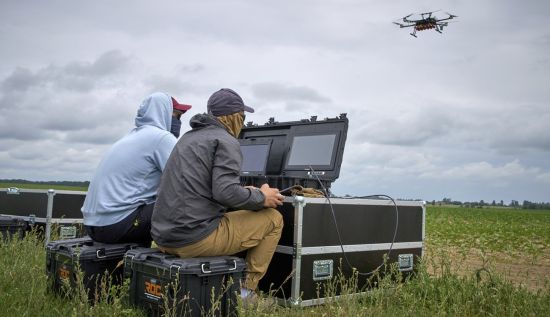
Bock revealed that the Bundeswehr is already working on a digital architecture designed to connect different unmanned systems into a unified operational picture. The goal is to create algorithms capable of integrating drones, robotic platforms, and counter-drone capabilities within a single battlefield management framework.
The admiral also highlighted Ukraine’s experience with layered air defense as an important model for future German capabilities.
“We are adopting the logic of a layered defense system. Effective protection requires long-range, medium-range, and short-range solutions working together. We are adapting these concepts to meet our own operational requirements,” he said.
His remarks reflect the growing influence of Ukraine’s battlefield innovations on European defense planning, as countries across NATO seek to incorporate lessons learned from the largest conventional war on the continent in decades.
The Armed Forces of Ukraine continue to expand cooperation with European partners in the fields of military innovation, defense technology, and digital warfare, turning combat experience into a valuable source of knowledge for allied militaries.
Read also: Melnyk Calls for Russia’s Exclusion From UN Peacekeeping Missions Over Sexual Violence Allegations