Yesterday at 23:53
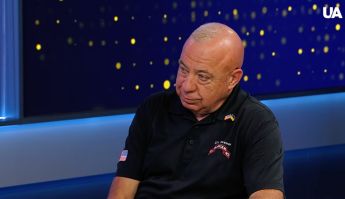
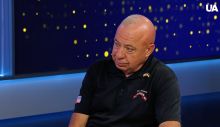
After nine trips to the Ukrainian frontline, U.S. Senator and retired U.S. Army Colonel Tom Brewer has reached a conclusion that is increasingly echoing across the West: Ukraine is not only holding back Russia but is reshaping modern warfare. In this exclusive interview, he talks about the high morale of the Ukrainian military, the devastating impact of strikes on Russian oil depots, and the main lesson for the United States — the urgent need to adopt Ukraine’s experience in drone warfare.
Why is the U.S. military closely studying Ukrainian tactics? How severe are Russia’s losses from strikes on its energy infrastructure? And why, in Brewer’s opinion, must the West stop fearing “escalation” and act more decisively?
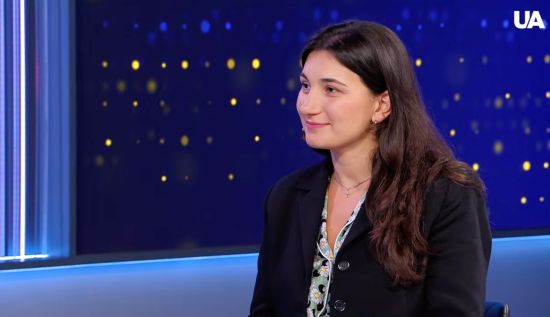
— Thank you so very much for your time and for your expertise. It’s nine times you’ve been here in Ukraine, and I just promised good news to 600,000 subscribers. Is there any good news, sir?
— I think there’s a lot of good news. You know, this past year we were here in December, we were here in July, and we were here in April. As time progressed, and we were able to go to the front, in December things were a lot more dreary because we were having problems with power. It was a cold winter.
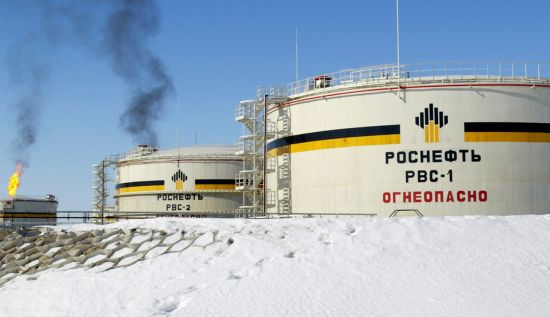
Now you see morale high. Ukraine has been able to make some advances. I think the war overall, with the destruction of the oil terminals and oil facilities, has changed the whole complexion of the war in the way that it’s perceived by the world. Because now it’s not Ukraine fighting a struggle to survive. It’s Ukraine winning in many places.
And that’s given folks who maybe didn’t have that much hope that Ukraine could survive against Russia hope for the future.
— Is that the picture you’ve seen on the front line? Are you sure people in the United States see that? In Washington, for instance?
— Well, Washington — I don’t know if Washington is maybe an example of America. And that really is our challenge, because no one comes here, and I wish more would. But because of the war, people are afraid to come here. And what’s even worse is there are fewer journalists here.
Indirectly, journalists are that pipeline, that conduit to tell the world what’s happening. When you lose them, you lose the ability for people to hear what the truth is. And so what happens is you go into this vacuum where there’s no information and you assume the worst.
You add to that the fact that with the U.S. attack on Iran and the events that are happening in the Gulf, the attention has shifted there. And Ukraine has been left behind to a degree at a very critical time, when they’re doing very good things both on the battlefield and in how they’re able to affect Russia.
— How can we change that?
— Well, you need a couple thousand guys like me to take the word back, right?
I’m participating in a number of different organizations that support Ukraine. What I do is prepare a report that goes out and tells the story of what’s happening here. That story is then shared with tens of thousands of Americans. It is used in different news releases.
And then, of course, we bring a journalist with us. You know John. I know John. John does a very good job of capturing little pieces of the war and then sharing them with folks in Nebraska, Iowa, South Dakota — kind of the listening area that his station takes in.
The problem is that I wish that were bigger. I wish it was national. It should be ABC, NBC, CBS — the stations that more of America hears. Because unfortunately, with nobody here telling the story, it will continue to remain in the shadows. And that’s too bad because Ukraine is doing so many wonderful things right now.
— Are you saying the Ukrainian war is becoming a forgotten war or something?
— You know, people are getting used to it. It’s just, “Yeah, the war in Ukraine. All right.”
Sadly, I’ve even had situations where I was wearing a Ukrainian hat or a Ukrainian shirt in a store and had someone ask me, “I thought that war was over.” It’s heartbreaking because there is a war that’s going on day in and day out where thousands are being injured or killed, while the focus is on missiles going back and forth in the Gulf.
I wish there was a way to provide almost a daily report that could be shared with America. It was that way early in the war. But as time went on — call it war fatigue, call it whatever you want — we lost that momentum.
— Can the UAVs, the Ukrainian experience in UAVs, the data that is shared with the United States, bring that momentum back? Do you think it can?
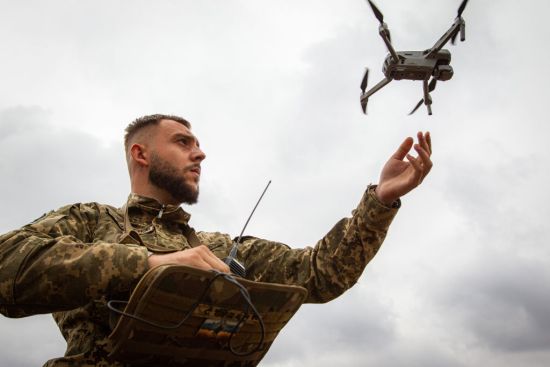
— The thing that must be done is for the United States military to embrace the knowledge that Ukraine has. They have not done that yet, except in pieces.
What’s critical is that we will lose future battles if we don’t take the knowledge that’s being earned by the Ukrainians here and use it.
The hardest thing I’ve ever had to do in my military career is to fill a body bag with a soldier and then notify the family.
We will fill many, many more body bags in the future if the American Army doesn’t wake up and use Ukraine as this warehouse of knowledge, this library of how to fight a war. And that’s my hope.
— And this is not happening at the moment to the extent that it should be happening, right?
— It is not.
— Okay. We could be talking about the reasons why it is not. But the latest news from Washington: the United States House just passed that major aid package.
— They did.
— Is it enough to, like you said, break the back of the Russian war machine? Or is this just another survival kit?
— It’s a lot of money, don’t get me wrong, and this is a big help. But again, I give you raw data honestly because I don’t know how to do it any other way.
I think your description of a survival kit, or a stepping stone to move farther down the road, is probably more realistic. There has to be an effort by both Europe and the United States to force Putin to end the war.
Because I’m afraid that we will continue to lose Ukrainian service members in numbers that we cannot afford to lose if we don’t force an end. And that can be done through sanctions.
That’s why the war in the Persian Gulf is so disappointing, because sanctions were the only tool that was effective against Russia, and now attention has shifted elsewhere.
So I’m going to continue to push to reestablish those sanctions and add more sanctions. And I hope that works.
— Well, you’re a well-known conservative Republican, and you talk to your people. You have been a vital pipeline of ground-truth information to members of Congress, if that’s what is written here.
But I have a question. There are some Republicans — I’ve listened to their speeches recently — and they think that no, we shouldn’t be spending a dime on Ukraine. Everything should be spent domestically. Which is an argument. I can understand that. I can see the logic behind it. It’s quite straightforward.
But do you have any other logic? Do you have a way to explain to your fellow Republicans why they should be spending quite a dime on Ukraine?
— Well, I guess I would start by telling you that there is a division within the Republicans. There are those who are very pro-Ukraine and those who follow the president and intend to be less supportive, I guess would be a way to put that.
He has surrounded himself with advisers, including his vice president, who I think have just never embraced Ukraine in any way, shape, or form. So that hurts any ability to try and do what needs to be done to end the war.
Because what they’re trying to do is reach a grand bargain, an agreement of some type, just a deal. And I don’t believe that’s the way forward. It’s something Putin wants to do, but that’s not how you end this war.
You end this war by putting so much pain on Russia that they have no choice but to end it. Because when that happens, then you’re in a position where you can force a reasonable end to the war that won’t leave Ukraine in a bad position.
And Ukraine needs to make sure the United States doesn’t leave them hanging in some agreement that they feel good about, Russia feels good about, but which leaves Ukraine in a position where it’s losing critical land or accepting an agreement concerning Crimea or something like that.
That is too critical for Ukraine’s future. Ukraine needs Crimea in order to be able to have free access to move its products out through the Black Sea.
— Well, you recently expressed strong support for U.S. Special Envoy Keith Kellogg and his competence in navigating peace discussions. Whatever they are — some people say these are not peace talks, just talks, or even something more sinister. Do you believe there is any sort of resolution that does not force Ukraine into land concessions? Or does some of that have to be done?
Because I admire Zelenskyy, but I wouldn’t want to be that politician who comes out and tells the Ukrainian nation, after four and a half years of this war, that they need to give some land away.
— I think the situation with land — I agree in the sense that there has been too much blood and treasure spent on winning this war and being able to restore the original borders of Ukraine to simply give that away in some type of agreement.
Especially after the events of the last few months, where Ukraine has shown, quite frankly, that it has the better army, that it has more skills and technology, and that it understands how to fight and win.
Whoever is orchestrating what’s happening right now with the strikes on the oil facilities is brilliant. And I think that’s the way of the future.
Once the oil is gone, what do you have in Russia that anybody wants? Nuclear weapons.
Okay. But they’ve done what — six tests in the last year? Not exactly successful, if you ask me. Four of them failed.
I think that’s an indicator. Our intelligence watched them, and they have failed to take their nuclear warheads apart, rebuild them, and reset them.
We do it every five years. They have not done it since the end of the Cold War.
Nuclear weapons require a lot of care, and they’re not doing that. I think they’re afraid that their weapons will explode on the launch pad, which would be a very bad day.
But it’s still a hammer they use to try and force deals and agreements because that’s all they have left.
— So should Ukraine agree to land concessions or firmly reject them?
— No. I think Ukraine has to hold firm because it is now in the driver’s seat, provided it can continue making the progress it has made and continue hitting the oil facilities.
So now Ukraine has a mid-range strike capability.
If Ukraine can extend that with an accurate long-range capability and continue doing what it’s doing — sending out waves where munitions are expended on the first wave, allowing strikes with the second and third waves — that’s working.
If it works, continue doing it. Continue to hurt them because they’re not responding well to it, and their air defense is collapsing.
— My personal interest is that letter — Zelenskyy’s letter to Putin. It isn’t actually addressed to Putin. I generally don’t believe that Zelenskyy thinks Putin is going to react in any way by saying, “I want peace talks. Come over to Moscow.” So who was this letter addressed to?
— Well, I would assume it was addressed to the Russian government. And then, of course, Putin, as the head of the Russian government, has to respond.
Because it’s Russia that is in the war, not Putin by himself.
The idea that they’re going to have peace talks that are fair-handed is probably ludicrous. Absolutely. But Zelenskyy is trying to show that he wants a resolution. He wants to have talks.
Think about it: at no point has Putin given ground on anything. He has set this standard. He doesn’t move from it because he thinks in a Soviet mentality: “You come to me, or you get nothing.”
And if that’s where he’s going to remain, then you’re not going to bring in Jared Kushner or any of the rest of them and have them be effective.
They weren’t effective in the Gulf. Why would they be effective here? They don’t know anything about Russia. They don’t know anything about Ukraine.
They go over there as envoys, and Witkoff is willing to go into the Kremlin without an interpreter. I mean, think about that. It’s ludicrous. So what you have is a son-in-law and a friend who does real estate negotiating a deal for Ukraine. No, you can’t do that.
So Zelenskyy is taking the initiative and saying, “Let me work the deal. Let me represent my country and my people.” That’s the way it should be.
They need to take the United States out of that process in that sense. The U.S. can sit on the sidelines and help by providing resources that shape the war, but it should not be the one making decisions about the future of Ukraine.
— Well, I’ve heard voices — they call them experts, I don’t know, maybe they are — but they say that, paradoxically, it might not be a favorable time for Ukraine to stop the war now because Ukraine is gaining momentum and should continue striking oil facilities in Russia, for example. Do you share that point of view?
I do. If you look at what Ukraine is doing right now by cutting off the limited ability to get into Crimea — you’ve got what, two main roads in, plus the bridge, right? They’re able to hit them now, and Russian logistics are drying up.
So Crimea has really lost much of its value to them, and they’re falling back in places. Morale is low. Their economy is in trouble. Why would you take your foot off the pedal and let them regroup and reset?
— Well, I’ve heard Russians saying on the internet: if Ukrainians consider Crimea their own land, why have they stopped sending fuel there? There should be plenty. But let’s move to a different topic. The Nebraska–Ukraine connection. Nebraska is a major agricultural crossroads for the United States. Is there any partnership yet with Ukrainians in that area?
— Well, actually, we’re meeting over the next few days, right? And that’s one of the things we’re looking at because we’re looking at the post-war period and how we can provide resources that Ukraine needs. That may be irrigation. That may be grain bins. That may be tractors, combines, whatever is needed.
If you were to put Ukraine on a board and Nebraska on a board and compare the products they produce, and how much of it is agriculture-related, they would almost be identical. So it’s a good fit. We just need to figure out how to make all that work.
You know, we’re blessed to have Howard Buffett, who has done several major projects here related to agriculture. So we’re already on the path. We just have to continue to nurture it.
— What about green energy? Hydrogen? Have you heard anything about it?
— Some. Of course, we have a lot of corn-based fuels in Nebraska — ethanol — and we like it. We use it a lot. Some people aren’t that excited about it, but it brings the price of fuel down. The byproduct can be fed to livestock, so it has its benefits.
— I’ve heard — I know people, not personally, but I know they live in Nebraska now. Ukrainians. And I know Ukrainians are very grateful for the hospitality of Nebraskans. A lot has been done for them. Can you talk us through what is going on?
— Well, just to give you a point of reference, Lincoln, Nebraska — a town of about 100,000 people, give or take, depending on whether the university is in session — has about 1,000 Ukrainians there.
Omaha, which is closer to 600,000 people, has about 1,500 Ukrainians. So it’s a rather large population.
They are huge contributors. There are truck drivers, business owners, people with their own stores. They’re hardworking people whom employers want to hire.
The problem we have is that federal rules were put into effect that were intended to address those crossing the southern border illegally. Unfortunately, they weren’t written in a way that only affected those people. They were written in a way that affected everyone.
Part of my challenge has been making sure Ukrainians keep their driver’s licenses and continue to receive the benefits they need. In some cases, where it becomes a federal issue, we are struggling.
Our Secretary of State and our governor have worked hard to find ways to ensure that Ukrainians are able to contribute to society and continue using their green cards without unnecessary obstacles. We want to make sure they have a degree of comfort and certainty that they won’t lose.
— Unbelievable. Senator, it is unbelievable that you’ve come here nine times. I’ve often asked myself why you keep doing it. I know you’ve said that it matters, and I understand that. But every time you come here, I can see and feel it. I can talk to people you’ve helped. It’s a great relief for Ukraine. You and your team are doing a great job, and it is immensely important.
Can I ask you to send a message to the Western world?
I know it sounds grand, but if you were sitting in a room with Western leaders who are terrified of what they call “escalation” — a word I hate — people who have probably never seen war to the extent that you have, and who fear escalation, what would you tell them based on what you have seen here? The West can definitely help bring this war to an end.
— What I would tell them is this: you have countries in Europe, and you have the United States. In all of them, people live relatively easy lives. They have freedom. They have democracy. They enjoy all of these benefits.
Yet they are not doing what they need to do to make sure that Ukraine can survive this ordeal and continue to have freedom and democracy.
Ukraine fought hard to obtain democracy. You carried that flag. You went from a situation where you didn’t have it to one where you did. And then Russia used that as a reason to invade.
If we allow Russia to have Ukraine, none of these countries — including the United States — should feel secure about their own future, their own freedom, or their own democracy.
Somehow that lesson is being missed because people live inside a protective bubble where they don’t worry about the rest of the world. They only worry about their day-to-day lives.
And when danger finally comes knocking on their door, it will be too late. The opportunity — and the obligation — is now. They cannot look the other way. They have to do whatever is necessary to help Ukraine win this war and bring it to an end so they don’t have to worry about their children and grandchildren facing the consequences in the future.
We’ve had an amazing trip this time.
We started in Odesa and traveled east all the way to the Donbas. We spent time in bunkers. We got to see new drones. We even had a chance to have coffee.
In all my years in the American Army, I know we never offered anyone coffee in a bunker anywhere. Yet there was no point during this trip where Ukrainians did not have the ability to make coffee for us.
We were so impressed.
But you need to understand something. You may not have an army that is polished. It may not look like a Ranger battalion in the American Army with perfect uniforms, perfect haircuts, no facial hair, and everything in perfect order.
But what you have is an army with a passion unlike any army I’ve ever been with. They want to win this war. Not just to win the war, but to make sure they can return to their families and that their families can live in peace. They are incredibly focused on finding, fixing, and killing the Russians who invaded their land.
I sometimes worry that the Ukrainian people don’t fully appreciate the conditions these soldiers live in on the front line. These men and women endure incredible hardship and still maintain a positive attitude.
We were joking about how excited they were to see us. Frankly, they had every right not to be excited. When they see those Stars and Stripes, they could easily say, “They haven’t done enough.”
But they don’t.
They welcome you as if you’re family. They would give you anything they have — even the shirt off their back if you asked for it. To see them in action — I wish I could take that spirit and turn it into a training program for the American Army.
You could tell American soldiers: “You have the best food, the best uniforms, the best weapons, everything you could possibly want. But to be a good soldier, you have to have heart.” These men and women have heart.
And I will tell you that from the perspective of an old soldier who has seen a lot of war, it is incredibly impressive that the Ukrainian Army is able to do what it does and keep morale as high as it is.
I honestly don’t know how you do it.
You should be proud. Proud of what they’re doing. And you should be positive about the future.
I know sometimes that’s difficult, but I think you are on a path that is moving in a very positive direction toward an end that will bring this war to a close in a way that, frankly, will be much better than many people anticipate.
Read also: The Russian-Ukrainian War Will End Only When Putin Leaves, — Interview with Jason Smart