Yesterday at 22:06
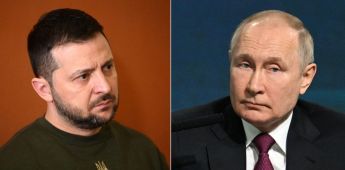
Russia’s renewed demands for Ukraine’s neutrality, non-bloc status, and non-nuclear status are being presented by Moscow as conditions for peace. However, as many analysts point out, Ukraine already met all of these conditions before Russia launched its full-scale invasion in 2022.
Ukraine had given up its nuclear arsenal decades earlier, was not a member of NATO, had no realistic prospect of joining the Alliance in the near future, and received only limited military support from Western partners. Yet none of this prevented Russia from attacking. This raises a fundamental question: if Ukraine was already neutral in practical terms, what exactly is Moscow seeking today?
The answer lies not in preventing conflict, but in shaping the conditions for Ukraine’s future vulnerability. Russian proposals repeatedly focus on limiting Ukraine’s military capabilities, restricting defense cooperation with Western partners, and preventing the country from building effective security mechanisms. Critics argue that such measures would leave Ukraine isolated and significantly less capable of deterring future aggression.
The debate also revives questions surrounding the 2022 Istanbul negotiations, which envisioned neutrality for Ukraine in exchange for security guarantees. Opponents of that framework argue that the proposed guarantees were weak, while the military restrictions placed on Ukraine would have substantially reduced its ability to defend itself in the event of another attack.
Beyond military and geopolitical considerations, the article argues that Russia’s objectives extend far beyond territorial control. According to this view, the Kremlin sees Ukraine not only as a strategic space, but also as a demographic, cultural, and political resource that should remain within Russia’s sphere of influence. This perspective helps explain why Moscow continues to challenge the legitimacy of Ukrainian statehood and identity despite the enormous costs of the war.
Historical examples, from Soviet policies toward neighboring nations to contemporary Russian actions in occupied territories, are cited as evidence that concessions aimed at reducing tensions do not necessarily eliminate future risks. Instead, they may create conditions for renewed pressure and further attempts to limit a country’s sovereignty.
Read the full article by Petro Oleshchuk, political scientist, Ph.D., and expert at the United Ukraine Think Tank.
Read also:Ukrainian Pilots Already Training on Gripen Fighter Jets — Swedish Defense Minister