Yesterday at 22:20
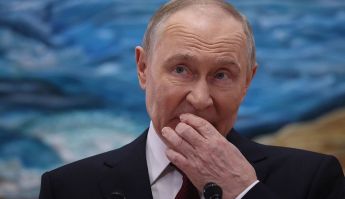
Signs of a power crisis are intensifying in Russia: elite rhetoric is shifting, economic pressure is growing, and unity around the war is eroding. As UATV English reports, this is stated in an analysis by The Economist.
Western analysts believe that Vladimir Putin has ultimately driven Russia into a strategic and political deadlock. A key signal of the crisis is not only economic or political stagnation, but also a change in the language used by Russian elites regarding the war and власть.
Shift in elite rhetoric
Whereas previously Russian business leaders and officials spoke of the war as a shared project, they are now increasingly distancing themselves from it. The formula “we,” which symbolized elite unity around Kremlin decisions, is disappearing.
Instead, Putin’s decisions are more frequently described as “strange,” and he is increasingly perceived as a separate political center, detached from the country’s future.
Signs of a systemic crisis in Russia
According to The Economist, the crisis in Russia has several key dimensions:
- The cost of war: The consequences of the conflict are becoming increasingly tangible for the population — inflation, rising taxes, and strain on infrastructure — while the strategic goals of the war remain unclear.
- Lack of rules: A large-scale redistribution of property is underway, accompanied by asset seizures. Business elites seek stability but face the dominance of the “rule of force.”
- Geopolitical weakening: Russia has lost part of its international influence, particularly in the energy sector, and its position in global institutions has weakened.
- Identity crisis: The absence of a clear internal development model after losing the traditional confrontation with the West.
Breakdown of the social contract
Analysts note that the old social contract — “comfort in exchange for political passivity” — no longer works. Instead, citizens and elites are expected to show loyalty without guarantees of stability or development.
According to experts, the Kremlin’s ideological model does not offer a clear scenario for ending the conflict or achieving “victory,” creating a state of prolonged instability.
In conclusion, the situation is compared to a zugzwang: any further moves by the Russian leadership — from increasing repression to launching new military actions — only deepen the systemic crisis.
Read also: Russia Launches Disinformation Campaign Against Polish Army — CCD