Today at 10:22
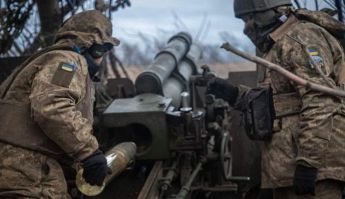
Russian troops have captured significantly less territory in Ukraine over the past six months than they did during the same period a year earlier and, according to new analysis, have actually lost more controlled territory than they gained, UATV English informs.
According to a report by the Institute for the Study of War, Russian forces advanced into or established a presence in approximately 40.6 square kilometers of Ukrainian territory between December 2025 and May 2026. During the same period, however, they lost control over roughly 281 square kilometers.
ISW analysts caution that the figures require context. Much of the apparent territorial loss stems from a reassessment of areas previously categorized as Russian advances. The institute found that Russian forces increasingly rely on infiltration tactics, sending small groups of soldiers behind or between Ukrainian positions without establishing firm control over the territory.
As a result, several areas were reclassified from “Russian offensive gains” to “infiltration zones,” meaning the 281-square-kilometer figure should not be interpreted as territory fully liberated by Ukrainian forces.
The report nevertheless highlights a dramatic slowdown in Russian battlefield progress. Between December 2024 and May 2025, Russian forces advanced approximately 516 square kilometers. During the same period in 2025–2026, they advanced into or infiltrated only 40.6 square kilometers—just 7.9% of the area recorded a year earlier.
ISW argues that the slowdown cannot be explained solely by seasonal factors. Russian offensives have historically intensified in late spring as weather conditions improve, but the expected increase in gains did not materialize in May 2026.
Analysts instead point to broader battlefield developments, including Ukrainian ground counterattacks, expanded medium-range strike capabilities against Russian targets, restrictions on Russian access to Starlink terminals in occupied areas, and Moscow’s efforts to limit access to the messaging platform Telegram.
The assessment suggests that Russia’s 2026 spring-summer offensive has so far failed to achieve significant territorial breakthroughs and that Ukrainian forces have been more successful in slowing Russian advances than during previous phases of the war.
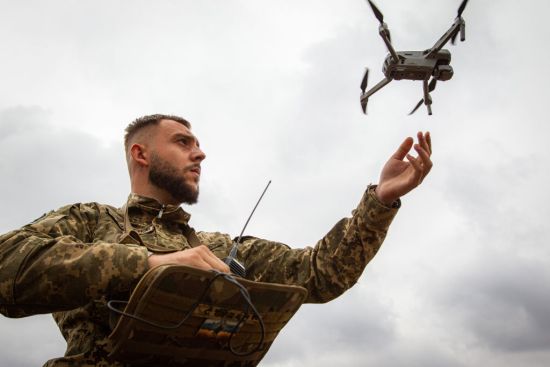
The findings come as both sides continue to adapt their tactics, increasingly relying on drones, electronic warfare, long-range strikes, and small-unit operations rather than large-scale mechanized offensives.
Read also: Russia increases its defense procurement for various types of Shahed drones: HUR names figures