Today at 19:08
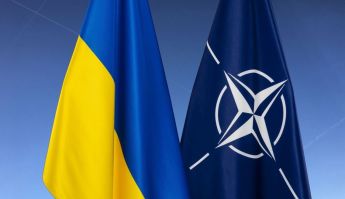
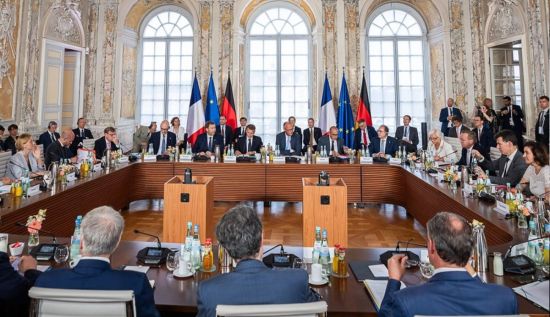
Ukraine marks the fourth anniversary of the “Ramstein” format — an international coalition that has united more than 50 countries and has provided over $150 billion in military assistance to strengthen the Armed Forces of Ukraine. As UATV English reports, this was announced by the Ministry of Defense of Ukraine.
The first meeting of the Ukraine Defense Contact Group took place on April 26, 2022. The format received the name “Ramstein” after the location of the first meeting — the Ramstein Air Base in Germany.
Over four years of work, this format has become a key platform for coordinating decisions on international military assistance to Ukraine. Thanks to this, Ukrainian military personnel have received critically necessary capabilities to repel Russian aggression.
It is within the framework of agreements reached on the sidelines of “Ramstein” that Ukraine has received a wide range of weapons, including:
- air defense systems NASAMS, MIM-104 Patriot, IRIS-T;
- tanks Leopard 2 and M1 Abrams;
- multiple launch rocket systems M142 HIMARS;
- self-propelled artillery systems PzH 2000;
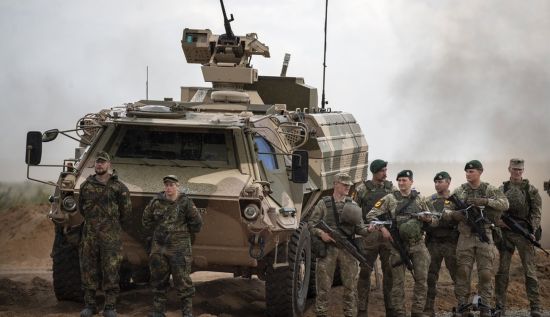
- armored personnel carriers M113 armored personnel carrier;
- aircraft F-16 Fighting Falcon and Dassault Mirage 2000.
Within “Ramstein,” nine capability coalitions have been formed, which are responsible for the development of key areas:
- aviation;
- integrated air and missile defense;
- maritime capabilities;
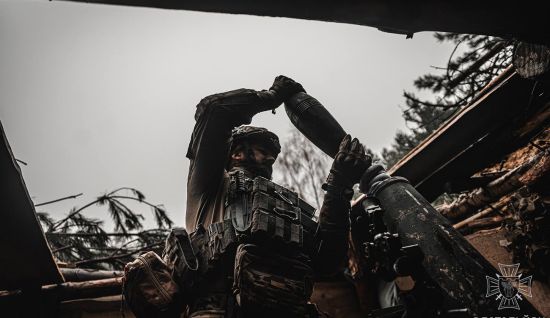
- artillery;
- armored vehicles and maneuverability;
- IT;
- drones;
- demining;
- electronic warfare.
The coalitions ensure priority needs and long-term development of the Armed Forces of Ukraine, as well as coordinate international support in the respective areas.
One of the key decisions was the introduction of the Prioritized Ukraine Requirements List (PURL) mechanism. It has made it possible to attract about $5 billion for the procurement of weapons from the United States and their оперативна delivery.
The mechanism was created in cooperation with NATO and the United States and предусматривает the financing of supplies of American weapons through voluntary contributions from partners. Coordination of needs and deliveries is carried out through existing NATO tools, in particular NSATU.
The “Ramstein” format is constantly adapting to changes on the front line. Today, Ukraine together with partners focuses on an approach to war in three domains: air, land, and economy.
Currently, the efforts of all partners are directed at three key priorities:
- strengthening air defense;
- scaling up the production of Ukrainian drones and missiles;
- providing long-range artillery and other ammunition.
Thus, in total, the countries of the Contact Group together with the EU have attracted more than $5.7 billion for the procurement of Ukrainian drones for Ukraine’s defense. It is within the Contact Group that Ukraine can coordinate areas of cooperation with partners for максимально effective support on the battlefield.
The Contact Group is also transforming into a platform for mutually beneficial cooperation.
Ukraine acts not only as a recipient of assistance, but also as a contributor to global security. Within “Ramstein,” the Ukrainian side presents its own solutions and invites partners to joint projects.
This opens access to Ukrainian technologies and systems that have proven effective in war and allows partners to prepare their armies for modern conflicts.
Ukraine thanks the United States for creating the “Ramstein” format, the United Kingdom and Germany for leadership and coordination, as well as all participating states for systematic support of the Armed Forces of Ukraine.
As earlier reported, following the results of the latest meeting in the “Ramstein” format, which took place in April 2026, allies announced new support packages, in particular in the field of air defense, drones, and logistics, and also confirmed contributions to joint defense programs.
Read also: Gitanas Nausėda on the anniversary of the Chornobyl disaster called for sanctions against Rosatom