Today at 12:01

Although the idea of a ceasefire in Ukraine remains under discussion, Russia has yet to show a clear willingness to agree. Still, the direction of future events will vary greatly depending on whether hostilities are halted or the conflict continues.
This article explores how each scenario could influence relations between Ukraine and the U.S., the U.S. and Russia, and Kyiv and Moscow — and examines the potential risks tied to each path.
Read more about this in the article by Ihor Petrenko, founder of the “United Ukraine” Think Tank, Doctor of Political Sciences for The Gaze.
Firstly, Petrenko explains that the talks in Istanbul revealed that the Kremlin remains unwilling to engage in substantive negotiations that involve withdrawing troops or even agreeing to a temporary ceasefire. Ukraine’s delegation, led by Defense Minister Rustem Umerov, put forward a firm proposal: a 30-day ceasefire as a first step to enable the safe functioning of humanitarian corridors, stabilize the frontlines, and avoid a fresh escalation this summer.
In response, the Russian side avoided giving a clear answer and instead emphasized a desire to “resume dialogue based on the 2022 Istanbul Agreements.”
This indicates that Moscow is trying to revert to a time more advantageous to itself, when Ukraine’s military capabilities were weaker and international support was less coordinated.
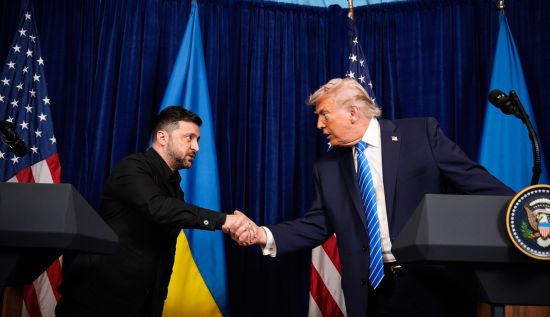
Secondly, political scientist argues that while the United States has officially endorsed the call for a ceasefire, it has yet to exert significant pressure on Russia to make it happen. Although an American delegation was present in Istanbul, the structure of the talks suggested that Washington was more of an observer than a leading force. The Trump administration appears unwilling to confront the Kremlin directly over Ukraine and leans toward a broader “de-escalation package” in which a ceasefire serves as a temporary stabilizing measure, without addressing fundamental questions of Ukraine’s territorial sovereignty.
At the same time, the U.S. is carefully watching its allies. If the EU, the UK, and the Baltic states maintain a strong stance, Washington is unlikely to risk creating divisions within the Alliance.
U.S. Special Representative Steve Witkoff has openly stated the need for some kind of compromise between Kyiv and Moscow. Unofficial briefings have even mentioned the idea of a “territorial swap”—a prospect that has raised serious concern not only in Ukraine but across Europe.
Should the U.S. push for a ceasefire on its own terms, relations between Kyiv and Washington could enter a precarious phase of “cautious partnership.” Support might still come in the form of economic aid or defense cooperation, but it would likely be slower and less consistent.
Thirdly, the author of the article suggest different scenarios of Further Developments of Russia-Ukraine war with different probabilities. If achieving a 30-day ceasefire is treated as a key objective—one that could significantly shape the future trajectory of the war—three possible scenarios emerge:
Scenario 1: Ceasefire is Achieved
Likelihood: Moderate (25–35%), depending on U.S. pressure, as well as the stances of the EU and Türkiye.
Potential outcomes include a temporary reduction in combat intensity and an opportunity for renewed diplomatic talks. However, there’s also a risk that Russia could exploit the pause to regroup and prepare for future actions.
Scenario 2: Russia Rejects Ceasefire and Escalates Militarily
Likelihood: High (45–55%).
In this case, Russia may use diplomatic dialogue merely as a façade ahead of a summer offensive. Ukraine could face increasing pressure from certain international partners accusing it of being uncooperative. The West risks internal division—some states might push for renewed negotiations while others step up military support. Meanwhile, the U.S. might begin to shift its focus toward China, the Middle East, or domestic priorities.
Scenario 3: Diplomatic Gridlock and Prolonged Stalemate
Likelihood: Moderate (30–40%).
Here, talks would continue but yield no tangible results. Russia would likely maintain limited military pressure without launching a full-scale offensive. Ukraine would remain active in the information space but face mounting challenges: declining global media interest, reduced public attention, and the gradual relegation of the war to a secondary issue on the international agenda.
Finally, Petrenko sums up that the outcomes of the Istanbul talks have made it clear who is genuinely seeking peace and who views a ceasefire as a temporary tactical maneuver. For Ukraine, it is crucial to remain a central player in the process, to resist any Western attempts to impose a “convenient” end to the war, and to retain the initiative on both diplomatic and informational fronts. In this conflict, losing isn’t just about territorial concessions — it’s also about losing the ability to speak and be heard.
Read the full article by Ihor Petrenko on The Gaze: How a Ceasefire — or Its Absence — Will Redefine the West’s Ukraine Strategy
Read also: Ukraine Prepared to Begin EU Accession Negotiations