Today at 21:26

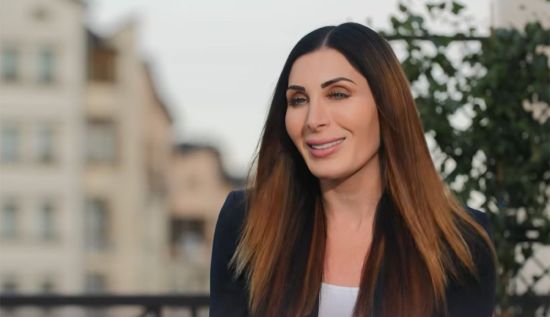
Laura Loomer is one of the most influential American conservative journalists and influencers, whose posts have repeatedly shaped the political agenda in the US. She traveled to Ukraine for the first time to see the war with her own eyes. In an interview with Ukrainian journalist Marichka Padalko, Loomer publicly explained for the first time why she spent years spreading critical statements about Ukraine, having concluded that she herself had become a victim of Russian propaganda, and spoke about her Ukrainian roots.
“I was a little nervous before the trip”
— Not many people knew I was going to Ukraine; I told very few people, because I wanted to keep it secret for safety reasons. The thing is, Russia Today has recently started attacking me, publishing a lot of negative things. So I decided I wouldn’t talk about the trip until I was actually in Ukraine.
It took me a long time to get here, because the airspace is closed. It was exhausting. I had to take a train and travel for a very long time.
But it helped me look at a lot of things differently. I realized that the people of Ukraine are literally hostages. I thought a lot about how much effort and time President Trump and the US spent trying to free the hostages in Gaza held by Hamas. Those hostages were held in tunnels.
And if you think about it, all of Ukraine is, in a sense, like one huge tunnel where everyone is being held hostage.
It’s really frightening to realize when your ability to move freely is taken away. You can’t just buy a plane ticket and escape from Russian ballistic missiles or drones, because there’s only a limited number of train tickets. For me it was shocking to see how difficult it is to get to Ukraine, how far in advance you need to book all your train travel. And I felt genuinely sad for the people of Ukraine.
When I got off the train in Kyiv, at that moment everything seemed very calm. Based on what I’d seen online, on social media and in the news, I expected to see more destruction and rubble.
The train ride took about 15 hours. During the day I looked out the window and saw some destroyed areas. The conductor told us how the Russians try to bomb railway stations to deprive people of the ability to move freely.
And I was surprised how resilient people in Ukraine are, because you walk out of the train station and people around you are living their lives. No one is hiding. People are smiling. People are walking their dogs. (I love dogs, and I noticed there are a lot of people with dogs here.)
I was struck by how neat and well-kept Kyiv looked. Because I expected it to be completely different, more destroyed.
I’ll admit, I was a little nervous before the trip, because the day before I had to get on the plane, Russia launched 40 ballistic missiles at Kyiv. And I thought: am I really going to get blown up in my hotel?
“I was stunned by how I was received”
— I was stunned by my reception in Ukraine. I knew I’d have some meetings, but I didn’t expect to be received so well.
I thought maybe some people would be skeptical because of things I’d said about Ukraine and Zelenskyy on social media in the past.
But actually, people here turned out to be very kind and extremely friendly. There were even people who asked to take a selfie with me.
I was picking out clothes in a store, and the guy who asked for a photo said, “Thank you for supporting Ukraine.”
And I was even more surprised by the post from the Office of the President after I posted a video of myself getting off the train saying, “I’m in Ukraine.” It got almost 2 million views. In the United States, it literally blew up the information space. It seemed to be one of the top topics on X.
After that, discussions flared up about whether my position toward Ukraine was sincere and whether I had really changed my mind. And that’s when Ukraine’s Office of the President stepped into the conversation, writing that it was important to give me the chance to see everything with my own eyes.
“I said terrible things about Ukraine”
— I used to say terrible things about Ukraine, truly terrible. I wrote that I didn’t care if Ukraine was seized by Putin, if Ukraine was occupied by Russia. I said I had no problem with Putin and mocked Zelenskyy for not wearing business suits.
As I understand now, I was spreading Russian propaganda, even though at the time I didn’t even realize it. […]
At a certain point I started consuming a lot of Russian media content. And only now do I understand that I was really heavily influenced by Russian propaganda.
The thing is, in the US after the 2020 presidential election (in which Donald Trump lost and Joe Biden won — ed.), many conservatives were blocked on social media, and we were denied the opportunity to appear on many TV channels. People were literally thrown out of the public space.
When I was blocked and lost access to my accounts, people from Russia Today (RT) reached out to me and said: we agree with you that the election was rigged, we also believe censorship against conservatives is wrong. I remember Vladimir Putin publicly stating at the time that he thought it was wrong to block President Trump on social media. […] Now I understand that Russia is extremely skilled at manipulation. They’re very good at emotionally influencing people.
And now I clearly realize that I became a victim of Russian state propaganda. It was that propaganda that convinced me to accept an offer to cooperate with them (with RT — ed.).
I wasn’t paid, I never took money from them. But I wrote for their website and took part in their podcasts. At the time it felt like I had a voice again, that I could share my opinion. But today I deeply regret it.
Over time, as Russian propaganda in the US became increasingly aggressive, I realized it had been a huge mistake.
When you’re isolated from other sources of information and constantly consume only that kind of content, it’s not surprising at all that you develop such a negative attitude toward Ukraine.
In 2022, after Elon Musk bought Twitter and restored my account, I started using the platform again.
While we were blocked, most American conservatives moved to Telegram. And that’s precisely where Russian propaganda and disinformation were being most actively spread at the time. […]
So is it really surprising that millions of American conservatives fell under the influence of Russian propaganda?
After Donald Trump’s victory in the 2024 presidential election, I learned a lot more about Alexander Dugin (a Russian ultranationalist ideologue known as the author of the concept of the “Russian world” — ed.). Dugin started appearing on many American conservative podcasts.
When I saw how many American conservatives were literally in awe of him, I thought: something’s not right here. Why do so many American conservatives support some Russian guy who wants to destroy the United States? That’s when I realized something dangerous was happening.
And then I noticed how the RT channel changed. At one point they at least tried to do international news. But over time they turned into a channel that just rips out isolated fragments and features the most radical voices in American politics, who constantly talked about how terrible a country America is, spreading all kinds of lies. I thought at the time that this was pure Russian propaganda.
I caught them outright lying about American politics more than once. And when I started openly pointing out these lies, they launched a campaign against me: spreading false information, calling me an Israeli spy.
That’s when I realized they were doing exactly the same thing with lies about Ukraine.
I understood well what was happening in the war between Israel and Hamas, I understood the internal politics of the United States well. But at the same time I realized: everything I knew about the war in Ukraine came almost exclusively from Russian or Russia-linked sources.
Because the full-scale war started in 2022, when I still didn’t have access to my accounts. And almost all the content I consumed at the time was from RT and Telegram channels.
Later, one of my colleagues who works in communications wanted to go to Ukraine for one of the security conferences. To get accreditation, he needed to represent some media outlet. He asked: “Can I say I work for your outlet?” I hesitated, but then agreed. […]
And when I started watching his material from Ukraine, it coincided in time with Russia becoming increasingly radicalized in its rhetoric. It openly supported Iran at a moment when calls to kill Donald Trump were already being heard in Iran, chants of “Death to America!” And Russia supported that.
That’s when I thought: this is already getting out of control. And if we Americans don’t start taking this threat seriously, one day we ourselves could become the next target.
I saw an interview with Alexander Dugin, an advisor to Vladimir Putin, in which he said Russia is ready to hand nuclear weapons to Iran so it could destroy the United States.
They want to kill Americans. I think a lot of Americans just don’t realize this.
“Americans shouldn’t hate Ukrainians”
— We in the US have developed a kind of Russia fatigue.
For many years, Democrats pushed the theory that Donald Trump had supposedly colluded with Russia to win the 2016 election. That story split American society for almost 10 years. Only recently were intelligence documents declassified that, in my view, prove the Russian collusion story was invented by the Democrats.
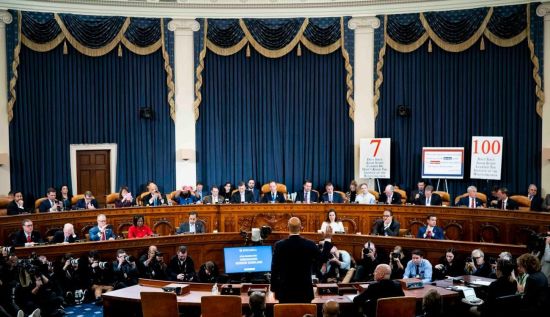
That’s precisely what led to Donald Trump’s first impeachment proceeding. It was tied to his phone call with Zelenskyy. Trump was accused of supposedly demanding dirt on Joe Biden, threatening to withhold military aid to Ukraine.
In my view, all of that turned out to be untrue. But the consequences were very serious. Many Trump supporters started viewing Ukraine negatively. People thought: we voted for Donald Trump, but we’re not Russian agents like we were called. Yet it seemed as though Ukraine or Zelenskyy had cooperated with Democrats to remove our president from power. That’s how many Americans perceived it at the time. […]
I think Ukraine should demonstrate much more actively just how pro-American it is. And there needs to be more talk about the fact that it is Russia that supports anti-American regimes and anti-American sentiment, while Ukraine is an ally of the United States. […]
A lot of things favorable to Ukraine have happened in the US recently, and there needs to be more talk about that. […]
I think President Zelenskyy should use social media more actively. Something like what Donald Trump does. Everyone waits to see what Trump will post on Truth Social. He speaks directly to people. I think that could really help Ukrainian communications too. […]
Many people in the US live in very difficult conditions. So their frustration is understandable. But that doesn’t mean they should hate Ukrainians.
On the contrary, they should try to put themselves in your shoes. Imagine what it means to live under constant shelling, to wait for the air raid signal every day. I myself experienced an air raid alert for the first time just the other day.
“I asked Zelenskyy all the questions I wanted to”
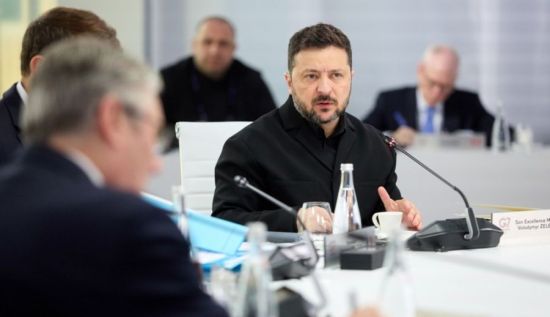
— I recorded an interview with President Zelenskyy at his residence. It was very beautiful, we talked outdoors.
I have to give him credit — he answered absolutely all my questions. I didn’t need to send them in advance. He didn’t know what I’d ask. I asked all the questions I wanted to ask.
I also told him what I’m telling you now (about adjusting Ukraine’s communication strategy — ed.). He said he’d take it into account. Members of his team were also there. They also said they thought this advice was very useful.
I really think this kind of communication model could help Ukraine. I’ve seen how effectively Donald Trump uses social media to convey his position directly to people. Maybe Ukraine should use this approach too. […]
I still can’t believe that I interviewed and talked with President Zelenskyy. And I’m really ashamed of some of the things I said before.
So I want to apologize to Ukrainians for what I said about your country. Because everyone I met here was extremely kind to me.
And I’m almost certain I wouldn’t have been received the same way in Moscow. If I had allowed myself to criticize the Russian authorities, I think the KGB would have found me at my hotel very quickly. So I don’t think I would have gotten the same reception.
I highly doubt Vladimir Putin would have invited me for an interview. But President Zelenskyy did.
And all the Ukrainian officials I met treated me very warmly.
“Russia is trying to split American society”
— Some American podcasters have hosted Dugin, or, for example, Viktor Bout (a Russian illegal arms dealer, whom Washington accused of supplying weapons to dictators and terrorist groups around the world — ed.). They invite such people, real criminals, onto their shows. […]
[American journalist] Tucker Carlson recorded an interview with Putin. He also interviewed Dugin and Bout. There’s Alex Jones (an American far-right radio host, a notorious conspiracy theorist — ed.), there’s Candace Owens (an American far-right political activist and media commentator — ed.). They attend various forums, meet with Russian officials.
Even individual representatives of the Russian authorities regularly come to the US, meet with members of Congress, and try to build an image of people who supposedly advocate for peace.
Russia is penetrating deeper and deeper into the American information space through media, through contacts with politicians, through various public platforms.
And I believe this poses an extremely serious threat to the national security of the United States. Truly, extremely serious. […]
I don’t have tens of millions of followers. On X I have almost 2 million. But I’ve always believed that the quality of an audience matters more than its size.
And I hope my trip to Ukraine will help at least some people look at the situation differently. I think it’s already starting to work.
On my podcast I’ve been talking a lot lately about Russian influence operations, about how Russia funds certain individuals, how it tries to split American society. And a lot of people write to me saying they hadn’t noticed this before, but now they’re starting to see it. It’s being talked about more and more.
“I’ll have something to tell President Trump about Ukraine”
— If, after returning from Ukraine, I get the chance to talk to President Trump about this trip, I’ll have something to say. And only good things. […]
I told President Trump I was going to Ukraine. It wasn’t a separate conversation, we just exchanged a few words between other business. He didn’t say anything special about it, because it was a very short conversation. But the next time I see the president or talk to him, I’ll have something to tell him.
I have a lot to say — a lot of good things about Ukraine. […]
Today we see President Trump once again showing support for Ukraine. I don’t want to speak on his behalf. But he’s already said he supports the bill on sanctions against Russia. Especially if sanctions against Iran are also included in it. On top of that, American military leadership is also openly saying it wants Ukraine to win. […]
I really hope we find a way to end this war. I voted for President Trump because I consider him a strong leader. And I think if anyone is capable of ending this war or forcing Putin to the negotiating table, it’s Donald Trump.
In my view, Putin is afraid of him.
I don’t know of any other world leader who has this kind of power of influence. And I really hope this war ends before Donald Trump’s presidential term is over. Because I know him personally, and he’s a man who’s used to keeping his promises. He promised not only Americans, but the whole world, that he’d do everything possible to bring back peace.
I don’t want to speak on his behalf, but I sincerely believe he’ll help achieve this.
“It’s time to hold negotiations in Kyiv, not Moscow”
— I hope Steve Witkoff and Jared Kushner (US presidential special envoys and negotiators on settling Russia’s war against Ukraine — ed.) will stop holding meetings in Moscow and come to Kyiv.
Look, if I was able to come here without being a government representative, and as you can see, I’m still alive… I understand there are safety recommendations.
But if I’m willing to risk my own life to find the truth, then they should come to Kyiv too.
I know Steve Witkoff and Jared Kushner well. They’re very smart, professional, and pleasant people.
But in my view, it’s time to hold the negotiations in Kyiv, not Moscow.
“It’s one thing to read about the war, and quite another to feel it yourself”
— Honestly, I don’t feel afraid [in Kyiv]. Of course, I’d really rather not have a ballistic missile hit my hotel.
But at the same time, I’d like to witness shelling. I’d go out on the balcony with a camera and film everything, to show Americans what Ukrainians are actually going through.
Yes, I’m willing to put myself at that kind of risk if it helps get the truth to people in the US.
I don’t want people to die. That’s the most important thing. But I want to show what it’s really like.
Because it’s one thing to read about the war, and quite another to feel it yourself.
When you’re sitting in a hotel and suddenly very loud sirens start going off, it really makes you nervous.
I think it’s very hard to live a normal life in Ukraine, because people are constantly in a state of anxiety, fear, depression. You never know if a missile will fall that very night. Your family members can be mobilized, you can lose loved ones.
And even just getting a normal night’s sleep is very difficult. And sleep is one of the most essential human needs.
Let me tell you a story. It really helped me understand how Ukrainians live. I invited a Ukrainian camera operator, Katya, to help me during the trip. We were driving together once. She asked me, “Did you hear the air raid alert?” I said, “Yes. I wonder if there’ll be another strike?” She said very calmly, “There will be. The Russians usually wait two or three days, then attack again.” I asked, “Do you always go down to a shelter when the alert sounds?” She replied, “If it’s very close, then yes. My boyfriend and I go down, but not every time.” I was surprised: “How can you be sure that this time a ballistic missile won’t come, that you won’t die in your sleep?” And she answered completely calmly: “If I die, I die. The main thing is that it happens fast, and that I don’t have to lie under the rubble for a long time.”
It was really painful to hear that. It’s hard for me to even imagine living with thoughts like that every day.
I don’t live in a war zone, but even in the US I sometimes feel fear. I regularly receive death threats, foreign states openly persecute me. Russian state media constantly attacks me. They spread an Iranian video calling for me to be killed. Iranian authorities have effectively issued a death sentence against me… After all that, I sometimes flinch at home at any noise.
So I can’t even imagine what it means to live in a country where that fear is far greater. When you don’t know if you’ll wake up in the middle of the night because your house is on fire from a ballistic missile hit. Although if such a missile hits a house directly, there’s probably almost no chance of survival anyway.
“I thought I’d see far more homeless people”
— Even so, Ukrainians really are living: people walk their dogs, go to restaurants. And they seem happy.
I visited a wonderful Ukrainian restaurant, met chef Yevhen Klopotenko. I really liked his restaurant. I tried borscht for the first time in my life.
Yevhen told me how, during the war, he fed people left without shelter — those whose homes had been destroyed. He would just go and feed them. And that made a very strong impression on me.
I think Ukrainian society is extremely close-knit.
Honestly, before coming here I thought I’d see far more homeless people. I assumed that because of the war, many people had been left without housing. But during my whole time in Kyiv, I didn’t see a single homeless person.
I don’t know, maybe your support system just works very well, or maybe it’s something else. But I think it shows just how strong family bonds and mutual support between people are here.
That’s very different from the United States. We have a lot of homeless people. But here I barely saw anyone begging. And that says people support each other.
“My great-grandmother and great-grandfather emigrated from Kyiv”
— We know you have family ties to Ukraine.
— Yes. Although, honestly, I know almost nothing about it.
I’m Jewish. And according to my father, his grandmother and grandfather emigrated from Kyiv. I never met them. My great-grandmother died before I was born, and my great-grandfather died when I was, I think, only a year old or even younger.
I only know their names were Pinkus and Anye, and that they were from Kyiv. We still have a few family photos.
I know my great-grandfather was fluent in German. He was a psychiatrist, lived in New York. He studied in Vienna during the Nazi occupation. He was even arrested by the Nazis. My father told me that when my grandfather finished medical school, Jewish students weren’t allowed to receive their diplomas normally, and his diploma even had a swastika on it.
I always lacked the time to talk with my grandparents, to ask them where we’re from, who our ancestors were. I’d be very glad to learn more about them, because I know almost nothing about my family.
— We managed to find information about your great-grandfather in the archives. And we found out he wasn’t born in Kyiv, but in Vinnytsia. Born February 10, 1895. The whole family later moved to Kyiv. And we managed to find a copy of his birth record.
— Wow. It says here that the Loomer family is from Vinnytsia, present-day Ukraine. Historical documents show that in 1875 they were officially registered in the meshchanstvo estate — the urban social class that included artisans, shopkeepers, small traders, and other city residents.
Pinkus Loomer was born on February 10, 1895. His father was Betzalel Yankelev Zelikov Loomer, his mother Chaya Yankeleva.
— We’re giving you photocopies of all the archival documents our researchers managed to find. This is our small gift to your family.
— I’ve never seen these documents before and knew almost nothing about my family’s history. This is incredibly valuable to me.
But here’s another surprising thing: I would never have learned any of this if I hadn’t changed my mind about Ukraine, if I hadn’t opened myself up to the truth, if I hadn’t stopped believing Russian propaganda.
And now I know where I’m from. Now I know my roots are here, in Ukraine. It’s an incredible feeling. I’m very happy.
And all of this makes me regret even more the things I used to say about Ukraine. […]
I guess you could say I’m partly Ukrainian. It’s just incredible. I came here as someone who was against Ukraine. And now, in Ukraine of all places, I’ve learned that I’m actually from here myself. It’s very symbolic and very unexpected.
I’m immensely grateful to everyone who treated me with kindness. It’s a great honor for me to be here, to tell the story of Ukrainians and, at the same time, to tell my own story. I hope this is just the first of many visits to Ukraine for me.
Read also: Can Russia’s Fuel Crisis Force the Kremlin to Make Concessions?