Today at 19:08
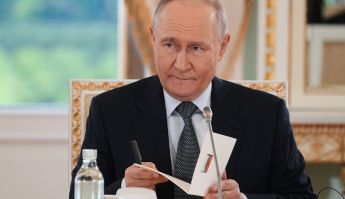
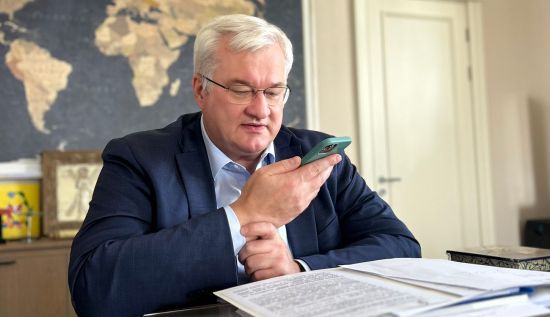
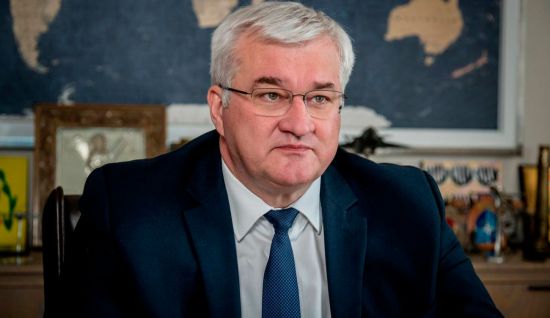
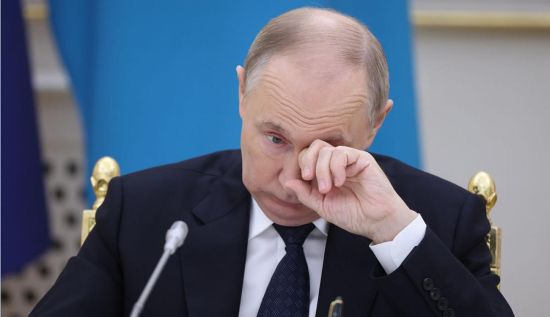
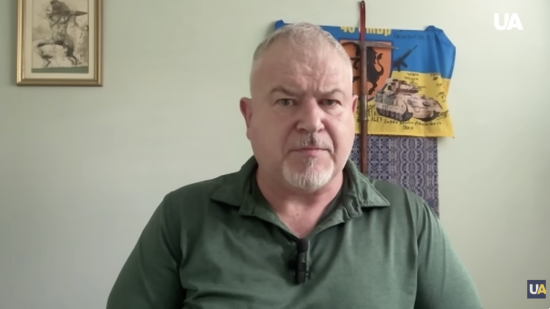
Russian President Vladimir Putin and his inner circle understand they’re approaching a dead end, and their increasingly harsh rhetoric reflects that reality — a familiar pattern in Russian politics that shouldn’t cause alarm, according to Volodymyr Yelchenko, former ambassador and head of international policy research at the Pylyp Orlyk Foundation, in an interview with Ukrinform.
“The escalation in rhetoric, in my view, stems from the fact that Putin and the Russian Federation’s leadership in general understand that they are approaching a dead end, and, as has always been the case in the past, they are raising the stakes. This is the typical style of Putin and Lavrov—and, in general, of the Russian Federation’s leadership,” Yelchenko said.
He noted that where Russia once threatened nuclear weapons, it now threatens to knock out Ukraine’s entire power grid right before winter. He described this as an attempt to sustain psychological pressure on Ukraine’s population, in hopes they’ll push their own leadership toward ending the war on unfavorable terms.
A second aim behind such rhetoric, he added, is to intimidate the collective West into scaling back or halting military, financial, and economic support for Ukraine.
“Therefore, we should remain calm about this. This isn’t the first time, and all these threats usually come to nothing,” he said.
Turning to recent “leaks” and interviews with figures from Russia’s so-called elite appearing in major Western outlets, Yelchenko argued these could not have surfaced without Kremlin approval — and may even have originated within the Kremlin itself. He sees the same underlying goal: pressuring the West, this time by stoking fears that a collapsing Russia would trigger nuclear proliferation, terrorism, and uncontrolled migration crises. The implicit message being pushed, he said, is that only Putin can prevent such an outcome — provided he secures some form of victory over Ukraine first.
Yelchenko argued that genuine change will only come through the dismantling of the Russian state itself, at which point discussion would shift from regime change to what successor states might emerge in that space — though he acknowledged this remains a distant possibility.
He voiced confidence that Russia, in its current form, will eventually collapse, pointing to history’s consistent pattern of empires coming to an end.
Yelchenko, who served as Ukraine’s Ambassador to Russia from 2010 to 2015, said he hopes to have been “Ukraine’s last ambassador to this ‘non-state,’ which will eventually cease to exist.”
As previously reported, Colonel Ants Kiviselg, head of Estonia’s Defense Forces Intelligence Center, recently said Russia is responding to Ukraine’s successful strikes on oil refineries and infrastructure by ramping up its information war against Western countries.
Read also: Ukraine Says Kerch Ferry Crossing Operating at 25% Capacity After July Strikes