Today at 17:22
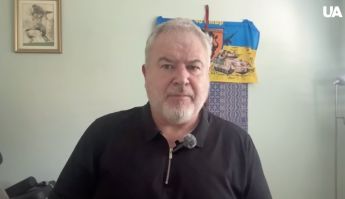
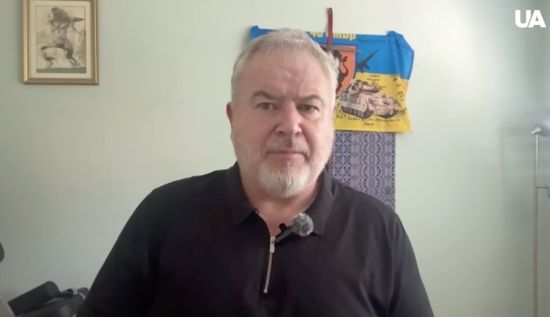
In an exclusive interview, you’ll hear sensational analysis from Cormac Smith — former advisor on strategic communications to Ukraine’s Minister of Foreign Affairs and ex-advisor to the UK Cabinet of Ministers during the cleanup of the chemical attack in Salisbury. As of June 2026, the expert states: there is no “dead end” on the front, systematic destruction of Russia’s defense is ongoing at all levels.
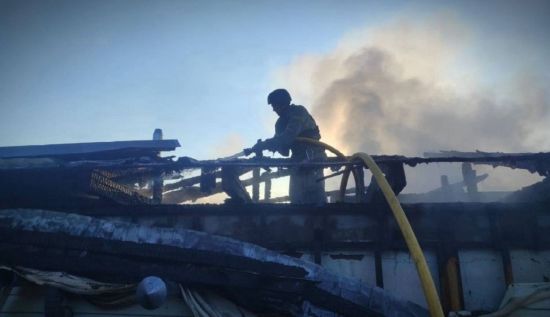
The British strategist thoroughly breaks down Ukraine’s unique “Trident” strategy, through which the Armed Forces of Ukraine and Special Forces simultaneously wage war on three fronts: on the confrontation line, along the occupiers’ rear logistics lines, and through DeepStrike strikes on Russia’s energy heart. You’ll learn why the daily fires at the Moscow oil refinery in Kapotnya are not just symbolism, but a powerful psychological strike on Russia’s middle class.
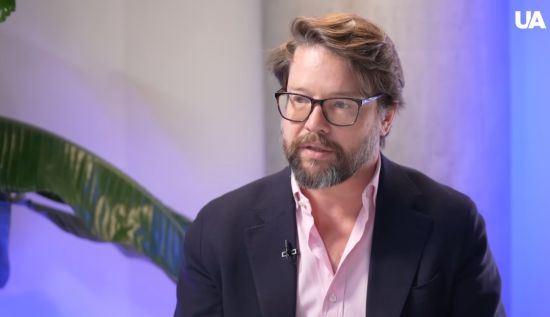
— Today, together with you, I would like to break down the hottest topics of recent days. Well, of course, Moscow on fire — and that is no longer a metaphor. What does the strike on the capital’s oil refinery tell us about? Let’s call it gaps in Russian air defense. Another topic: Ukraine is hitting oil facilities, fuel depots, and railways. Is this systematically bleeding the Russian war machine dry or not? We’ll also talk about the Kremlin’s response and its threats. And finally, what do Ramstein and the anti-ballistic missile program mean for the future of the front line? So, let’s begin with Moscow on fire.
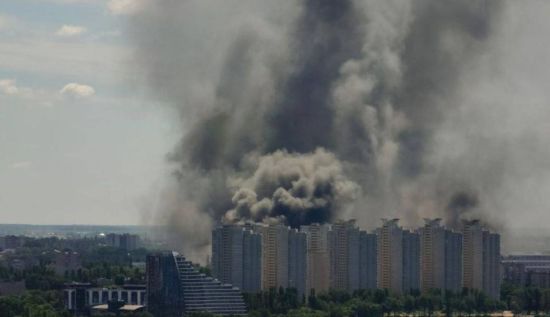
This Thursday, an oil refinery exploded in Moscow — literally inside the city. Black smoke rose over the capital, storage tanks were blown up, and everyone saw the footage. These were not images from some remote oil depot in Siberia. This was the heart of Russia. For me personally, and I think for many Ukrainians, it was emotional to watch. But strategically speaking, what does the strike on the Moscow refinery mean?
— Henry, it means two things. First, let’s look at it from the perspective of the war effort. I recently described the situation — not as a military man, but as a civilian and former diplomat — as the three points of a trident. And of course, the trident is the great symbol of Ukraine.
The first point of the trident is the front line itself. There we see Russian forces getting absolutely hammered. Current estimates suggest that Ukraine is killing Russian troops at ratios ranging from six-to-one to eight-to-one. It was actually President Alexander Stubb of Finland who, only two weeks ago, estimated the ratio to be as high as eight-to-one. We know that Russia is losing between 30,000 and 35,000 troops per month. To put that into perspective, that is roughly twice as many casualties in a single month as the Soviet Union lost during ten years of war in Afghanistan.
We also know that Putin cannot recruit replacements fast enough to make up for those being killed or severely wounded. So things are going very badly for Russia on the front line. That is the first point of the trident. The second point is that Ukraine has effectively opened a second front by targeting Russia’s logistics network. On average, Ukraine is reportedly destroying between 400 and 500 fuel trucks and other logistical vehicles carrying ammunition, food, and supplies needed at the front.
But now we come to your question — the third point of the trident: deep strikes. These deep strikes are important for two reasons. First, they are devastating Russia’s oil industry. Russia has often been described as a gas station with nuclear weapons. Oil and energy exports are what fund much of the state. I was listening before coming on air to Professor Scott Lucas from University College Dublin, who follows Ukraine very closely. He suggested that up to 40 percent of the Russian state budget is now being devoted to what the Kremlin calls its “special military operation.”
That places enormous strain on Russia. But perhaps even more importantly, these strikes are bringing the war home to ordinary Russians. Yesterday morning, my best friend in Kyiv and I were discussing the strikes on Moscow. I understand there is a sense of euphoria across Ukraine about these developments. My friend said something that perfectly captured the mood: “Now it is time for ordinary Russians to meet ordinary Ukrainians.” In other words, they are beginning to experience a small part of what Ukrainians have endured for years.
But there is something even more important. In recent weeks, Ukraine struck St. Petersburg during the St. Petersburg International Economic Forum. That is the event where Russia gathers investors, influencers, and business leaders from around the world to present itself as a great power, a great economy, and an attractive investment destination. What message did Ukraine send by striking a naval dry dock and an oil refinery during that event? They effectively provided a fireworks display for the delegates attending the forum.
And now this week we have seen strikes on Moscow. I believe this is the third consecutive time that Ukrainian drones have penetrated Moscow’s airspace. What matters here is not only the fuel shortages, rising prices, and queues at gas stations that we increasingly hear about. What matters is who is being affected. The impact is now reaching a very specific social group: the middle classes and the wealthy residents of Moscow and St. Petersburg.
Correct me if I’m wrong, but there has long been an unwritten social contract between Putin and those groups. The understanding was simple: their wealth, lifestyles, and relative comfort would not be disturbed. Meanwhile, the recruits sent into the meat grinder over the last four and a half years have overwhelmingly come from distant regions of the Russian Federation. Now that arrangement is being challenged. The strikes are exposing vulnerabilities that many Russians believed did not exist.
Yesterday, I heard reports that more than a thousand drones and missiles were directed toward Moscow. Russian authorities claimed to have intercepted fewer than two hundred. If that is accurate, it presents a very different picture from what we hear when Russia attacks Kyiv, Lviv, and other Ukrainian cities, where Ukrainian air defenses reportedly intercept the overwhelming majority of incoming threats despite operating under enormous pressure.
— You’re absolutely right. I can’t correct you because you’re not wrong. I live in Kyiv, I hear it and I see it. Every wave of terror that comes every night is met by our air defense. Some targets still get through and cause damage, but interception rates are often 60, 70, 80, sometimes even 90 percent. Occasionally all incoming targets are shot down. It’s an incredible achievement by Ukrainian air defense. In Russia, however, the situation appears to be the exact opposite.
The recent attack obviously sent shockwaves straight to the Kremlin. Yet the Kremlin remained silent for almost 24 hours. Then Sergei Lavrov appeared with the usual rhetoric, threats of massive retaliatory strikes and similar statements. Is that a sign that the strike was truly painful? Or perhaps they simply do not care? Maybe Moscow is trying to project the image that everything is proceeding according to plan, that everything remains under control.
— Look, Henry, I’m going to say something that I don’t need to tell you, but I think viewers should hear it. First, this is a moment when people across Europe and around the world need to recognize the fundamental difference between Ukrainians and Russians. When Russia strikes Ukraine, it deliberately targets civilian infrastructure, apartment buildings, homes, and civilians. It murders men, women, children, and even babies.
What Ukraine is doing, by contrast, is targeting military objectives, logistics hubs, and Russia’s war economy. These are legitimate military targets under the laws of war and the Geneva Conventions. What Russia does constitutes war crimes. This is the difference between barbarism and civilization.
Even in the middle of an existential war, Ukraine continues to behave in a civilized manner and follows the rules as much as it possibly can under such circumstances. Russia, meanwhile, continues to deliberately murder civilians, not only with drones but also with precision ballistic missiles. We have all seen the images of ballistic missiles crashing into apartment blocks and residential neighborhoods. That is the first point I want to make.
The second point is that the Kremlin has traditionally maintained an iron grip on information and communications. However, it increasingly appears that this grip is beginning to weaken. The bombardment of Moscow was filmed everywhere by ordinary people with their phones. The Kremlin cannot prevent people from witnessing these events. It may attempt to control the narrative, but ordinary Russians know what they saw with their own eyes.
— Exactly. But you understand very well how Russia builds narratives of resilience around obvious setbacks and defeats. The Kremlin is undoubtedly trying to reframe these strikes for domestic audiences, even if not for international ones.
— Henry, let me jump in there. One of the biggest lies that has been imposed on all of us is the claim that there is no amount of suffering the Russian people cannot endure. We have been told since the beginning of the full-scale invasion that Russia cannot be defeated, that Ukraine’s only option is surrender or some kind of capitulation deal. The Kremlin has spread this narrative not only inside Russia but across Europe and the wider world. It has put these arguments into the mouths of useful idiots, paid agents, and sympathetic political figures in many countries. But it is simply not true.
Look at Russia’s history. Russia has lost most of the wars it has fought.
It lost in Afghanistan. It would have lost the Second World War without the enormous support provided by Britain and the United States through Arctic convoys and Lend-Lease assistance. As a student of history, I firmly maintain that. And today Russia is losing badly in Ukraine against a country that has roughly one-third of its population.
I have said since before February 24, 2022, during interviews I gave in January of that year, that Putin would have absolutely no hesitation in feeding tens of thousands of his own citizens into a meat grinder while simultaneously murdering innocent civilians abroad. We saw it in Aleppo. We saw it in Grozny. We saw it in Mariupol. None of this should surprise us.
What the Kremlin practices is what we call a “firehose of falsehoods.” Have you heard that expression? During the Salisbury poisonings in the United Kingdom, when I was working with the Cabinet Office after returning from Ukraine, we counted 47 separate false narratives pushed by the Kremlin. According to various versions, everyone from Theresa May to MI5, MI6, the CIA, and even unrelated individuals were somehow responsible. One theory was so absurd that it claimed the poison simply drifted in from a nearby British chemical research facility. The goal was never to convince people of one explanation. The goal was to flood the information space with so many explanations that nobody knew what to believe.
People also need to understand the difference between the Soviet Union and today’s Kremlin regime. The Soviet Union was oppressive and deeply flawed, but it at least possessed an ideology. It claimed that communism was superior to capitalism and presented a vision, however misguided, of how society should function. Today’s Kremlin has no ideology whatsoever. It is a kleptocratic system built on mafia principles and former KGB networks.
Putin is surrounded by gangsters. Their objective is not to build a better society but to enrich themselves. Russia should be a wealthy country that provides a good standard of living to its citizens. Instead, vast parts of the population continue to live in poverty. These are the regions supplying the conscripts for the war. They are not coming from the affluent districts of Moscow and St. Petersburg. And now, for the first time, we are beginning to see cracks emerge. Even pro-Kremlin newspapers are occasionally publishing material that raises questions and expresses doubt.
So the real question becomes this: is the Kremlin’s iron grip on information beginning to weaken? Is it starting to lose its effectiveness? I do not expect mass democratic uprisings in Russia because there is little historical tradition of demanding freedom and democracy. Russians have generally looked for strong rulers. But that does not mean the system is invulnerable. The appearance of doubt, especially among elites and ordinary citizens who previously felt insulated from the war, is significant. That is where real pressure begins to build.
— And again, my question is this: what do we do next? Do we simply continue on this path? We are obviously getting better and better at applying pressure. We have the strikes on Moscow, the oil refinery, St. Petersburg, and many other places. The pressure is clearly mounting. But skeptics will argue that Russia has survived for a very long time already. They survived sanctions, and they adapted methods to bypass those sanctions. So why would strikes on refineries and rail infrastructure be more effective than all previous attempts to strangle Russia’s economy? Maybe I sound naive, but I genuinely want to know: are we moving in the right direction?
— Yes, I believe we are. And I’ll tell you why. First, I’m not going to sit here and predict that Russia is about to collapse. We have all heard those predictions for four and a half years. The truth is that we do not know when Russia might collapse, whether the regime might collapse, or whether Mr. Putin might one day simply fall out of a window or drink some polonium-laced tea. Nobody knows. But what we do know is that after four and a half years, the war is beginning to go very badly for Putin.
I’ve already talked about the figures. I’ve talked about the enormous losses on the front line. May was the first month since 2023 in which Ukraine regained more territory than it lost. At the same time, Ukraine is now having a devastating impact on Russia’s oil industry. This was not possible before because the long-range weapons provided by Western partners came with restrictions. You were effectively operating with handcuffs on. You were not allowed to use them freely. Now, however, Ukraine has developed its own long-range strike capabilities. You have developed systems with ranges that far exceed those of many Western weapons, and you are beginning to use them effectively.
Because of that, neither you nor I know exactly when the crack in the dam will become the moment when the dam finally bursts. We simply cannot predict that. But we have to believe that it will happen. I often think of my good friend Oleksii Makeiev, who is now Ukraine’s ambassador in Berlin. In the early days of the full-scale invasion, he was in Brussels working around the clock on sanctions policy. One Sunday morning we were speaking on a video call while he was exhausted from work, and he said something that has stayed with me ever since. He said: “Cormac, it’s very simple. If Russia stops fighting, there will be no war. If we stop fighting, there will be no Ukraine.”
That is the existential reality of this war, and every Ukrainian understands it in their heart. Putin has never hidden the fact that he does not regard Ukraine as a real country. He wants to erase Ukraine and Ukrainian identity from the map. So when people ask whether we know exactly when the Kremlin regime will weaken or when Putin will disappear from the scene, the answer is no, we do not know and we cannot know. What we can measure, however, is progress. One of the phrases I used repeatedly when working at the Ministry of Foreign Affairs was very simple: “Ukraine is making progress.” We used it when talking about the economy, reforms, anti-corruption efforts, and modernization because it was factual and measurable.
I would make exactly the same argument today. Ukraine is making progress. In fact, that progress appears to be accelerating. Every week we see new evidence of increasing Ukrainian capabilities and increasing pressure on Russia. That does not mean victory is guaranteed tomorrow, but it does mean the overall trajectory is moving in the right direction.
Something else caught my attention this morning. I saw what appeared to be a leaked report regarding the current state of negotiations involving the United States, Ukraine, and Russia. I cannot verify all of it, and I do not know how much of it is accurate, but it was discussed in The Economist. What seems notable is that there is now talk about freezing the front line, while discussion of the earlier capitulation-style proposals appears to have faded away.
You may remember those proposals that emerged after the Alaska meeting last year, where Ukraine was effectively expected to surrender roughly twenty percent of its territory, including parts of the strategically important Donbas fortress belt. Ukraine was never going to accept such conditions. We saw how hard Trump, Kushner, and Witkoff tried to deliver that outcome for Putin. But it now appears increasingly clear that they cannot deliver it. More importantly, Putin himself may have come to understand that they cannot deliver it either.
I have very little doubt that securing such a concession was one of the central objectives behind that highly publicized meeting in Alaska, where Russia was effectively welcomed back from diplomatic isolation. Yet today the conversation appears to be changing. Whether that ultimately leads anywhere remains to be seen, but it does suggest that some of the assumptions that dominated those discussions are no longer being treated as realistic. That, in itself, is a significant development.
— We absolutely should make that our slogan for today: Ukraine is making progress. Ukraine is making progress. We have seen that progress very clearly. And I think we are going to add to that progress with ballistic capabilities in the near future, and frankly, I cannot wait to see it. By the way, speaking of Ramstein, President Zelenskyy recently stated that the anti-ballistic missile program should begin delivering its first results already by this winter. So, Cormac, if Ukraine manages to shield its skies from ballistic missile attacks, will Putin be left without any meaningful military leverage at all? Because that seems to be the last instrument of pressure available to him.
— Well, it is difficult to know for certain. Putin’s primary source of leverage has always been intimidation. I remember speaking to a Ukrainian diplomat in The Hague some time ago, and he told me that the Ministry of Foreign Affairs had counted well over one hundred occasions on which the Kremlin rattled its nuclear saber. They have been doing this since the very beginning of the full-scale invasion. I often think back to what General Wesley Clark said at a security conference in Kyiv in 2022. He laid out three very simple points. First, he said Ukraine should be given every weapon it needs. Second, he argued that Putin should not be offered an off-ramp. Third, and perhaps most importantly, he said the West must not be intimidated by Russian nuclear threats. Unfortunately, for much of this war, the West has been intimidated by those threats.
No doubt Putin will continue trying that tactic. But if Ukraine can adequately protect its cities and population centers, much of that leverage disappears. Of course, Ukraine still depends significantly on external support, particularly when it comes to advanced air defense systems. We know there have been shortages of Patriot missiles, partly because resources have been diverted to other crises, including developments around the Strait of Hormuz. At the same time, there appears to be some form of arrangement emerging from recent G7 discussions. Trump has suggested that the United States may continue supplying air-defense munitions to European partners, who would then transfer them to Ukraine. Whether that arrangement ultimately materializes remains unclear.
The reality is that Trump remains deeply unpredictable. Europe, however, has stepped up considerably and continues to do so. We hope for the best from America, but we must prepare for the worst. Returning to your question, if Ukraine received all the air-defense missiles it needed and was able to dramatically reduce Russia’s campaign of terror against Ukrainian cities, then what meaningful leverage would Putin still possess? He has already been beaten badly on the battlefield. His logistics chain is under increasing pressure, which directly affects troop morale and operational capability. His economy is being strained by military expenditures that now consume a massive share of the state budget. Everything points to growing difficulties for the Kremlin.
At the same time, Putin shows absolutely no appetite for peace. In many ways, the war has become existential for him personally.
If he loses the war, he may not only lose power, he may lose his life.
That is why I think he continues despite the mounting costs. For him, there may be no acceptable off-ramp left.
— I think that is a fair assessment. Let me ask one of the final questions for today. Crimea. Some analysts argue that Russia is preparing the peninsula for a possible Ukrainian operation by reinforcing its defenses. At the same time, Ukrainian military forecasts suggest that Crimea could become effectively isolated from mainland Russia, turning into a logistical trap. You observed Russia’s position after the 2014 annexation from London and later from Kyiv. How realistic is the scenario in which Crimea becomes a symbol of Russia’s collapse rather than Putin’s trophy? I have this feeling—perhaps only a feeling—that Russia is increasingly preparing for the possibility of a Ukrainian operation there. Do you think that could happen? More importantly, do you think it is worth pursuing? Is Crimea where the unraveling of Putin’s empire could begin?
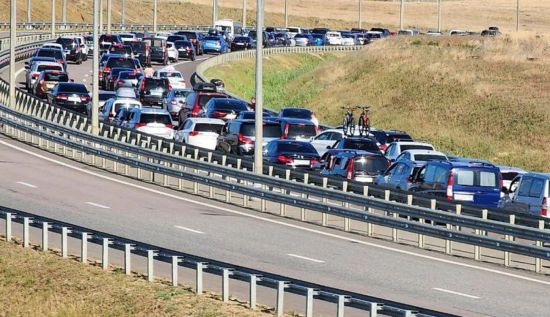
— Well, look, this is probably above my pay grade. Let me simply offer my assessment based on conversations with people whose expertise and judgment I trust. I do not believe Ukraine intends to retake Crimea through a major operation anytime soon. What Ukraine is doing instead is making Crimea increasingly untenable for Russian forces. The land corridor into Crimea has effectively become a road to hell. That is where Russia is losing hundreds of logistics vehicles every day. As for the Kerch Bridge, people constantly ask when it will finally come down. My view is that Ukraine may not actually need to destroy it completely. The bridge has already suffered significant damage, and there are serious questions about its ability to handle heavy military traffic.
What we are seeing instead is a long-term strategy. Ukraine is systematically making Crimea more and more difficult for Russia to hold. The Ukrainian defense minister recently said that Ukraine intends to make Crimea a living hell for Russian forces, and I think that is exactly what has been happening for many months now. Air-defense systems are being targeted. Pathways are being opened for Ukrainian drones and missiles. The objective appears to be reducing Russia’s ability to operate freely there. Ukraine has approached this challenge very intelligently.
For years people have been saying that Crimea is untouchable, that it will always remain Russian, that Ukraine will never get it back. I never believed that. Having lived among Ukrainians for years, I can tell you that Crimea is absolutely existential for Ukraine. President Zelenskyy said more than a year ago that this war began with Crimea and that it would end with Crimea. Another person who has been remarkably consistent on this issue is retired General Ben Hodges. From the beginning he argued that Ukraine could and eventually would regain Crimea. His reasoning was simple: as long as Russia controls Crimea, Ukraine can never be truly secure. Crimea remains a strategic dagger pointed directly at Ukraine.
And we have already seen dramatic progress. Ukraine, a country that effectively entered this war without a traditional navy, managed to sink a significant portion of the Russian Black Sea Fleet, including its flagship, the Moskva. The remaining vessels were forced to retreat to safer ports. As a result, shipping routes in the Black Sea have reopened, which is critically important not only for Ukraine but for countries around the world that depend on Ukrainian agricultural exports. The Black Sea is once again functioning as a major trade corridor.
I do not know, and neither you nor I should know, exactly what plans the Ukrainian high command has for Crimea. A very good friend recently told me: “It is probably not what you think, but there is a plan.” I believe that is probably true. What is clear is that Ukraine is steadily increasing pressure. And we are already seeing one consequence: many Russians who moved to Crimea after 2014 are reportedly leaving the peninsula in large numbers. That, by itself, tells us something about how secure they feel about Crimea’s future.