Today at 13:46

By 2026, Ukraine will need at least $120 billion to sustain its defense – a sum that reflects the full scale of Russia’s war against the democratic world. Defense Minister Denys Shmyhal emphasized this during a meeting with foreign diplomats. He noted that the priority is not only the internal transformation of Ukraine’s defense sector but also sending a strong signal to partners: without consistent external assistance, it is impossible to contain a nuclear power operating in a state of “total resource mobilization.”
This $120 billion is not simply about survival. It is about maintaining the front, boosting domestic industry, modernizing the armed forces, and above all, safeguarding the population.
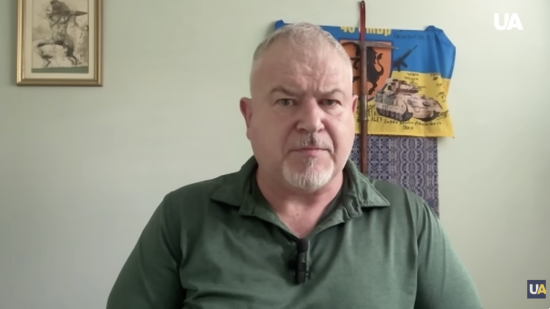
Read more about this in the article by Bohdan Popov, Head of Digital at the United Ukraine Think Tank, communications specialist and public figure.
First of all, the expert explains that Ukraine aims to secure roughly half of this funding – about $60 billion – through international assistance. While part of these resources will be used to purchase weapons from foreign partners, around 50% of all armaments in 2026 are planned to be produced domestically. This is not just a goal but a continuation of the large-scale modernization of the defense industry that has been underway for the past three years.
A top priority is air defense systems, especially those capable of intercepting ballistic missiles, which are vital for protecting cities and critical infrastructure. Significant investments will also target the production of FPV drones, long-range UAVs, and interceptors. The emphasis is on both quantity and technological edge, as the conflict has become a battle of engineering and digital innovation.
Another key area of spending is the expansion of domestic production of ammunition, armored vehicles, artillery, and communication equipment. Funds are also earmarked for supporting Ukraine’s digital army through the development of platforms such as “Army+,” “Reserve+,” and the DELTA combat system.
Secondly, Popov reckons: The war Ukraine is fighting comes at an enormous cost. Yet defeat would be far more expensive. The $120 billion required is on par with the expenditures of NATO countries during full-scale military operations. The key difference is that Ukrainian forces are defending not only their own territory but also the security of their allies. Ukraine serves as a “buffer,” a “shield,” and a “laboratory” where Western weapons, doctrines, and innovations are tested in real combat conditions.
Currently, nine coalitions within the Ramstein framework coordinate security support for Ukraine. In 2025, this assistance reached a record $43 billion. The decision made at the NATO summit in The Hague officially recognizes this support as part of the defense spending of Alliance members for the first time. This is not simply “aid to Ukraine” – it is an investment in the security of all Europe.
Finally, the author summarizes that defense reform would be incomplete without improving how soldiers are treated. For the first time, Ukraine launched a large-scale voluntary recruitment program, establishing 50 centers in major cities where conscripts can choose their unit and role. A contract service was introduced for young people aged 18–24, alongside a dedicated program for foreign volunteers.
The digital ecosystem “Army+” enables 830,000 military personnel to submit reports, transfer between units, receive training, and access support services. Meanwhile, the “Reserve+” system allows 4.5 million eligible individuals to efficiently handle documents, deferments, and medical checks. This is truly an army of a new generation.
The $120 billion is not the budget of a single country; it represents a collective investment in Europe’s security, democracy, and the global order. Ukraine has exceeded expectations – not only defending its territory but also reforming, modernizing, and becoming a partner that can share knowledge, technology, and solutions.
Supporting Ukraine is not a cost – it is one of the smartest investments the civilized world can make today.
Read the full article by Bohdan Popov on The Gaze: $120 Billion for Ukraine’s Victory: Why 2026 Defense Spending Is an Investment in Global Security
Read also: Five Unlikely Alliances That Could Potentially End the War in Ukraine