Today at 23:04

The 2025 NATO Summit in The Hague marks a critical test for the Alliance. As tensions with Russia escalate, the world is watching to see whether NATO can overcome its internal divisions and present a united front in support of Ukraine. Will the Alliance rise to the challenge — or falter when unity is needed most? Dive in this topic with Petro Oleshchuk, political scientist, Ph.D, expert at the United Ukraine Think Tank, in his article for The Gaze.
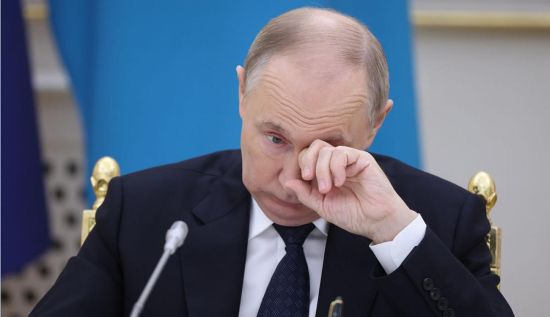
Firstly, Oleshchuk argues that at a time when the Alliance should be showing leadership, clarity, and resolve, political uncertainty continues to dominate — despite the very real military threat posed by Russia, there remains no matching political response. Tellingly, it was in this atmosphere that Russian Deputy Foreign Minister Sergey Ryabkov gave an interview to the state news agency TASS, once again issuing demands to NATO. “Resolving the conflict with the West is impossible without halting NATO’s expansion. A reduction of NATO forces in Eastern Europe would benefit the continent’s security,” Ryabkov claimed. It’s worth noting that before Russia launched its full-scale invasion of Ukraine, Ryabkov had already issued ultimatums insisting that NATO “must leave Eastern Europe” — and we all know how that turned out.
Secondly, political scientist explaines that the topic of increasing defense spending among NATO members has been on the agenda for years, but it gained renewed urgency with the election of U.S. President Donald Trump. Trump has made it clear that allies must take greater responsibility for their own defense, repeatedly stating that the U.S. should not be expected to protect countries that fail to invest adequately in their militaries. As a result, defense spending has become a central issue for preserving Euro-Atlantic unity.
However, the proposal to raise defense spending to 5% of GDP has become a litmus test, revealing deep divisions within the Alliance. While the goal of increasing the minimum from the current 2% to 5% by 2032 is ambitious, it is already facing strong pushback. Spain, for instance, has openly rejected the initiative put forward by Dutch Prime Minister Mark Rutte, calling it both economically unrealistic and politically untenable.
Thirdly, the expert emphasizes that the absence of any reference to Ukraine’s membership prospects in the final communiqué of the summit is more than just a diplomatic omission — it’s a troubling signal. Since the 2008 Bucharest Summit, where Ukraine and Georgia were given a vague assurance that they would “become members of NATO,” little has changed in practice.
The fact that this issue isn’t even being discussed at the summit level points to a new, unofficial consensus — one of indefinite postponement. In reality, it amounts to a consensus to freeze Ukraine’s integration into the Alliance. Lithuanian Foreign Minister Kęstutis Budrys acknowledged this with diplomatic restraint but clear intent: “There are no plans to invite Ukraine to join NATO at the summit. This issue is not even on the agenda.”
This silence carries serious risks — not only undermining Kyiv’s trust in its Western allies but also threatening regional security as a whole. Ukraine remains the only European country actively fighting on NATO’s front lines, yet remains outside the Alliance’s security guarantees.
Finally, political scientist sums up Ultimately, it is hard to view the upcoming NATO summit as anything other than a reflection of the deep crisis currently facing the Euro-Atlantic project. The Alliance is struggling with a lack of solidarity, a fragmented vision of the future, and an absence of unity in recognizing and responding to the threats it faces.
NATO may be more divided now than at any point in recent memory — and that reality is not lost on its main adversary, Russia. Sensing weakness and disarray, Moscow appears to be preparing new provocations targeting the Alliance. With internal disputes unresolved, these provocations could soon escalate into full-scale hybrid aggression, testing NATO’s cohesion and resolve.
Read the full article by Petro Oleshchuk on The Gaze: NATO Summit 2025: Will the Alliance Stand with Ukraine?
Read also: How the Renewed Iran-Israel Conflict Affects Ukraine?