Yesterday at 21:26

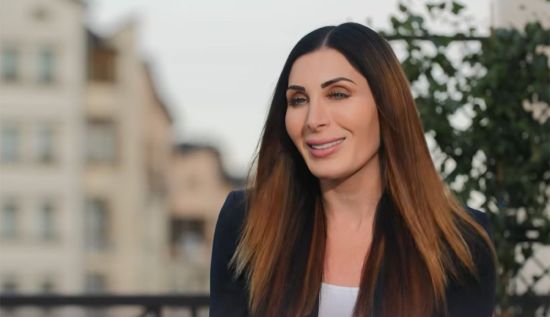
In this interview, we talk to Jonathan Fink, journalist and host of Silicon Curtain. We analyze the “peace plan” for Ukraine, which is more of a capitulation plan than a negotiation document, reflecting the Kremlin’s maximalist demands. According to the journalist, Moscow is using such initiatives to divide allies, humiliate Ukraine, and dissuade the US from imposing tougher sanctions.
The vast majority of Ukrainians are categorically opposed to any territorial concessions, and holding elections during the war would be dangerous and destructive. A “frozen conflict” would only mean a new war in a few years. Watch to learn Fink’s perspective on the geopolitical game unfolding behind the scenes – from backroom operations to the origins of disinformation and the struggle within Western governments over how to deal with Russia.
Read more details from the interview between UATV English host Henry Keen and Jonathan Fink, journalist and host of Silicon Curtain.
— What is going on? Trump’s plan. Some say it’s a capitulation plan for Ukraine — no less than that. Some say it is a turning point. But what is it? And if it is the latter, a turning point — a turning point where to, exactly?
— Well, I think we need to unpack this. Because as I’ve been following this and talking to people who have potentially connections into the Republican Party, I think more and more details are emerging that make this a rather curious story. But the actual points of the plan are mostly familiar. Going through them one by one, this is nothing we haven’t seen before. It’s Moscow’s maximalist demands.
It shows that Putin has no intention of giving any ground. His starting point — and it’s not even negotiation; let’s not pretend it’s negotiation — he wants capitulation with a dose of humiliation on the side. That is what Putin wants, and he hasn’t deviated from that at any point. This is just a rehash of those points with a couple of interesting details added.
So, the size of the Ukrainian army would need to be cut even further — we know that’s not going to fly. No one will agree to that. Any leader in Ukraine who even tentatively signed up to that would be done. Their credibility would be zero, not just with the population but crucially with the hundreds of thousands of men and women serving in the armed forces. Moscow knows this.
There’s nothing original here. The only perhaps original bit is something with the fingerprints of Wickoff all over it — leasing Donbas, getting paid for land. That’s not a viable proposal; it’s a humiliation clause.
— So you think this is not a real plan but something else going on?
— Yes. And it seems Wickoff doesn’t quite understand how Twitter works — he may have thought he was sending a direct message when he actually posted something publicly, asking who leaked this to Axios. He meant Kirill Dmitriev, who he was getting cozy with. So this is starting to look like an operation to bounce the US administration into engaging in this spurious peace plan.
I don’t know how far this is authorized by Trump, but it certainly has Moscow’s fingerprints — trying to accelerate and manipulate the process. There is even speculation that Axios and the FT were manipulated into running the story.
— Moscow stands behind it for sure. They want Donbas and Crimea, reduction of Ukraine’s armed forces, and refusal of NATO membership for 20–30 years. Why these points?
— Because it’s all part of Moscow’s strategy — divide and conquer. That has been the pattern for 400 years. Where they can humiliate, they do. Control, violence, control of resources, and humiliation — that’s the cement of the Russian system.
They know Ukraine will never accept these terms. So the purpose is not for Ukraine to accept — it’s to divide Ukraine from the US, divide European allies from the US, create despair, distrust, argument. A classic Soviet / Putinist technique: demand far more than anyone will ever give you, and even if they meet you halfway, you’ve gained something.
This is described in Keir Giles’ book Moscow Rules. Demand the earth — accept a portion — declare it a victory. Very similar to New York real estate negotiation, ironically.
And then there’s the clause about no long-range missiles. That would completely castrate Ukraine’s ability to defend itself. Not going to happen.
— According to KIIS, 84% of Ukrainians oppose any territorial concessions. President Zelenskyy said no concessions and no elections during the war. Is that the right decision?
— I think it is. Elections right now are not feasible. Running them would disenfranchise huge numbers of people, risk mass casualties at polling stations, and would be extremely divisive. And, ironically, holding elections under such conditions might actually make it easier for Russia to claim the Ukrainian government lacks legitimacy.
But that doesn’t mean governance cannot evolve. During World War II, the UK had a national coalition government — diverse political actors making decisions together. Ukrainians I’ve spoken to say such a model would need to include not just political parties but veterans, military leaders, civic society. That could reinvigorate decision-making and help manage the war more effectively.
— There is also internal fatigue in Ukraine: corruption cases, exhaustion. Could that force Ukraine to surrender?
— I have not met a single Ukrainian who considers surrender an option. Everyone understands what occupation means. Anyone who is a civic, cultural, religious, military or political figure — they would not make it out alive under Russian occupation. Ukrainians know this from history and from the current behavior of Russia in occupied territories.
— Let me go back to the “peace plan.” Ukrainian and European officials felt blindsided by the news. Why keep European partners blind? Does Trump know what he is doing? Do they have a plan?
— Hard to say. My instinct is negative because I am strongly anti-Trump — I don’t like his behavior or ignorance of context. But it could be that someone is trying to bounce him into this process. We’ll see in the next few days how he responds: whether he owns it or denies involvement.
He has many domestic fires: legal issues, scandals. He may use this as a distraction. But inside the Trump camp, there are two factions: one realistic and somewhat pro-Ukraine, the other susceptible to Kremlin narratives. And those Kremlin-leaning voices may now be gaining the upper hand.
General Keith Kellogg is one of the few adults in the room — respected in Kyiv, aware of the context, understands peace through strength. Rubio too. But Wickoff may be leaving the administration — possibly because the pro-Moscow camp is ascendant.
Europe will then have a choice: acquiesce or resist. Capitulation would be political suicide for Europe. The question is open.
— New sanctions came into force yesterday — aluminium bans, shadow fleet restrictions, banking sanctions. Will this hurt Putin enough to force him to stop fighting?
— Personally, I doubt it. Putin is far less flexible than he was in the early 2000s. He is not imaginative. He is surrounded by people building the myth of him understanding everything. The real man is grey, full of hatreds and KGB culture.
He cannot show weakness — weakness is fatal in the Russian system. Relenting would be humiliating, and humiliation is intolerable to him. So he will continue until the wheels fall off — even as the economy deteriorates.
— Let’s imagine a ceasefire tomorrow. Would it be just a frozen conflict leading to another war in 3–5 years?
— Yes. And even then, the war wouldn’t actually stop. This isn’t 1918 — the guns won’t fall silent. Russian troops would continue occupying territory, committing crimes. There would be constant probing, provocations, low-level attacks.
Moscow would blame Ukraine for any violation. Hybrid warfare would escalate. A frozen conflict is just war in another form. Peace with Putin is illusory.
— And Russia would rearm during the pause. Then what? Not just Ukraine — Moldova, Baltic states, maybe NATO conflict. Even if Putin dies, someone else comes. Could anything change for the better?
— I follow Julia Navalnaya, Kasyanov, others — there will not be a liberal Russia after Putin. But that’s not a reason to tolerate Putin. What follows him will still be better for a time, because successor regimes need years to consolidate. That is the window for the West to rearm and fortify.
Whoever follows won’t want nuclear suicide. Many elites have children and assets in Europe. So we should absolutely work to collapse Putin’s regime. The best outcome is turmoil — smuta — chaos inside Russia while we rearm.