Yesterday at 21:26

Frozen Russian sovereign assets represent a potentially transformative source of reparations for Ukraine’s post-war recovery, turning punitive financial measures against the aggressor into a tool of justice and a deterrent against future conflicts.
Russia’s full-scale war has inflicted immense destruction, with reconstruction costs now exceeding $1 trillion. As the aggression continues into 2025, Western governments are holding roughly $300 billion in immobilized Russian state assets—primarily reserves of the Russian Central Bank—frozen as part of sanctions imposed after the invasion.
These funds, concentrated in institutions such as Euroclear in Belgium, constitute a powerful lever for enforcing accountability. Rather than letting them remain untouched, various proposals suggest repurposing them through a dedicated reparations fund or a loan-based mechanism that could finance Ukraine’s rebuilding. This approach would not only accelerate recovery but also set a global precedent: aggressor states would bear the financial consequences of unlawful war.
Read more in the article by Danylo Yershov, political scientist specializing in international relations, junior expert at the United Ukraine Think Tank.
Firstly, the author emphasizes that the core principle is to transform the frozen assets into a direct instrument of reparations rather than merely a punitive measure. The European Union, which controls the largest share of these funds (around €185 billion), has put forward a model for a “reparations-backed loan.” Under this plan, the EU would use the immobilized assets as collateral to raise significant annual financing for Ukraine—potentially up to €50 billion per year for military assistance, reconstruction of critical infrastructure, and humanitarian needs. The loan would be repaid only once Ukraine receives formal reparations from Russia, thereby shifting long-term financial responsibility entirely onto the aggressor state. This builds on the existing framework through which profits generated from the assets (about €3–5 billion annually) are already being transferred to Ukraine, while indirectly leveraging the principal amount for larger commitments.
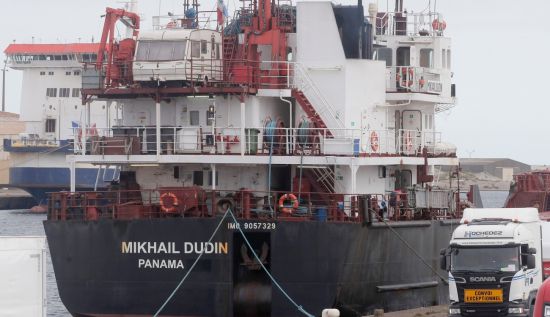
Secondly, the expert argues that although sovereign assets are secure for now, widespread sanctions evasion by Russian oligarchs highlights the need for decisive action regarding state-owned funds. As noted earlier, oligarchs such as Andrey Melnichenko and Roman Abramovich have transferred holdings to relatives or concealed them through offshore trusts to escape personal sanctions—moves that allowed them to keep receiving revenue and maintain supply chains benefiting Russia’s war economy. One notable example is Melnichenko’s reduction of his stakes in EuroChem and SUEK below 50%, transferring control to his wife to keep exports flowing. Meanwhile, a shadow tanker fleet of roughly 940 vessels continues bypassing the oil price cap, generating billions in revenue despite environmental and regulatory dangers.
Thirdly, Yershov explains that beyond providing immediate financial support, a reparations fund would help institutionalize a new model of global justice. By formalizing the use of an aggressor’s frozen assets to compensate victims, it creates a clear deterrent: states contemplating aggression would know that war could swiftly trigger not only military pushback but also the automatic redirection of their overseas reserves. This aligns with established norms of international law, under which reparations for unlawful wars are mandatory, as affirmed by bodies such as the United Nations and the International Court of Justice. Organizations like the Global Fund for Victims of Violence argue that such mechanisms could be expanded—for example, to support survivors of conflict-related sexual violence—using the Russian case as a precedent for broader reparative justice.
Finally, the political scientist summarizes that opponents warn of possible repercussions. Russia could retaliate by seizing Western property inside its territory, worth an estimated $300 billion, or seek to challenge Western actions in international courts. Legal debates also persist: some argue that direct confiscation breaches the principle of sovereign immunity. However, tools such as the reparations-backed loan sidestep this problem by formally preserving Russia’s ownership on paper until reparations are paid. Enhancing coordination between the EU and the U.S.—for instance, through joint monitoring of the shadow fleet, as recommended by the U.S. Government Accountability Office—is vital to minimize risks.
Ultimately, failing to act would only prolong injustice. Establishing a reparations fund now would accelerate Ukraine’s recovery and reinforce global norms that hold aggressors financially accountable. As the war continues, the frozen hundreds of billions have become more than an economic resource—they have become a moral obligation. Transforming Russia’s unlawfully accumulated reserves into instruments of reconstruction would serve both justice and deterrence, turning the assets of war into the foundations of Ukraine’s resilience.
Read the full article by Danylo Yershov on The Gaze: Using Frozen Russian Assets for Ukraine’s Reconstruction: Creating a Reparations Fund to Restore Justice
Read also: The Victory Cult Behind Putin’s Russia: How a Soviet Myth Became a Tool of War