Yesterday at 20:05

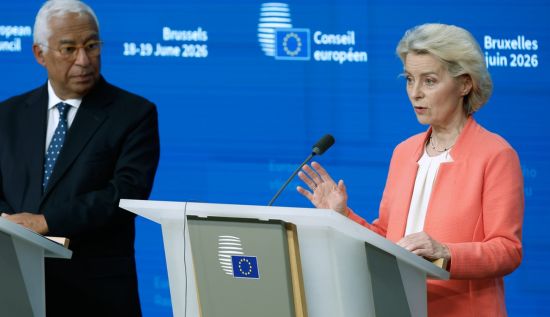
Seven EU member states — Estonia, Finland, Germany, Latvia, Lithuania, Poland, and Sweden — have issued a joint call to introduce tariffs on a wider range of Russian goods, Politico reports as cited by UATV English.
The discussion paper, dated November 4, urges the European Commission to propose tariffs on:
- iron and steel,
- inorganic chemicals,
- potash fertilizers.
In 2024, these products generated €5.4 billion in export revenue for Russia, helping to fund its war against Ukraine.
A senior EU diplomat, speaking anonymously, noted:
“This is part of our economic security, and we must reduce our dependency.”
Two other EU diplomats confirmed the initiative.
Why it matters
European companies purchased €33 billion worth of Russian goods in 2024. Even excluding oil and gas, that’s €11 billion in imports — including metals, fertilizers, nickel, aluminum, fish, and machinery.
Much of this trade remains legal because these goods are either not under EU sanctions or fall under exemptions. Tariffs, however, can be adopted without unanimity, unlike sanctions — making them a faster and more feasible tool.
A key shift is that Germany has joined the initiative:
“It could convince some Commission members,” a diplomat said.
Internal resistance
Some EU countries prefer to keep duty-free access to Russian raw materials. For example:
- Belgium and Czechia secured exemptions for certain steel slabs,
- Russia-linked steel plants operate in Belgium, Czechia, and Denmark.
Others oppose tariffs on principle, arguing they effectively function as sanctions.
What’s next
EU ambassadors have already discussed the proposal. The issue will now move to the EU trade ministers’ meeting on November 24.
If support grows by then, the topic may also be raised with U.S. Trade Representative Howard Lutnick, who is invited to the meeting in Brussels.
The EU already imposed tariffs on some Russian agricultural goods in 2023, and in January 2025 the European Commission proposed tariffs on all agricultural products and nitrogen fertilizers from Russia and Belarus — a proposal still awaiting approval by the Council and European Parliament.