Today at 13:01

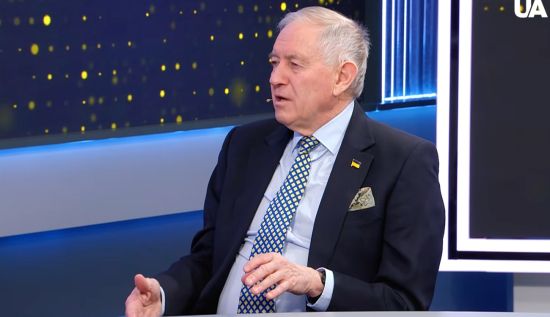
Read more details from the interview between UATV English host Henry Keen and a military observer, YouTuber with almost a million followers, Denys Davydov.
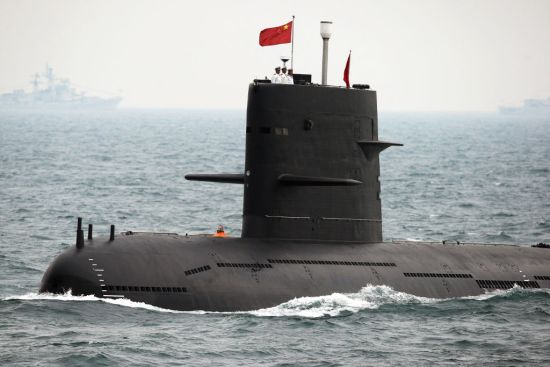
— Let’s talk about the recently escalated nuclear rhetoric, whatever that means. Putin’s Burevestnik and Poseidon, Trump’s nuclear submarines off the coast of Russia. French analyst Fabien Mondin says all that is alarming. So is it?
— Honestly, there is nothing really new that Putin is proposing to the world. Russia already has ICBMs and lots of nuclear warheads. They have more nuclear warheads than the United States of America, and they have the ways to deliver them. They have very sophisticated ICBMs. It’s not just a single warhead for each missile — they may carry up to 20, and, as rumors say, 50 warheads per missile. And even if Americans somehow intercept 90% of those missiles, which Russia already has, the remaining 10% will do most of the harm, and it will be enough to wipe out, as Kiselyov says, “everything.”
So I honestly don’t know why Putin develops this Burevestnik or Poseidon missiles or torpedoes, because there is nothing new. Russia already has those capabilities to demolish the entire world, maybe even several times, as well as the United States of America. Maybe if Putin invested those funds in producing some sort of air defense, because compared to Americans and the American THAAD system, Russia doesn’t have that sophisticated air defense against ICBMs — maybe that would be a threat, definitely. Because if you can protect yourself from a nuclear attack and you have nuclear capabilities, that’s concerning.
But one more torpedo or Burevestnik cruise missile, which is not a hypersonic missile — it’s a standard cruise missile, just equipped with a different engine — okay, it may fly for 14,000 or even more kilometers, but it is still interceptable by air defense. So there is absolutely nothing new which Putin proposes. And we see the reaction coming from the Western media — they don’t really care. But Putin continues to talk about it, maybe just for his internal audience. Because actually what matters is not the nuclear capabilities of the country, but the fact whether Putin really wants to try it out.
And judging by what we know about Putin, he is not willing to do it. He likes his current state, his current life, and everything. I give just a very low percent that Putin somehow may use his current nuclear capabilities, which are more than enough. So: nothing new, absolutely no new threat.
— But speaking about the perspective of reality of all this — is there any evidence whatsoever that the launch of Burevestnik on October 21st was a real test of a real nuclear carrier, and not a traditionally staged demonstration of “unprecedented, enormous, one-of-a-kind, yet not quite real” Russian power?
— They didn’t provide the images for us — just a couple of photos from the starting platform. We know that this cruise missile, Burevestnik, indeed exists. However, Russia doesn’t share any detailed images — you know, like Elon Musk’s SpaceX: when they launch their missiles, they have a bunch of cameras filming everywhere, even from the ocean from special buoys. Russia doesn’t give that kind of information. However, that missile exists — we have the confirmation from Norwegian intelligence that Russians even before this conducted several launches of those Burevestniks. How successful they were — it’s hard to tell.
— Okay, I take that as an answer, thank you. I’ll put it that way: whatever that Poseidon they’re investing in — real or not — Putin prepares the infrastructure for that Poseidon torpedo, as he said. So could we guess what that means as a political signal? Because it is a political signal.
— Yes, it is a political signal. I think that the idea for Putin was to use the current White House administration as a weapon. It doesn’t work as he thought, so he tries different variants — sending Dmitriev, who is some sort of economic ambassador of the Russian Federation, to propel Russian economic interests — and at the same time Putin wants to show that he still has this nuclear “something” that could be very harmful for the United States. So he uses those two policies simultaneously. But in both of those, I think he failed — especially with the latest Dmitriev visit to the United States of America, when he said that sanctions do not matter for Russia’s economy.
I think Donald Trump could be even humiliated more about this stuff, because you have to say that sanctions really matter if they’re applied by Donald Trump. You shouldn’t say, “No, they are not touching us at all.”
— All right. If this is a signal — okay, whatever happens — the signal has been received. What, in your opinion, should NATO’s reaction to such a signal be? Because there is, I mean, no reaction at all. A bit embarrassing.
— There is a reaction — comments from Donald Trump. He said that this Poseidon or Burevestnik doesn’t really matter, because the United States has nuclear capabilities. They deployed a submarine somewhere close to Russia, as Trump said. Also Trump said that they will commence some nuclear exercises. But it’s not a nuclear blast or something — he mentioned in the tweet that it’s going to be “mirror actions”: so what they do, we are also going to do — some tests of ICBMs in this case. I think the United States already did it, if I’m not mistaken.
But Russia understood it as more escalation. And yesterday, at the security meeting in Moscow, there was the proposal of Shoigu, Minister of Defense of Russia, to start real nuclear exercises somewhere in northern Russia, where they might actually explode a real nuclear bomb. For a very long time those nuclear tests were cancelled, forbidden, but now Russia seems like it wants to return and even blow up a real bomb to show their seriousness. We will see what might happen in this case.
— And what do you think the reaction will be? Because it could be just talks, until it happens — until Russia actually is the first one to test a nuclear bomb since, I don’t know, 1992 or 1996, whatever that was — mistaken dates — but they will be the first one. Do you believe there will be any reaction?
— Yes, I believe there will be a reaction. I think from America there will be a reaction. We may like Donald Trump, we may not like Donald Trump, but he will not swallow that act. It’s understandable — it’s his mindset, the portrait of Donald Trump. He will not stay calm — there will be a response. What kind of response — it’s hard to tell.
Hopefully, it will be the support of Ukrainian long-range capabilities — maybe with Tomahawks, maybe with something else — but hopefully in this way. Because if he decides to blow up an American bomb, it doesn’t really matter — the real thing should be applied: Ukraine is fighting against Russia. Ukraine really physically influences Russia. So I think that would be the proper response for Donald Trump — but we don’t know what they really think. It hasn’t yet happened.
— Indeed. Absolutely. I agree — it hasn’t yet happened. But Putin awards the developers of Burevestnik and Poseidon and declares complete independence of Russian technologies from Western ones, finally, and brags about new nuclear products. Is that a real threat or not? He is bragging, he is speaking — but when the time comes, do you believe, as an expert or as an observer, do you personally believe that he will use any of that against the United States?
— No, I don’t believe that Putin will use nukes. So many red lines have already been crossed, and Putin is quite okay with Tomahawk missiles. I don’t think there will be some sort of response from him. They’re mostly yapping on Russian propaganda TV, and Putin himself threatens all the time. At first our allies really took it seriously — remember how they were very slow in giving us Leopard tanks, tanks in general. Each time it was: “We are afraid to escalate.”
Well, finally, they don’t care about it. Trump’s administration is pretty much okay with Ukrainian strikes on Russian infrastructure. No one is telling us “do not escalate” any longer. At least like that. I would like to see direct military support from the United States, not just for Europeans to purchase those weapons, because they are limited in their capability and the European economy is not feeling well compared to what it was before. So, yes, Ukraine doesn’t obtain enough right now. If Donald Trump wants to respond — of course it’s better to support Ukraine in any case.
— Maybe the last question for this topic. Trump announces nuclear tests and readiness for parity — again, whatever that means — with Russia and with China, by the way. But could this all develop into a real arms race?
— Yes, it can. Potentially. But still, the United States has more production, more everything. I don’t think that Russia nowadays, with the problems they have in the economy and military sector, is capable of going into a military race with the United States. Maybe China — but China’s idea now is to develop more warheads. They have 600; they plan, till 2030, to have 1,000 nuclear warheads. But still it’s five times less than in Russia and the United States of America. So if we speak about nuclear weaponry, they’re not really in this competition. The modern competition, as you see on the front lines, is about drone technologies.
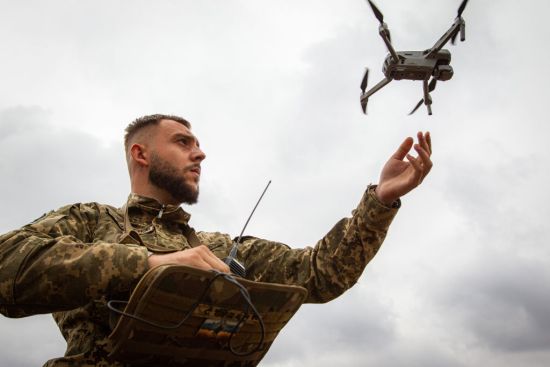
Unfortunately, I see from the NATO countries that they still don’t understand what is happening. And only after some sort of provocations started with the drones, Denmark, for example, went to Ukrainian specialists to train them, to show the drone interceptors, and so on. So they are still lacking this technology.
That’s the big downside of the Western NATO bloc in general. And I guess Ukraine has something to propose to our partners for them to be more capable.
— But just to round up the topic from an OSINT point of view — or maybe you have other sources — is there any satellite imagery confirming preparations for nuclear tests, both in Russia or the United States? Is there any evidence that the preparations are real?
— So far, I haven’t seen those. Russia just said about it the day before yesterday. So we’ll see in the coming days if they really want to put something into real action. Obviously, we have satellites — not “we,” but in general — the images are being published, you can monitor them. So we will see the preparations. I think maybe Russia will blow up one warhead in Novaya Zemlya — maybe. I think they may do it. They may do it just to see what happens, because that’s what they usually do: to provocate and see what happens.
— All right, let’s slide into diplomacy, because we really need to wait another two days — it’s even crazy that we’re talking about “let’s wait for another couple of days and see if someone will blow up a nuclear warhead.” But let’s talk about diplomacy. British Secretary of Defense John Healey said Trump can force Putin to negotiations — literally, that’s what he said. Trump says Putin called for help two weeks ago to settle the war that he has started on his own. So, on a scale from 1 to 10, how real do you think all that is? Can Trump force Putin? Did Putin call? Is it a sign of weakness from Russians? A diplomatic trap? Both? What’s going on?
— Maybe Putin called Donald Trump to help him to finish Ukraine or something — to help him to cut military support — because I see Putin just using Donald Trump in his favor as diplomatic weaponry to achieve his goals on the front lines. I don’t see that Putin is willing to stop. No one from experts, I guess, sees some sort of light at the end of the tunnel.
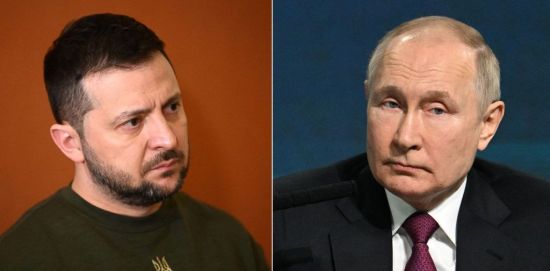
Putin already has this proposal from Donald Trump to stop the war at the current front line. President Zelenskyy agrees on that — he openly said to Donald Trump: we agree to freeze the war. But Putin doesn’t want to do it. And Putin always has this option: if he is not successful on the front lines, if something dramatic starts to happen with the Russian economy — for now it’s not like that, unfortunately — maybe some protests, if we believe in that, then he might always stop, agree on Trump’s scenario, agree on Zelenskyy’s scenario, stop the current war. But before that he will continue.
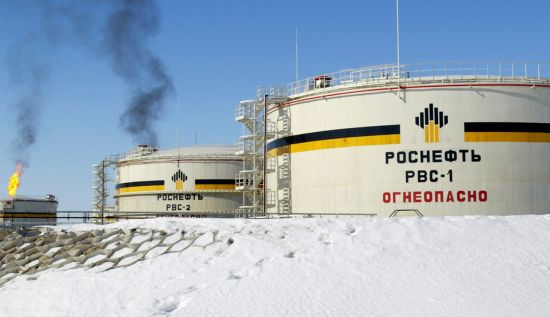
And I don’t think that the United States administration — whoever is president — has real leverage on the Russian president. Honestly, it’s not as it was before. Russia has different markets. Russia has China. Wang Yi, the foreign minister of China, said to Kallas three months ago that they will not let Russia lose, because it’s not profitable for China. He said it openly. So they have multiple countries still trading with Russia, unfortunately supporting their economy. Sadly, also European partners purchase Russian fossil fuels. We apply sanctions, Hungary applies sanctions on pipelines, but still it’s not enough.
Russia will be declining — problems are mounting. But you said no expert believes that Putin wants to stop this war — I’m with you — but some still say that sometimes they see it the other way: that the Kremlin is preparing some sort of negotiation framework, with all these Russian info throw-ins and propaganda throw-ups.
About negotiations — I heard that Russians split the topic. For example, they want to discuss separately Ukrainian children who were kidnapped, prisoners of war, and some other humanitarian aspects. They are not even touching the territorial question. They split those topics — it means that they want to “negotiate for negotiations” and to make it as long as possible, to show to Donald Trump also that they are negotiating about something. That’s their approach: they want negotiations just to continue the war. That’s it.
— Well, we share the same opinion. But let’s say the ceasefire is now — tomorrow. Do you believe that after such a ceasefire a new round of war with Russia, a new escalation, is inevitable?
— With the current Russian regime — yes. I think the only way to stop this war is to get rid of the Russian regime. Unfortunately, with the current Russian president at least, and with his circle, the war will continue. It’s my opinion.
Putin has his own ambitions — he tells about it openly. I don’t understand why people try to interpret Putin’s words in a different way. He says it openly. He speaks about historical parallels, that Ukraine is a fake state which was created by Lenin, that it is Russia, we are the same nation. So he wants to achieve it. It’s his built-in program. He has this narrative and he will do it, and he will use other excuses — expansion of NATO, for example. Maybe he believes in that too — he is ex-KGB and was threatened by NATO before. But his main idea is to erase Ukraine — not to unite, but to erase.
Uniting people — and those who disagree, let’s get rid of them. Let them live in other countries, or let’s put them into some camps, and those who would like to accept “Russian peace” — okay, they will be Russians. That’s what they do in occupied territories: put in Russian history books, raise kids as totally Russians — they grow up Russians there.
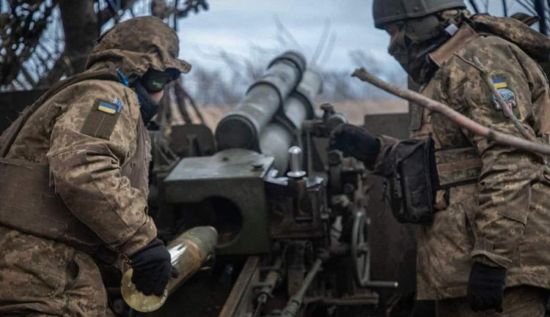
— Well, anyone who wants to see what “Russian peace” looks like should go to Mariupol and spend some time in Bucha and see what happens there. But let’s talk about the grim reality on the front line, Denys. I’m a news anchor, as you can see, and every day I see those reports from the General Staff — it’s my job to translate them to American and British audiences. The reports say: over the past 24 hours more than a thousand occupiers were eliminated. So, quite a stable trend these days. Russians care not for any life, including their own — that much we do know. But what about us — Ukraine — the Pokrovsk direction, I mean? How are we doing there, Denys?
— Honestly, not that good. Especially with the news coming the day before yesterday. Yesterday there were good news — it seems like Ukraine wants to expand the bottleneck for withdrawal of Ukrainian forces. Unfortunately, our army cannot hold those two settlements for long. I expect that in the coming weeks, maximum, they will be taken by the enemy.
It was evident even one year ago that Pokrovsk will be taken by Russia — they just pour lots of forces. Let’s be honest: Russia has a big army, they have big resources, their economy is big.
North Korea supports Russia with more artillery shells than the entire West supplies to Ukraine.
So unfortunately it’s like that. Ukraine still is mainly alone, at least with manpower, against this advance. And I’m still surprised how our guys can defend and how they let Russia advance so slowly and sometimes even counterattack — like it was. We are speaking about Pokrovsk, but there are still defense lines after Pokrovsk. So it’s not the end of the story if Russians take it.
And how the Ukrainian Armed Forces are still holding — this Pokrovsk will go into the history books, definitely, because everything said that Pokrovsk would be lost, and Russians were expecting that to happen for a year already — and we’re still there, still dragging their forces. This is amazing bravery and heroism of the Ukrainian Armed Forces.
— But how are our new brave air-defense systems doing? And those F-16s — are they affecting the actual battlefield or not?
— We need more fighter jets. F-16s are working to protect Ukrainian skies — they are used against Russian cruise missiles, Russian drones. But speaking about the front lines, I think Ukraine simply doesn’t have enough airplanes. Russia has advanced airplanes — Su-30s, Su-35s — they are way better than F-16s. F-16s, even with the tuning options that we have — advanced radar technologies — I don’t think they are comparable to Su-35, for example.
And to act against the Russian fighter-bombers Su-34, which are doing most of the harm on the front lines dropping gliding bombs, Ukraine needs hundreds of airplanes of that type, of F-16. Unfortunately, we haven’t obtained even a single flying unit from the United States of America — all the supplies were from Europe. Europe still waits for F-35s, and only after that will they send to us all of the F-16s — for example, Belgium.
So, unfortunately, Ukraine is capable to use F-16s just behind the front lines. But Ukraine has other capabilities — long-range weaponry is still working. For example, FPV-5 “Flamingo” is kind of a wet missile, a cruise missile — it needs more development. It’s quite big, so after all maybe Neptune or Tomahawks are way better because they’re smaller, nimble, may fly for a longer range, because Flamingo is well identified by Russian radars, air-defense systems. But still there were successful uses of Flamingo — not that many — but for initial use it’s more or less okay. It needs more development. Neptune is well tested — that’s why I see that Ukraine mostly uses Neptune to hit some of the Russian infrastructure recently.
— Pokrovsk and other settlements — it’s local anyway. Is there a risk that Russia will attempt a massive assault before winter again?
— They tried. North from Pokrovsk there is the Berdiya direction — Russians already broke through. It was a very big threat for Ukraine, actually bigger than Pokrovsk. In August this year they broke through to Zolota Nyva and actually crossed the Ukrainian main defense line in a single point, and it was a threat for the entire region — Sloviansk, Kramatorsk, Druzhkivka, and Kostyantynivka.
Luckily, Ukraine reacted. I was really surprised with our Ukrainian military command — it happens rarely, but it happened at the proper time. They deployed our guys from the first Azov Corps, 33rd Assault Brigade, and 95th — they were very capable in cutting Russians south, and nowadays it’s like the finishing of the presence of Russian troops in that region.
So from the great success of the Russian attack — they miserably failed there. And Ukraine really showed that it can still react very fast. I would like to see that reaction also for Pokrovsk — at least with the fast withdrawal of Ukrainian troops, because there are risks now for Ukrainian Armed Forces in this pocket. Yesterday I saw some good news: Ukraine tries to widen the bottleneck to withdraw the forces — but just to withdraw. For now in Pokrovsk it’s the most profitable scenario for Ukraine.
But Berdiya direction was more tricky because of the main defense line that could potentially have been penetrated — so it was more dangerous. And Ukraine reacted, so it compensated this Russian move. I think Russians didn’t expect it themselves — it was an accidental move. They just tried to move to that direction and advanced 17 km in 3 days. But later on it was a complete disaster.
And about this “big offensive” that President Zelenskyy spoke about, our military command spoke about — Russians actually started it. They started it last month. They poured more than 70 vehicles to Chasiv Yar direction — that’s the same variant with their breakthrough that happened in August, the same direction. They lost territories, but Ukraine already deployed capable units, withdrawn army, and Russians tried to break through again: “Okay, we were there, we penetrated that line, we want to get it again.” But it’s too late for them, and they lost 74 vehicles in the last month for two villages, and they didn’t take those. So absolutely losses for nothing.
And I saw one video how Russian motorcyclists went to a closed bridge — the bridge was destroyed a month before — and the Russian military command sent them to that closed connection. It was a dead end. And they were immediately hit by Ukrainian drones. So — let’s wish for the same, actually.
Read also: Doug Klain: Only Russia’s Defeat Can Bring Real Change